EdX

Drug Discovery & Medicinal Chemistry (edX)

Drug Discovery & Medicinal Chemistry (edX)

Learn how scientists in drug development modify and test molecules to improve potency and reduce toxicity. Discover the criteria that regulatory agencies use to approve molecules that are shown to be both safe and effective as pharmaceuticals for the treatment and prevention of diseases.

Class Deals by MOOC List - Click here and see EdX's Active Discounts, Deals, and Promo Codes.

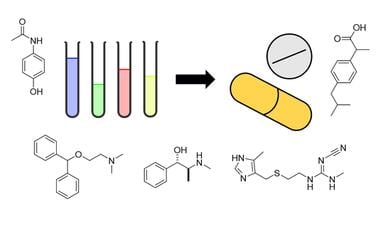
Drug discovery is a challenging field, but the pathway most drugs navigate from concept to market is predictable and based upon repeated experimentation. The process requires scientists with expertise in chemistry, biology, and medicine. This course focuses on four aspects of drug development.

  • regulation - approval protocols for government regulatory agencies
  • pharmacodynamics - how a drug affects the body
  • pharmacokinetics - how a drug flows through the body
  • lead discovery/optimization - the steps for finding and improving molecules as potential drugs

The course closes with two case studies of molecules that have advanced through the development process and into clinical trials.

What you'll learn
After completing this course, students will be able to...

  • contrast the different steps of the drug discovery process,
  • summarize the relationship between patents and generic drugs,
  • interpret dose-response curves from the action of drugs on proteins,
  • calculate drug-target binding energies from potency measures,
  • describe factors that affect the flow of a drug through the body,
  • predict structural changes in a molecule to influence half-life,
  • priorize weakly active molecules as potential drug candidates,
  • implement modifications to improve the properties of drug-like molecules, and
  • assess literature reports of drug development programs.

Syllabus

Module 0 - Welcome
Module 1 - Drug Discovery Process
Module 2 - Drug Targets
Module 3 - Drug Metabolism & Pharmacokinetics
Module 4 - Lead Discovery & Optimization
Module 5 - Case Studies from the Literature
Module 6 - Farewell

Prerequisites
Students planning to complete the course should have the prerequisites listed below.

  • high school algebra - logarithmic and exponential functions
  • high school biology - general anatomy and basic cell structure
  • high school general chemistry - equilibrium and intermolecular forces
  • introductory organic chemistry - functional group recognition and line-angle structures

Students who do not have these prerequisites will understand much of the course content but may have difficulty earning a passing grade.

Go to Class
MOOC List is learner-supported. When you buy through links on our site, we may earn an affiliate commission.

Related Courses

Trasplante de órganos: desafíos éticos y jurídicos (edX) EdX
Universidad Autonoma de Madrid,UAMx

Trasplante de órganos: desafíos éticos y jurídicos (edX)

En este curso analizaremos algunos interrogantes éticos y jurídicos que suscita el trasplante de órganos. Desde que en 1954 se realizara el primer trasplante exitoso de un órgano, la cirugía de trasplantes se ha desarrollado espectacularmente brindando esperanza y calidad de vida a muchos enfermos.

Self Paced
Self-Paced
Human Anatomy: Musculoskeletal Cases (edX) EdX
HarvardX,Harvard University

Human Anatomy: Musculoskeletal Cases (edX)

Learn the anatomy basic to understanding five musculoskeletal injuries commonly seen in primary care medicine and orthopedic clinical specialty practice. Follow hypothetical patients from injury to operating room. Human Anatomy: Musculoskeletal Cases invites students to join medical and basic science faculty at Harvard Medical School (HMS) to learn about musculoskeletal injuries commonly seen in clinical practice.

Self Paced
Self-Paced
Science & Cooking: From Haute Cuisine to Soft Matter Science (chemistry) (edX) EdX
HarvardX,Harvard University

Science & Cooking: From Haute Cuisine to Soft Matter Science (chemistry) (edX)

Top chefs and Harvard researchers explore how everyday cooking and haute cuisine can illuminate basic principles in chemistry, physics, and engineering. Learn about food molecules and how chemical reactions can affect food texture and flavor. During each module of this course, chefs reveal the secrets behind some of their most famous culinary creations — often right in their own restaurants. Inspired by such cooking mastery, the Harvard team will then explain the science behind the recipe.

Self Paced
Self-Paced
BioStatistics (edX) EdX
DoaneX,Doane University

BioStatistics (edX)

This college-level, credit-eligible Biostatistics course will teach you the skills required for success in future analytical studies in biology. In this undergraduate-level biostatistics course, the learners will be introduced to the use of statistics and study designs in biology. Upon successful completion of this course, learners will be able to design experimental, quasi-experimental and observational studies that will meet regulatory guidelines; collect, analyze, and interpret data using appropriate statistical tools.

Self Paced
Self-Paced
Cement Chemistry and Sustainable Cementitious Materials (edX) EdX
École Polytechnique Fédérale de Lausanne,EPFLx

Cement Chemistry and Sustainable Cementitious Materials (edX)

Learn the basics of cement chemistry and laboratory best practices for assessment of its key properties. Every day, we see concrete used all around us – to build our houses, offices, schools, bridges, and infrastructure. But few people actually understand what gives concrete its strength, resistance, and utility. The aim of this course is to offer basic cement chemistry to practitioners, as well as new students in the fields of chemistry and engineering.

Self Paced
Self-Paced
Advanced Cardiac Imaging: Cardiac Magnetic Resonance (CMR) (edX) EdX
University of Hong Kong,HKUx

Advanced Cardiac Imaging: Cardiac Magnetic Resonance (CMR) (edX)

First ever cardiac magnetic resonance (CMR) MOOC! Learn the CMR essentials through short videos, downloadable cases & web forums. Available in multiple languages & follows guidelines for level 1 requirements. This course is for radiologists, cardiologists, radiographers/ technologists and other health professionals who want to learn more about cardiovascular magnetic resonance imaging (CMR). Previous experience in CMR is not required.

Self Paced
Self-Paced
Food Fermentation: The Science of Cooking with Microbes (edX) EdX
HarvardX,Harvard University

Food Fermentation: The Science of Cooking with Microbes (edX)

In Food Fermentation: The Science of Cooking with Microbes, explore the history of food and beverage fermentations and how tiny microbes change and enhance flavors, aromas, and tastes in our food. What’s living in your food? Many of the foods that we consume daily owe their distinct characteristics and flavors to microbes, specifically through a biochemical process of fermentation (using bacteria, fungi, and other microorganisms to produce diverse foods).

Self Paced
Self-Paced
Basic Analytical Chemistry (edX) EdX
The University of Tokyo,UTokyoX

Basic Analytical Chemistry (edX)

Gain a physical understanding of the principles of analytical chemistry and their application in scientific research. Analytical chemistry takes a prominent position among all fields of experimental sciences, ranging from fundamental studies of Nature to industrial or clinical applications. Analytical chemistry covers the fundamentals of experimental and analytical methods and the role of chemistry around us.

Self Paced
Self-Paced
Tropical Coastal Ecosystems (edX) EdX
University of Queensland,UQx

Tropical Coastal Ecosystems (edX)

Take the challenge and understand problems and solutions to managing tropical coastal ecosystems. Do you want to develop the skills and knowledge needed to help preserve tropical coastal ecosystems? These habitats provide goods and services for hundreds of millions of people but human activities have led to their global decline.

Self Paced
Self-Paced
Zoologia (edX) EdX
University of Naples Federico II,FedericaX

Zoologia (edX)

Comprendere gli animali e i sistemi naturali, attraverso il filo conduttore dell’evoluzione. Un viaggio da percorrere con l’entusiasmo di un bambino e la professionalità di uno studioso. La zoologia è la conoscenza degli animali, i nostri coinquilini. Ci sono centinaia di specie animali che interagiscono insieme a noi in una relazione di comunità o ecosistema. Questo corso di Zoologia è una passeggiata nei temi propri della materia come elemento culturale essenziale per il biologo, il naturalista e chiunque si occupi della vita.

Self Paced
Self-Paced