EdX

Sales: reacciones químicas y aplicaciones (edX)

Sales: reacciones químicas y aplicaciones (edX)

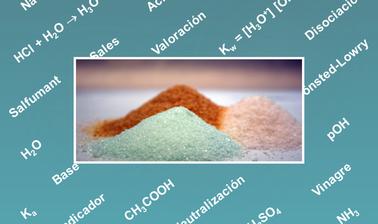
Avanzando en el conocimiento de las sustancias que modifican la acidez del medio, este curso de química se dedica a estudiar los equilibrios en que intervienen sales. En este curso en línea se tratan en primer lugar, las sales como compuestos que pueden modificar la acidez del medio.

Class Deals by MOOC List - Click here and see EdX's Active Discounts, Deals, and Promo Codes.

La explicación de dichas modificaciones se realiza a partir de la teoría de Brönsted-Lowry. Estos conceptos se aplican al cálculo de las concentraciones de las diferentes especies en disolución justificando adecuadamente las aproximaciones realizadas y poniendo especial énfasis en el cálculo del pH.
En este curso de química se describe la naturaleza y aplicaciones de las disoluciones amortiguadoras, citando algunos ejemplos representativos de su importancia en el medio natural. El estudio de los equilibrios ácido-base en este contexto se centra en el cálculo del pH de dichas disoluciones y en sus modificaciones cuando se añaden cantidades limitadas de ácidos o bases fuertes.
This course is part of the Fundamentos de Química XSeries.

What you'll learn

  • Estudiar los equilibrios en que intervienen sales
  • Entender los equilibrios de hidrólisis
  • Calcular qué pH podemos esperar de estas disoluciones
  • Estudiar disoluciones más complejas (disoluciones amortiguadoras)

Syllabus

Unidad 1: Disolución de sales
Unidad 2: Disoluciones amortiguadas
Unidad 3: Valoraciones ácido-base

Prerequisites:
Sería conveniente haber seguido los cursos Reacciones químicas y cálculos estequiométricos y Ácidos y bases: reacciones químicas y aplicaciones
Go to Class
MOOC List is learner-supported. When you buy through links on our site, we may earn an affiliate commission.

Related Courses

DNA and Atoms: The Secret of Life (edX) EdX
Seoul National University,SNUx

DNA and Atoms: The Secret of Life (edX)

Learn about DNA structure, how atoms are bonded to make DNA molecules and the periodic table, through Nobel lectures and key scientific papers. In this chemistry course, you will learn about “Life in the Universe." We will explore DNA as genetic material and atoms as the building blocks of life. We will discuss the discovery and key features of the double helical structure of DNA and the chemical principles behind the sugar-phosphate backbone and hydrogen bonding in the base pairs will be emphasized.

This course is archived
4 Weeks
Catalytic Conversions for Biobased Chemicals and Products (edX) EdX
Wageningen University,WageningenX

Catalytic Conversions for Biobased Chemicals and Products (edX)

Design new (bio)catalytic conversion routes that allow you to use biobased feedstocks to their highest potential as building blocks for chemicals, materials and fuels. Biomass is the only renewable feedstock which contains the carbon atoms needed to make the molecules to create chemicals, materials and fuels. However, the majority of our current scientific and industrial knowledge on conversion is based on fossil feedstock processing.

Self Paced
Self-Paced
Introduction to Solid State Chemistry (edX) EdX
MIT,MITx

Introduction to Solid State Chemistry (edX)

Learn chemical principles by examining materials with examples from energy generation and storage to emerging technologies. This first-year University chemistry course explores the basic principles of the chemical bond by studying the properties of solids. Properties such as stiffness, electrical conductivity, thermal expansion, strength, and optical properties are the vehicle by which you can learn a great deal of practical chemistry.

Sep 6th 2023
13-24 Weeks
Life in the Universe: Syntheses for Life (edX) EdX
Seoul National University,SNUx

Life in the Universe: Syntheses for Life (edX)

Learn about the chemical principles behind key synthetic processes relevant to life such as protein synthesis, photosynthesis, and ammonia synthesis. Nobel Lectures and key scientific papers will be used. “Syntheses for Life” will start with the Bohr model of hydrogen atom and discuss chemical evolution, protein synthesis and structure, photosynthesis, and Haber’s synthesis of ammonia. The course provides an overview of remarkable scientific discoveries.

This course is archived
5-12 Weeks
Science in Art: The Chemistry of Art Materials and Conservation (edX) EdX
Trinity College, Hartford

Science in Art: The Chemistry of Art Materials and Conservation (edX)

Learn the chemistry behind the visual arts, and how an understanding of art’s material properties helps preserve our cultural heritage. How do artists create visual effects? In order to create an artistic impression, artists select materials that allow image formation, and that lend color, emphasis, shape, and size to the object created.

No sessions available
5-12 Weeks
The Chemistry of Life (edX) EdX
Kyoto University,KyotoUx

The Chemistry of Life (edX)

Learn how to generate ideas at the interface between chemistry and biology. Chemistry and biology are traditionally taught as separate subjects at the high school level, where students memorize fundamental scientific principles that are universally accepted. However, at the university level and in industry, we learn that science is not as simple as we once thought. We are constantly confronted by questions about the unknown and required to use creative, integrated approaches to solve these problems.

Self Paced
Self-Paced
Nutrition and Health: Macronutrients and Overnutrition (edX) EdX
Wageningen University,WageningenX

Nutrition and Health: Macronutrients and Overnutrition (edX)

Learn the fundamentals of nutrition and its impact on human health. There is an overload of information about nutrition and health, but what is the truth and what can you do to improve the health of your patients? Learn more about nutrition and how our diet profoundly impacts our current and future health. This course addresses the relationship between nutrition and human health, with a focus on health problems related to overnutrition.

Self Paced
Self-Paced
Science & Cooking: From Haute Cuisine to Soft Matter Science (chemistry) (edX) EdX
HarvardX,Harvard University

Science & Cooking: From Haute Cuisine to Soft Matter Science (chemistry) (edX)

Top chefs and Harvard researchers explore how everyday cooking and haute cuisine can illuminate basic principles in chemistry, physics, and engineering. Learn about food molecules and how chemical reactions can affect food texture and flavor. During each module of this course, chefs reveal the secrets behind some of their most famous culinary creations — often right in their own restaurants. Inspired by such cooking mastery, the Harvard team will then explain the science behind the recipe.

Self Paced
Self-Paced
Big Bang and the Origin of Chemical Elements (edX) EdX
Seoul National University,SNUx

Big Bang and the Origin of Chemical Elements (edX)

Discover the ultimate origin of all chemical elements essential for life. Explore the Big Bang through Nobel Lectures and scientific papers in part 2 of Life in the Universe. This course will start with the nuclear structure of atoms and discuss the creation of hydrogen in the big bang universe and the fusion of hydrogen to make heavier elements in stars. Three pillars of the big bang cosmology will be elaborated.

This course is archived
4 Weeks