EdX

Energy and Thermodynamics (edX)

Energy and Thermodynamics (edX)

Learn the fundamentals of chemistry and energy, from the types of energy to atomic mass and matter to enthalpy and thermodynamics. What is energy and why is it so important? How does chemistry inform energy efficiency and sustainability? Energy and Thermochemistry is an interdisciplinary, online course that introduces you to the concept of energy. Providing a foundational understanding of energy, this course shows you how energy at the molecular level forms the basis of nearly every scientific discussion of chemical, physical, and biological change.

Class Deals by MOOC List - Click here and see EdX's Active Discounts, Deals, and Promo Codes.

In this course, you will cover three core concepts — energy, atoms and molecular structure, and thermodynamics. At the start of this course, you will learn about the different types of energy, including potential, kinetic, electrical, chemical, electromagnetic, thermal, and internal energy. You will examine Newton’s Second Law of Thermodynamics, the Joule apparatus, energy release and consumption, and energy and power scales. In the next section, you will move to the study of atoms, the building blocks of molecules, discovering electrons and the nucleus, atomic mass, and molecular structure. Finally, you’ll end the course learning about thermochemistry and the relationship between energy, heat transfer, and work, leading to an understanding of energy in a modern setting and how chemistry can inform energy efficiencies.
Through readings, videos, and case studies, these modules will help you to understand how energy flows through an economic structure. You will gain a deeper knowledge of the consumption of fossil fuels, conservation of energy, and, ultimately, how to build a sustainable energy future.
This course is part of the University Chemistry MicroBachelors Program.

What you'll learn

  • Describe the different forms of energy, such as mechanical (kinetic and potential), electrical, chemical, electromagnetic, thermal, and nuclear
  • Interpret the units of energy and power and how to convert between them
  • Understand different subatomic particles (proton, electron, neutron) and the major experiments that led to the modern concept of the atom and its structure
  • Recognize the nature of a chemical bond and compare and contrast the different methods of representing the chemical bonds in a molecule
  • Explain the Second Law of Thermodynamics and apply it to chemical reactions
  • Gain an understanding of enthalpy, water condensation, geothermal energy, and thermodynamic pressure
Go to Class
MOOC List is learner-supported. When you buy through links on our site, we may earn an affiliate commission.

Related Courses

The Transition to the Decarbonised Economy of Tomorrow (edX) EdX
Delft University of Technology,DelftX

The Transition to the Decarbonised Economy of Tomorrow (edX)

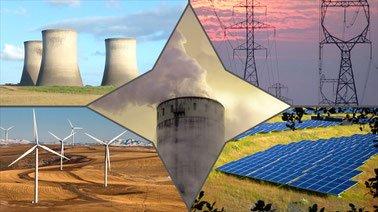
Dive into the economic strategies for promoting the energy transition: technologies, policies, pricing, emission trading and more. How can economic strategies bring our current, fossil fuel based energy system into a carbon neutral future? According to the International Panel on Climate Change, we have only limited time left to keep global temperatures below 1.50 C and to avoid a climate crisis. How do we go about decarbonizing our economy? What are the best renewable energy sources to bring about this transition? And how do we convince investors that renewables really are the best option?

Apr 30th 2024
5-12 Weeks
Nutrition and Health: Macronutrients and Overnutrition (edX) EdX
Wageningen University,WageningenX

Nutrition and Health: Macronutrients and Overnutrition (edX)

Learn the fundamentals of nutrition and its impact on human health. There is an overload of information about nutrition and health, but what is the truth and what can you do to improve the health of your patients? Learn more about nutrition and how our diet profoundly impacts our current and future health. This course addresses the relationship between nutrition and human health, with a focus on health problems related to overnutrition.

Self Paced
Self-Paced
The Chemistry of Life (edX) EdX
Kyoto University,KyotoUx

The Chemistry of Life (edX)

Learn how to generate ideas at the interface between chemistry and biology. Chemistry and biology are traditionally taught as separate subjects at the high school level, where students memorize fundamental scientific principles that are universally accepted. However, at the university level and in industry, we learn that science is not as simple as we once thought. We are constantly confronted by questions about the unknown and required to use creative, integrated approaches to solve these problems.

Self Paced
Self-Paced
AP® Physics 2 - Part 1: Fluids and Thermodynamics (edX) EdX
Rice University,RiceX

AP® Physics 2 - Part 1: Fluids and Thermodynamics (edX)

The first course in a comprehensive series designed to prepare you for the AP Physics 2 exam, focusing on thermodynamics and fluids. Preparing for the AP Physics 2 exam requires a deep understanding of many different topics in physics as well as an understanding of the AP exam and the types of questions it asks. This course is Part 1 of our X-Series: AP Physics 2 and it is designed to prepare you for the AP exam.

No sessions available
4 Weeks
Introduction to Solid State Chemistry (edX) EdX
MIT,MITx

Introduction to Solid State Chemistry (edX)

Learn chemical principles by examining materials with examples from energy generation and storage to emerging technologies. This first-year University chemistry course explores the basic principles of the chemical bond by studying the properties of solids. Properties such as stiffness, electrical conductivity, thermal expansion, strength, and optical properties are the vehicle by which you can learn a great deal of practical chemistry.

Sep 6th 2023
13-24 Weeks
Thermodynamics (edX) EdX
IIT Bombay,IITBombayX

Thermodynamics (edX)

Introduction to basic concepts and applications of thermodynamics in mechanical engineering. ME209x is a basic course in thermodynamics, designed for students of mechanical engineering. We will study the terms and concepts used in thermodynamics, with precise definitions. The three laws of thermodynamics (zeroth, first, and second) will be explored in detail, and the properties of materials will be studied.

No sessions available
5-12 Weeks
Quantum Mechanics (edX) EdX
Georgetown University,GeorgetownX

Quantum Mechanics (edX)

Learn the quantum mechanics needed to prepare you for the second quantum revolution (focused on quantum sensing). We use a new way to teach quantum for undergraduates by focusing on conceptual ideas and operator manipulations. This allows us to discuss more applications to experiment usually done. You need a background in the full calculus sequence and in math methods. Freshman physics and modern physics is recommended. This course is appropriate for physicists, chemists and engineers.

Aug 21st 2023
13-24 Weeks
El enlace químico y las interacciones moleculares (edX) EdX
Universitat Politècnica de València,UPValenciaX

El enlace químico y las interacciones moleculares (edX)

Aprenderemos a identificar los tipos de enlace presentes en los compuestos químicos y a relacionar la estructura de éstos con sus propiedades. Los materiales que utilizamos diariamente y los objetos que nos rodean están formados por sustancias químicas cuyas propiedades, aplicaciones y transformaciones dependen del tipo de enlace que las caracteriza. El tipo de enlace condiciona la interacción entre las moléculas de un compuesto.

Self Paced
Self-Paced
Quantum Mechanics of Molecular Structures (edX) EdX
The University of Tokyo,UTokyoX

Quantum Mechanics of Molecular Structures (edX)

Learn two methods used to determine molecular structures and their properties in this introduction to Quantum Mechanics. Knowing the geometrical structure of the molecules around us is one of the most important and fundamental issues in the field of chemistry. This course introduces the two primary methods used to determine the geometrical structure of molecules: molecular spectroscopy and gas electron diffraction.

Self Paced
Self-Paced