EdX

Salmon, People, and Place (edX)

Salmon, People, and Place (edX)

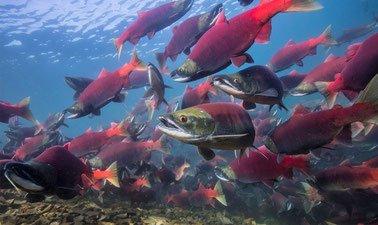
This course explores the relationships between salmon and people with an emphasis on the special ties of salmon to Indigenous peoples and to Alaska Natives in particular. No wild animal has more profoundly influenced the cultures and well-being of societies in North America than salmon. Salmon and people have been entwined in a relationship for millennia. This six-week course is an exploration and celebration of this relationship, as well as an examination of the current major issues, including habitat alterations, climate change, and management actions currently straining the relationship between salmon and salmon-dependent people.

Class Deals by MOOC List - Click here and see EdX's Active Discounts, Deals, and Promo Codes.

We will put significant emphasis on learning about salmon and people in Alaska, a place containing the last stronghold of pristine salmon ecosystems anywhere.

Students should expect to read, discuss online, and host and facilitate dialogues in their own communities, using their newfound knowledge beyond our virtual classroom. Together we will examine how the biology of salmon roots them in place and in turn serves to shape human societies and ecosystems.
We will learn from Indigenous elders and youth and understand the system of local management that has sustained salmon for generations. Students will compare and contrast traditional Indigenous management with current practices that are focused on maximizing yield, and will learn concepts such as spawner-recruit analysis and escapement goals.
This course is ideal for those interested in careers in natural resource management and will be of interest to anyone with a love for the natural wild world. By the completion of the course students will be informed and empowered to confront the challenges facing the relationships between salmon and salmon-dependent societies in the 21st century.

What you'll learn

  • The connection of salmon biology to place
  • How salmon influence traditional Indigenous and contemporary Western management systems
  • Common threats to salmon populations
  • The complex and interconnected nature of salmon systems in Alaska and the Pacific Northwest
  • The deep connections between Indigenous people and salmon
  • An understanding of traditional sustainable management
  • Diverse opinions across cultures and stakeholders on salmon-related issues
  • An informed view of complex salmon-related issues

Syllabus

Week 1: Our Salmon Connections
An exploration of what salmon mean to you and an opportunity to learn about the relationship of salmon to others in the course and beyond.

Week 2: Indigenous Deep Time Ties
Introduction to traditional Native ties to salmon, including the foundations of sustainable management grounded in the concepts of permission and consent. We will be guided by our Elders in this journey.

Week 3: Western Fishery Management
A survey of the key concepts underpinning current management of salmon, including spawner-recruit analysis, fixed-escapement policies, and the problem of forecasting.

Week 4: Sport and Commercial Fisheries
Learn about those that live to fish and fish to live and the routine tensions that can arise among different user groups.

Week 5: The Four H’s and Climate Change
Did you know that the demise of salmon throughout much of the world are linked to the same four causes? We will learn about these causes and discuss the mounting challenge of climate change and global warming facing salmon populations.

Week 6: The Future of Salmon and People
Prediction is difficult, especially about the future. In the final week we look forward to what might be in store for salmon and salmon-dependent societies. Will the choices we make be full of humility or hubris?
Go to Class
MOOC List is learner-supported. When you buy through links on our site, we may earn an affiliate commission.

Related Courses

Zoologia (edX) EdX
University of Naples Federico II,FedericaX

Zoologia (edX)

Comprendere gli animali e i sistemi naturali, attraverso il filo conduttore dell’evoluzione. Un viaggio da percorrere con l’entusiasmo di un bambino e la professionalità di uno studioso. La zoologia è la conoscenza degli animali, i nostri coinquilini. Ci sono centinaia di specie animali che interagiscono insieme a noi in una relazione di comunità o ecosistema. Questo corso di Zoologia è una passeggiata nei temi propri della materia come elemento culturale essenziale per il biologo, il naturalista e chiunque si occupi della vita.

Self Paced
Self-Paced
Climate Change: The Science and Global Impact (edX) EdX
SDGAcademyX,SDG Academy

Climate Change: The Science and Global Impact (edX)

We need to understand the science behind global warming to avoid the most damaging and irreversible climate change impacts on people and planet. Climate change is arguably the greatest challenge of our time. Human activity has already warmed the planet by one degree Celsius relative to pre-industrial times, and we are feeling the effects through record heat waves, droughts, wildfires and flooding.

Self Paced
Self-Paced
BioStatistics (edX) EdX
DoaneX,Doane University

BioStatistics (edX)

This college-level, credit-eligible Biostatistics course will teach you the skills required for success in future analytical studies in biology. In this undergraduate-level biostatistics course, the learners will be introduced to the use of statistics and study designs in biology. Upon successful completion of this course, learners will be able to design experimental, quasi-experimental and observational studies that will meet regulatory guidelines; collect, analyze, and interpret data using appropriate statistical tools.

Self Paced
Self-Paced
Remote Sensing of Wildfires (edX) EdX
University of Alaska Fairbanks,AlaskaX

Remote Sensing of Wildfires (edX)

Learn how satellite imagery and the science of remote sensing allows us to detect wildfires, help manage their spread, and guide ecological restoration. Wildfires are a natural and essential part of our ecosystem, recycling soil nutrients and renewing healthy forests. In Alaska, around one million acres (4000 km2) burn every year, and record years have seen as many as six million acres burned. Most of these fires are allowed to spread naturally.

Self Paced
Self-Paced
Tropical Coastal Ecosystems (edX) EdX
University of Queensland,UQx

Tropical Coastal Ecosystems (edX)

Take the challenge and understand problems and solutions to managing tropical coastal ecosystems. Do you want to develop the skills and knowledge needed to help preserve tropical coastal ecosystems? These habitats provide goods and services for hundreds of millions of people but human activities have led to their global decline.

Self Paced
Self-Paced
One Planet, One Ocean (edX) EdX
SDGAcademyX,SDG Academy

One Planet, One Ocean (edX)

A holistic view of how the ocean functions, how human interactions with the ocean can be understood, and what solutions are available to support both sustainable use and stewardship of our blue planet. Is the ocean the real final frontier? Humans have a greater understanding of the surface of the moon than they do of the depths of these waters.

Self Paced
Self-Paced
Climate Solutions (edX) EdX
University of Edinburgh,EdinburghX

Climate Solutions (edX)

We are in a Climate Emergency. The actions we all choose to take over the next decade will decide whether we succeed or fail to meet the biggest challenge to our civilisation in the 21st century. Learn how you can help tackle climate change. The Climate Solutions course is designed and delivered by award-winning climate change experts and educators.

Self Paced
Self-Paced
Climate Change Education (edX) EdX
Inter-American Development Bank - IDB,IDBx

Climate Change Education (edX)

Learn how to work with your students to help them explore climate change through the use of interactive and engaging activities. These activities are designed for students at the primary and secondary levels. Our climate is changing rapidly, and now more than ever we need to be ready to act and prepare the next generation to take care of our planet. This course explores the basic science behind climate change and presents the tools to teach it in a positive, engaging and participatory way. The course also introduces some of the ethical and social issues around climate change.

Self Paced
Self-Paced