EdX

Science & Cooking: From Haute Cuisine to Soft Matter Science (chemistry) (edX)

Science & Cooking: From Haute Cuisine to Soft Matter Science (chemistry) (edX)

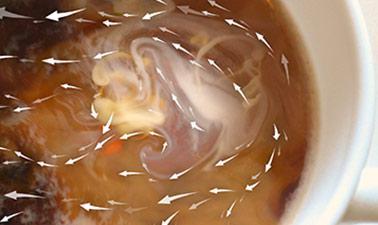
Top chefs and Harvard researchers explore how everyday cooking and haute cuisine can illuminate basic principles in chemistry, physics, and engineering. Learn about food molecules and how chemical reactions can affect food texture and flavor. During each module of this course, chefs reveal the secrets behind some of their most famous culinary creations — often right in their own restaurants. Inspired by such cooking mastery, the Harvard team will then explain the science behind the recipe.

Class Deals by MOOC List - Click here and see EdX's Active Discounts, Deals, and Promo Codes.

Topics will include:

  • How molecules influence flavor
  • The role of heat in cooking
  • Diffusion, revealed by the phenomenon of spherification, the culinary technique pioneered by Ferran Adrià.

You will also have the opportunity to become an experimental scientist in your very own laboratory — your kitchen. By following along with the engaging recipe of the week, taking precise measurements, and making skillful observations, you will learn to think like both a cook and a scientist. The lab is certainly one of the most unique components of this course — after all, in what other science course can you eat your experiments?

What you'll learn:

  • The scientific concepts that underlie everyday cooking and haute cuisine techniques;
  • How to apply principles of physics, engineering, and chemistry to cooking;
  • How to become an experimental scientist in your own kitchen;
  • How to think like a chef AND a scientist.

Syllabus

Week 1: Molecules, moles, flavor, and pH
Includes a discussion by Daniel Humm of Eleven Madison Park in NYC on flavor, pH, and the secret to his famous duck sauce, and scientific discussions on the major macromolecules of food, as well as flavor, moles, and pH.

Week 2: Energy, temperature, and heat
Includes a welcome drink by Dave Arnold of Booker and Dax in NYC to toast the beginning of the course, and a scientific discussion of how to cook a perfect egg. This week will focus on one of the most commons ways to cook, i.e. to add energy in the form of heat that increases the temperature of a food and hence changes its internal structure.

Week 3: Phase transitions
Joan and Jordi Roca of El Celler de Can Roca, recently voted the best restaurant in the world, will explain how they manipulate phase transitions when cooking by using techniques such as sous vide and rotovapping. The scientific discussion will focus on what causes phase transitions in foods from a macroscopic and microscopic perspective.

Week 4: Diffusion and Spherification
José Andrés, founder of ThinkFood Group, and chef and owner of several restaurants including minibar, Jaleo, and The Bazaar, will introduce us to the remarkable dishes he creates with gelling agents. Dominique Crenn of Atelier Crenn in San Fransisco will make carrot jerky, and America's Test Kitchen will show us their secrets to making excellent scrambled eggs and coleslaw. The discussion this week will include gelation, and how the unique properties of proteins and modernist thickeners make it possible. The underlying scientific principle that José Andrés uses in the culinary technique of spherification is diffusion, which we will understand using the idea of random walks, and apply to the dehydration of foods to concentrate their flavors and produce interesting dishes.

Week 5: Heat Transfer
Carme Ruscalleda, chef and owner of restaurant Sant Pau, located both in Spain and Tokyo, will cook steak and other culinary specialties that illustrate the special attention chefs pay to heat diffusion when cooking food. Nathan Myhrvold will share his method for cooking the perfect burger, and America’s Test Kitchen will show us their secret to cooking perfect French fries. The scientific discussion this week is about heat transfer, and explaining why it is so hard to cook a perfect steak. We will explore the principle of heat transfer from both a microscopic and macroscopic perspective, and discuss how this process explains cooking times, temperature profiles, and Maillard reactions, which are important for imparting flavor to food.

Week 6: Candy
This week we will have a scientific discussion on solubility and the science of candy and chocolate. Joanne Chang, from Flour bakery, will talk about the stages of sugar, and Enric Rovira from Xocolaters de Barcelona in Spain will show us some marvelous chocolate creations and we will discuss the underlying science of chocolate tempering and the different phases of chocolate.

Go to Class
MOOC List is learner-supported. When you buy through links on our site, we may earn an affiliate commission.

Related Courses

Feeding a Hungry Planet: Agriculture, Nutrition and Sustainability (edX) EdX
SDGAcademyX,SDG Academy

Feeding a Hungry Planet: Agriculture, Nutrition and Sustainability (edX)

How do we create a healthy and sustainable diet for the growing world population? Agriculture is more than waving fields of wheat; our ability to grow food from existing natural resources – and without decimating those resources – is key to sustainably feeding the world. In this course, learn about food security worldwide, the effects of malnutrition, how we manage ecosystems that provide food resources and more.

Self Paced
Self-Paced
Sustainable Global Food Systems (edX) EdX
University of Edinburgh,EdinburghX

Sustainable Global Food Systems (edX)

How do we feed 11 billion people? Discover the importance of sustainable food systems on a global scale. We are currently facing one of the biggest challenges worldwide: how to feed a growing population without exhausting global resources. This course examines food security from a food systems perspective and illustrates the major global challenges present, from the environmental impact of food production to the public health impacts of current and future diets.

Self Paced
Self-Paced
Quantum Mechanics of Molecular Structures (edX) EdX
The University of Tokyo,UTokyoX

Quantum Mechanics of Molecular Structures (edX)

Learn two methods used to determine molecular structures and their properties in this introduction to Quantum Mechanics. Knowing the geometrical structure of the molecules around us is one of the most important and fundamental issues in the field of chemistry. This course introduces the two primary methods used to determine the geometrical structure of molecules: molecular spectroscopy and gas electron diffraction.

Self Paced
Self-Paced
A Resilient Future: Science and Technology for Disaster Risk Reduction (edX) EdX
École Polytechnique Fédérale de Lausanne

A Resilient Future: Science and Technology for Disaster Risk Reduction (edX)

Discover how science and technology help us reduce disaster risk and increase resilience. This course aims to introduce participants to existing and emerging technologies suitable for disaster risk reduction while promoting the overall aim of sustainable development. The course focuses on three main natural hazards- floods, landslides and earthquakes. It also discusses the challenges and limits of adapting and adopting technologies depending on context (Global North and Global South) with examples from Switzerland, Nepal, Colombia, Philippines and other countries.

Self Paced
Self-Paced
Science & Cooking: From Haute Cuisine to Soft Matter Science (physics) (edX) EdX
HarvardX,Harvard University

Science & Cooking: From Haute Cuisine to Soft Matter Science (physics) (edX)

Top chefs and Harvard researchers explore how traditional and modernist cooking techniques can illuminate basic principles in chemistry, physics, and engineering. Learn about elasticity, viscosity, mayonnaise, baking, and more! In this course, which investigates physical transformations in food, we will be visited by world-famous chefs who use a number of different styles and techniques in their cooking. Each chef will demonstrate how he or she prepares delicious and interesting creations, and we will explore how fundamental scientific principles make them possible.

Self Paced
Self-Paced
Introducción a las ondas gravitacionales (edX) EdX
Universidad Nacional de Córdoba,UNCordobaX

Introducción a las ondas gravitacionales (edX)

En este curso, junto con la Dra. Gabriela González, vamos a viajar por uno de los descubrimientos científicos recientes más importantes, donde vamos a aprender cómo se producen y cómo se detectan las ondas gravitacionales y por qué lo hacemos. En este curso conocerás sobre las ondas gravitacionales de forma fácil y enseñado por una experta del proyecto LIGO; Gabriela González.

Self Paced
Self-Paced
Cavity Quantum Optomechanics (edX) EdX
École Polytechnique Fédérale de Lausanne,EPFLx

Cavity Quantum Optomechanics (edX)

Fundamentals of optomechanics. Basic principles, recent developments and applications. Optomechanics is the study of the interaction between light and mechanical systems which can result in the manipulation of the state of both light and the mechanics. The nature of this interaction gives rise to a wide range of applications in both fundamental physics and technological advancements. In this course, you will learn the concepts and tools required for conducting research in the field of cavity optomechanics.

Self Paced
Self-Paced
Formulación y nomenclatura de compuestos químicos (edX) EdX
Universitat Politècnica de València,UPValenciaX

Formulación y nomenclatura de compuestos químicos (edX)

Aprenderemos cómo establecer las fórmulas de los compuestos químicos inorgánicos y orgánicos más usuales y las reglas para nombrarlos. Toda la materia está formada por elementos o compuestos químicos que son resultado de la combinación de átomos. Cada compuesto presenta una determinada composición que se corresponde con una fórmula y se identifica con un nombre.

Self Paced
Self-Paced
Understanding Nuclear Energy (edX) EdX
Delft University of Technology,DelftX

Understanding Nuclear Energy (edX)

Learn the science and technology behind nuclear energy and the special features of this energy source. In this nuclear energy course, we will tackle provocative questions such as: Is nuclear energy a good substitute for fossil fuels to reduce our CO2 emission or not?; Can nuclear reactors operate safely without any harm to the public and environment?; How much nuclear waste is produced and how long does it need to be stored safely?; How can we make nuclear energy clean and more sustainable?; How much are nuclear energy costs?

Self Paced
Self-Paced