EdX

One Planet, One Ocean (edX)

Offered by SDGAcademyX, SDG Academy,
One Planet, One Ocean (edX)

A holistic view of how the ocean functions, how human interactions with the ocean can be understood, and what solutions are available to support both sustainable use and stewardship of our blue planet. Is the ocean the real final frontier? Humans have a greater understanding of the surface of the moon than they do of the depths of these waters.

Class Deals by MOOC List - Click here and see EdX's Active Discounts, Deals, and Promo Codes.

But what we know of the ocean proves it hosts a wealth of opportunity – connecting the world; supporting important and basic economic, cultural and environmental functions – despite being under significant threat. Stressed by unsustainable lifestyles and the increasing demands of a growing global population, how do we become good stewards of this massive natural resource?

In this course, learn from the world's leading experts on ocean science. They will present the issues and potential solutions – grounded in rigorous scientific research – to fight for our endangered waters.
This course is for:

  • Those who loved Planet Earth and The Blue Planet.
  • Sustainable development practitioners who need a science-based overview of preservation and conservation of the oceans and the ecosystems they support
  • Private-sector actors – such as those who work in corporate sustainability and responsibility, energy, fishing and other industries connected to the oceans – who are interested in understanding the sustainable interaction of their field with these resources
  • Graduate students and advanced undergraduate students studying oceanography, environmental science, environmental law, sustainable development, sustainable business and related fields
  • Climate change activists or practitioners interested in the current science and governance of ocean use and preservation

What you'll learn

  • The physics, biology, chemistry, and the geology of the ocean
  • Howhuman interactions with the ocean impact its resilience
  • Rules and regulations governing ocean use, and related economics of ocean ecosystems
  • Sustainable solution options for natural resource use, habitat protection, fisheries and coastal systems

Syllabus

Module 1: One Planet – One Ocean

  • The Ocean MOOC
  • The Ocean: A finite resource
  • Concepts of Sustainability
  • Economic Models of Sustainability
  • Governing Global Commons
  • Values and Attitudes to the Ocean
  • From Science to Solutions

Module 2: Coasts

  • Coastal Systems
  • Influences from Land: Deltas under Pressure
  • Influences from the Ocean: Coastal Hazards
  • Threats from the Sea Bed
  • Coastal Ecosystems
  • Ecosystem and Nutrient Management
  • Coastal Solutions: Ecosystem-based Management
  • Future of our Coasts

Module 3: Marine Ecosystems

  • Dance of the plankton
  • Marine Ecosystem Change and Services
  • Valuing Ocean Assets
  • Resilience and Adaptation in the Ocean
  • Alien Species Migrations and Range Shifts
  • Ocean Plastic A) - Where is it?
  • Ocean Plastic B) - What to do about it?
  • Marine Spatial Planning

Module 4: Fisheries and Aquaculture

  • Marine Food Chains
  • Aquaculture and Mariculture
  • Fisheries Economics and Management
  • Sustainable Management of Fisheries
  • From Attitude to Action

Module 5: Marine Life and Minerals

  • Ocean Evolution
  • Evolution and Marine Diversity
  • Life in the Deep Sea
  • Non-Renewable Ocean Resources
  • Seafloor Resources: Energy and Minerals
  • Ocean Exploration and Sustainable Use of Marine Resources

Module 6: Ocean and Climate

  • Human influence on the Ocean
  • Changes in Ocean Circulation
  • Ocean Prediction
  • Ocean Heat Storage and Sea Level
  • The Ocean’s Biological Pump
  • Ocean Change: A Mix of Interacting Stressors
  • Climate Engineering
  • Sub-Seafloor Carbon Storage
Go to Class
MOOC List is learner-supported. When you buy through links on our site, we may earn an affiliate commission.

Related Courses

Industrial Biotechnology (edX) EdX
Delft University of Technology,DelftX

Industrial Biotechnology (edX)

Learn the basics of sustainable processing for biobased products to further understand their impact on global sustainability. As fossil-based fuels and raw materials contribute to climate change, the use of renewable materials and energy as an alternative is increasingly important and common. This transition is not a luxury, but rather a necessity.

Self Paced
Self-Paced
Sharks! (edX) EdX
University of Queensland,CornellX,Cornell University,UQx

Sharks! (edX)

Learn about the most fascinating animals on Earth, their sophisticated senses and how sharks and their relatives have impacted human history and culture. Did you know that you can track some sharks’ movements on Twitter? Or that the scales on their skin have influenced the way humans design boats, planes, and even swimsuits? Or that sharks have more senses than humans?

Jul 3rd 2023
4 Weeks
The Chemistry of Life (edX) EdX
Kyoto University,KyotoUx

The Chemistry of Life (edX)

Learn how to generate ideas at the interface between chemistry and biology. Chemistry and biology are traditionally taught as separate subjects at the high school level, where students memorize fundamental scientific principles that are universally accepted. However, at the university level and in industry, we learn that science is not as simple as we once thought. We are constantly confronted by questions about the unknown and required to use creative, integrated approaches to solve these problems.

Self Paced
Self-Paced
Room for Rivers: River basin Management in Times of Climate Change (edX) EdX
Delft University of Technology,DelftX

Room for Rivers: River basin Management in Times of Climate Change (edX)

Learn from the experience of the Netherlands-based “Room for a River” program devising river and delta solutions in times of climate change. With a long history of disasters and years of dealing with the challenges posed by water, the Netherlands has accumulated essential knowledge about water management and specifically of rivers. This course will share with you this knowledge gleaned over more than a decade under the Dutch government’s “Room for the River” program, started in 2007.

Nov 22nd 2022
5-12 Weeks
Tropical Coastal Ecosystems (edX) EdX
University of Queensland,UQx

Tropical Coastal Ecosystems (edX)

Take the challenge and understand problems and solutions to managing tropical coastal ecosystems. Do you want to develop the skills and knowledge needed to help preserve tropical coastal ecosystems? These habitats provide goods and services for hundreds of millions of people but human activities have led to their global decline.

Self Paced
Self-Paced
Introduction to Biology - The Secret of Life (edX) EdX
MIT,MITx

Introduction to Biology - The Secret of Life (edX)

Explore the secret of life through the basics of biochemistry, genetics, molecular biology, recombinant DNA, genomics and rational medicine. 7.00x is an introductory level biology course hosted by professor Eric Lander, who was one of the leaders of the Human Genome Project. The course content reflects the topics taught in the MIT introductory biology courses and many biology courses across the world.

Mar 12th 2024
13-24 Weeks
Small Organisms, Big Solutions: Microbiomes & Sustainability (edX) EdX
National University of Singapore,NUS

Small Organisms, Big Solutions: Microbiomes & Sustainability (edX)

The course is an introduction to microbiomes and sustainability. It argues that global microbiomes are fundamentally relevant to sustainability. Topics include principles of sustainability, sustainable development, microbiomes in humans and the environment, bioremediation, and bioretention.

Apr 20th 2022
4 Weeks
Super-Earths And Life (edX) EdX
HarvardX,Harvard University

Super-Earths And Life (edX)

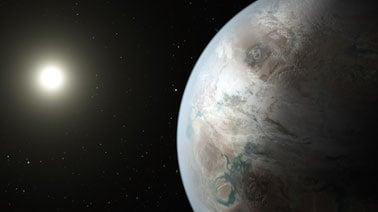
Learn about the Earth, life, and how we can search for life elsewhere in the universe. Are we alone in this universe? What new information and observations on exoplanets have we discovered? In the past decade, astronomers have made incredible advances in the discovery of planets outside our solar system. Thirty years ago, we knew only of the planets in our own solar system. Now we know of thousands circling nearby stars.

Self Paced
Self-Paced