EdX

Human Anatomy: Musculoskeletal Cases (edX)

Human Anatomy: Musculoskeletal Cases (edX)

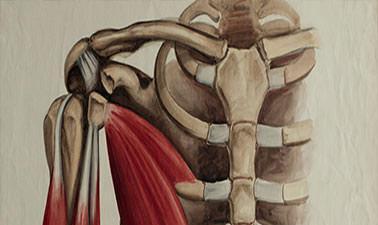
Learn the anatomy basic to understanding five musculoskeletal injuries commonly seen in primary care medicine and orthopedic clinical specialty practice. Follow hypothetical patients from injury to operating room. Human Anatomy: Musculoskeletal Cases invites students to join medical and basic science faculty at Harvard Medical School (HMS) to learn about musculoskeletal injuries commonly seen in clinical practice.

Class Deals by MOOC List - Click here and see EdX's Active Discounts, Deals, and Promo Codes.

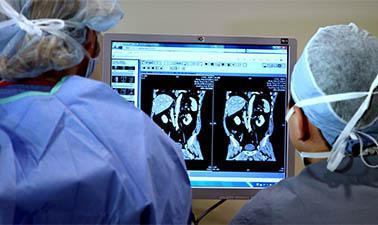
For each case, students visit the HMS Clinical Skills Center to observe the initial patient encounter and physical examination by an orthopedic surgeon. Following the patient encounter, students complete the interactive gross anatomy, histology and radiology learning sessions essential for understanding the case. The anatomy learning sessions include observing actual dissections in the Harvard Medical School anatomy laboratories revealing and explaining the human anatomy relevant for each clinical case.

After completing the case learning sessions, students review pertinent radiology images, commit to a tentative diagnosis from a list of differential diagnoses, and accompany the patient to a virtual operating room to observe the surgical treatment. In the virtual operating room, students observe narrated videos of actual surgical procedures.
Clinical content for each case is developed in close collaboration with leading orthopedic surgeons and radiologists at Brigham and Women’s Hospital.
This course will contain videos, photographs, and other content, including anatomical images and videos showing cadaver dissection, that some people may find offensive, disturbing or inappropriate.

What you'll learn

  • Fundamentals of musculoskeletal anatomy
  • Basics concepts and procedures of radiology
  • Anatomical structures related to five common injuries

Go to Class
MOOC List is learner-supported. When you buy through links on our site, we may earn an affiliate commission.

Related Courses

Irrigation Efficiency: more food with less water (edX) EdX
KU Leuven University,KULeuvenX

Irrigation Efficiency: more food with less water (edX)

Learn to improve the efficiency of different irrigation system components over varying scales in order to extract less water from our resources while producing more food. How can we meet the demands of our ever hungrier and thirstier world? Irrigation water uses 70% of the fresh water extraction worldwide to produce 40% of the food.

Self Paced
Self-Paced
Fundamentals of Neuroscience, Part 2: Neurons and Networks (edX) EdX
HarvardX,Harvard University

Fundamentals of Neuroscience, Part 2: Neurons and Networks (edX)

Discover what makes your brain tick in this second part of a four-part introductory series in Neuroscience. Neurons in isolation are fascinating and complicated, but the real magic of neuroscience happens in the interaction between neurons. In this course, we examine how neurons pass signals to one another and how complex dynamics can result from just a few neurons arranged in relatively simple circuits.

Self Paced
Self-Paced
Super-Earths And Life (edX) EdX
HarvardX,Harvard University

Super-Earths And Life (edX)

Learn about the Earth, life, and how we can search for life elsewhere in the universe. Are we alone in this universe? What new information and observations on exoplanets have we discovered? In the past decade, astronomers have made incredible advances in the discovery of planets outside our solar system. Thirty years ago, we knew only of the planets in our own solar system. Now we know of thousands circling nearby stars.

Self Paced
Self-Paced
Lessons from Ebola: Preventing the Next Pandemic (edX) EdX
HarvardX,Harvard University

Lessons from Ebola: Preventing the Next Pandemic (edX)

Understanding the context for the Ebola outbreak: What went right, what went wrong, and how we can all do better. Like no other event in recent history, the 2014 Ebola outbreak has made clear the fragility of existing health systems. While responding to the current epidemic is critical, we also have an opportunity to learn lessons to prevent the next global health catastrophe, forge partnerships across borders and disciplines, and demonstrate our commitment to value all human lives.

Self Paced
Self-Paced
Feeding a Hungry Planet: Agriculture, Nutrition and Sustainability (edX) EdX
SDGAcademyX,SDG Academy

Feeding a Hungry Planet: Agriculture, Nutrition and Sustainability (edX)

How do we create a healthy and sustainable diet for the growing world population? Agriculture is more than waving fields of wheat; our ability to grow food from existing natural resources – and without decimating those resources – is key to sustainably feeding the world. In this course, learn about food security worldwide, the effects of malnutrition, how we manage ecosystems that provide food resources and more.

Self Paced
Self-Paced
Introduction to Lifestyle Medicine (edX) EdX
DoaneX,Doane University

Introduction to Lifestyle Medicine (edX)

Gain a basic understanding of the main components of lifestyle medicine as well as the importance of using the coach approach when counseling patients about behavior change. Lifestyle factors including poor nutrition and physical inactivity are critical determinants of health, causing a pandemic of chronic diseases, premature death and unsustainable healthcare costs. Currently, 50 percent of Americans live with one or more chronic illnesses in which diet, exercise and stress play a key role.

Self Paced
Self-Paced
Algorithms and Data Structures Capstone (edX) EdX
University of California, San Diego,UC San DiegoX

Algorithms and Data Structures Capstone (edX)

Synthesize your knowledge of algorithms and biology to build your own software for solving a biological challenge. Building a fully-fledged algorithm to assemble genomes from DNA fragments on a real dataset is an enormous challenge with major demand in the multi-billion dollar biotech industry. In this capstone project, we will take the training wheels off and let you design your own optimized software program for genome sequencing.

Self Paced
Self-Paced
The Opioid Crisis in America (edX) EdX
HarvardX,Harvard University

The Opioid Crisis in America (edX)

Learn about the opioid epidemic in the United States, including information about treatment and recovery from opioid addiction. On average, 130 Americans die every day from an overdose of opioids, the class of drugs that includes heroin, hydrocodone, codeine, morphine, and fentanyl. Around 70% of all opioid overdose deaths involved a prescription opioid. Drug overdose is now the leading cause of accidental death in the United States — opioid addiction is driving this epidemic.

Self Paced
Self-Paced
Mental Health and Nutrition (edX) EdX
University of Canterbury,UCx

Mental Health and Nutrition (edX)

Learn what foods and nutrients should and should not be consumed to improve mental wellbeing and explore the fundamental role that nutrition plays in our mental health. Whether you are a health professional working with people with mental health challenges; someone who struggles daily with low mood, anxiety or stress; someone who supports others who face mental health struggles, or you are simply interested in the fascinating interface between food and brain health, this course is for you!

Self Paced
Self-Paced
Cell Biology: Mitochondria (edX) EdX
HarvardX,Harvard University

Cell Biology: Mitochondria (edX)

A human-centered approach to the fundamentals of cell biology with a focus on the power plants of the cell - mitochondria. The cell is a powerful case study to help us explore the functional logic of living systems. All organisms, from single-celled algae to complex multicellular organisms like us, are made up of cells. In this course, you will learn the how and why of biology by exploring the function of the molecular components of cells, and how these cellular components are organized in a complex hierarchy.

Self Paced
Self-Paced
Improving Global Health: Focusing on Quality and Safety (edX) EdX
HarvardX,Harvard University

Improving Global Health: Focusing on Quality and Safety (edX)

An introduction to the emerging field of global healthcare quality. Access to healthcare services is critical – but is it enough? We are at a critical inflection point in global health. We have seen improvements in access to care, but struggle to improve human health. A key component of this equation is quality of care. Improving access to healthcare is only as useful as the quality of care provided. Many agree that quality is important – but what is it? How do we define it? How do we measure it? And most importantly, how might we make it better?

Self Paced
Self-Paced