EdX

Formulación y nomenclatura de compuestos químicos (edX)

Formulación y nomenclatura de compuestos químicos (edX)

Aprenderemos cómo establecer las fórmulas de los compuestos químicos inorgánicos y orgánicos más usuales y las reglas para nombrarlos. Toda la materia está formada por elementos o compuestos químicos que son resultado de la combinación de átomos. Cada compuesto presenta una determinada composición que se corresponde con una fórmula y se identifica con un nombre.

Class Deals by MOOC List - Click here and see EdX's Active Discounts, Deals, and Promo Codes.

La formulación y la nomenclatura sirven para clasificar y nombrar las diferentes clases de sustancias. Este curso va dirigido a los alumnos que acceden a la Universidad, especialmente, aquellos que no han cursado Química y que requieren de los conocimientos básicos en estos aspectos.
En este curso aprenderás las normas que se utilizan para establecer las fórmulas de las sustancias y especies químicas, así como las reglas necesarias para nombrarlas. De este modo, podrás identificar y nombrar correctamente los compuestos químicos inorgánicos y orgánicos más comunes.
Las unidades del curso son:

  1. Introducción y nomenclatura de sustancias inorgánicas
  2. Sustancias binarias
  3. Sustancias terciarias
  4. Sustancias cuaternarias
  5. Introducción a la formulación y nomenclatura de compuestos orgánicos
  6. Hidrocarburos
  7. Funciones halogenadas
  8. Funciones oxigenadas
  9. Funciones nitrogenadas
  10. Compuestos con dos o más grupos funcionales

This course is part of the Fundamentos de Química XSeries

What you'll learn:

  • Las normas que se utilizan para establecer las fórmulas de las sustancias y especies químicas
  • Las reglas necesarias para nombrarlas

Go to Class
MOOC List is learner-supported. When you buy through links on our site, we may earn an affiliate commission.

Related Courses

Effects of Radiation: An Introduction to Radiation and Radioactivity (edX) EdX
OECx,Open Education Consortium - OEC

Effects of Radiation: An Introduction to Radiation and Radioactivity (edX)

There are many practical applications of radiation and radioactivity in various fields, including medical, scientific, and industrial activities. In some parts of Japan, people continue to experience environmental radioactivity caused by the nuclear accident at the Fukushima Daiichi Nuclear Power Plant on a daily basis. Understanding the basic science of radiation and radioactivity will form the base of the course, with specific examples from Japan and elsewhere in the world to illustrate concepts.

No sessions available
4 Weeks
Entropy and Equilibria (edX) EdX
HarvardX,Harvard University

Entropy and Equilibria (edX)

Expand your learning of chemistry and thermodynamics by exploring entropy, free energy, and equilibrium. Nature is driven by spontaneity — processes that move forward without external intervention. In this course, Entropy and Equilibria , you will explore the Second Law of Thermodynamics and get an introduction to the concepts of entropy and equilibrium states.

Self Paced
Self-Paced
Science & Cooking: From Haute Cuisine to Soft Matter Science (chemistry) (edX) EdX
HarvardX,Harvard University

Science & Cooking: From Haute Cuisine to Soft Matter Science (chemistry) (edX)

Top chefs and Harvard researchers explore how everyday cooking and haute cuisine can illuminate basic principles in chemistry, physics, and engineering. Learn about food molecules and how chemical reactions can affect food texture and flavor. During each module of this course, chefs reveal the secrets behind some of their most famous culinary creations — often right in their own restaurants. Inspired by such cooking mastery, the Harvard team will then explain the science behind the recipe.

Self Paced
Self-Paced
Reacciones rédox en la industria y la naturaleza (edX) EdX
Universitat Politècnica de València,UPValenciaX

Reacciones rédox en la industria y la naturaleza (edX)

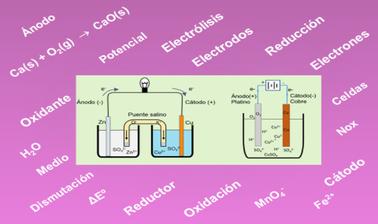
Las reacciones de oxidación-reducción son de las reacciones más frecuentes en el mundo que nos rodea. En el curso en línea las conocerás a traves de algunas de sus aplicaciones más comunes, como las pilas, las baterías o la forma de prevenir la corrosión. Las reacciones de oxidación-reducción (rédox) se explican como una transferencia de electrones entre diferentes especies químicas. Son, junto a los procesos ácido-base, los tipos de transformaciones químicas más habituales en el mundo que nos rodea.

Self Paced
Self-Paced
Basic Analytical Chemistry (edX) EdX
The University of Tokyo,UTokyoX

Basic Analytical Chemistry (edX)

Gain a physical understanding of the principles of analytical chemistry and their application in scientific research. Analytical chemistry takes a prominent position among all fields of experimental sciences, ranging from fundamental studies of Nature to industrial or clinical applications. Analytical chemistry covers the fundamentals of experimental and analytical methods and the role of chemistry around us.

Self Paced
Self-Paced
Chemical Thermodynamics I: Thermodynamics and Statistical Mechanics (edX) EdX
MIT,MITx

Chemical Thermodynamics I: Thermodynamics and Statistical Mechanics (edX)

Based on 5.601 Thermodynamics I, this course introduces learners to fundamental concepts in thermodynamics and statistical mechanics. Learners will develop an understanding of fundamental thermodynamic principles and how they arise from molecular scale system properties. This course is the first in a series of two thermodynamics courses that together, cover chemical thermodynamics, statistical mechanics, phase equilibria, and kinetics.

Apr 14th 2022
5-12 Weeks