Discovering Science: Chemical Products (FutureLearn)

Offered by University of Leeds,
Discovering Science: Chemical Products (FutureLearn)

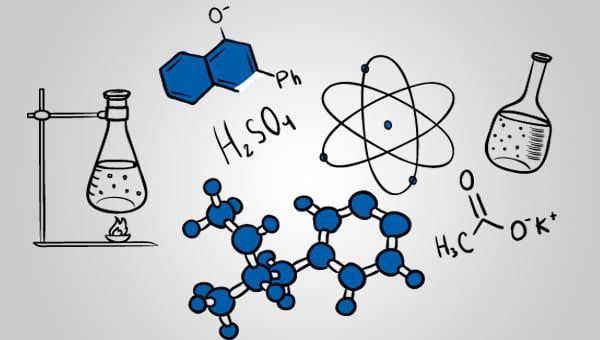
With chemistry providing us an endless amount of possibilities, what would you choose to develop? For centuries natural materials have been used by people to meet their daily needs. Discover how scientists are using their knowledge of the molecular structure of naturally occurring compounds to develop new and exciting materials. From clothing to tooth enamel, the possibilities are endless. You’ll also consider the chemistry behind the development of everyday consumer, and consider the ethics behind the products you use.

Class Deals by MOOC List - Click here and see FutureLearn's Active Discounts, Deals, and Promo Codes.

Syllabus

Week 1: From biomaterials to bio-inspired materials
Week 2: Consumer products

What will you achieve?
By the end of the course, you'll be able to...

  • Identify how an understanding of natural fibres has led to the development of synthetic fibres.
  • Explore how bio-inspired materials have the potential to make significant impacts on our everyday lives.
  • Investigate the chemistry behind everyday household products.
  • Explore the impacts of consumer products.
Go to Class
MOOC List is learner-supported. When you buy through links on our site, we may earn an affiliate commission.
Related Courses

Beer Quality: Foam (Coursera) Coursera
University of California, Davis

Beer Quality: Foam (Coursera)

As it is one of the most distinctive qualities of beer, achieving the perfect foam is a precise art. In this course, you’ll learn how foam affects the quality of beer. Designed for brewers of all skill levels, this online course is part of a comprehensive series where "The Pope of Foam”, Charlie Bamforth, guides you through the key markers of beer quality: flavor, foam, color/clarity, freshness and quality systems.

Jun 1st 2026
4 Weeks
Reasoning Across the Disciplines (Coursera) Coursera
University of North Carolina

Reasoning Across the Disciplines (Coursera)

Critical reasoning skills are a key success factor for students entering their first year of college. They must be able to think logically and form arguments. This course, designed with incoming college freshmen in mind but open to anyone, provides an essential grounding in critical reasoning skills. Faculty from multiple disciplines at the University of North Carolina at Chapel Hill offer guidance on applying critical thinking skills in the context of specific disciplines. By developing these skills, students will learn more, enjoy their courses more, and experience greater academic success.

May 18th 2026
5-12 Weeks
Discovering Science: Medicinal Chemistry (FutureLearn) FutureLearn
University of Leeds

Discovering Science: Medicinal Chemistry (FutureLearn)

What role does chemistry play in healthcare and our ability to diagnose and treat patients? Discover how chemotherapy has evolved, and some of the breakthroughs and developments chemists have made in the fight against cancer over the last 10 years. Diagnostic imaging examines how scientists learn about, and treat, the inside of the body without invasive surgery. You’ll explore how modern imaging techniques diagnose problems quickly and safely, and how diseases which may not previously have been picked up are identified.

Sep 23rd 2024
2 Weeks
Kitchen chemistry: Chemistry without a laboratory (FutureLearn) FutureLearn
University of East Anglia

Kitchen chemistry: Chemistry without a laboratory (FutureLearn)

Use your kitchen as a laboratory to learn about chemistry using everyday chemicals. The Kitchen Chemistry course is designed to explore some of the principles of chemistry. You will be encouraged to carry out your own experiments using materials that are often found in the home. If not they can be obtained from most supermarkets, pharmacies or hardware stores.

No sessions available
5-12 Weeks
Nanotechnology and Nanosensors, Part 1 (Coursera) Coursera
Technion - Israel Institute of Technology

Nanotechnology and Nanosensors, Part 1 (Coursera)

Nanotechnology and nanosensors are broad, interdisciplinary areas that encompass (bio)chemistry, physics, biology, materials science, electrical engineering and more. The present course will provide a survey on some of the fundamental principles behind nanotechnology and nanomaterials and their vital role in novel sensing properties and applications. The course will discuss interesting interdisciplinary scientific and engineering knowledge at the nanoscale to understand fundamental physical differences at the nanosensors.

May 18th 2026
5-12 Weeks
Predictive Models for Toxic Chemical Releases (Coursera) Coursera
University of California, Davis

Predictive Models for Toxic Chemical Releases (Coursera)

Discover the core principles of process safety and risk analysis in chemical engineering through our dynamic course. Gain expertise in modeling liquid and gas leaks, accurately assessing potential material releases, and calculating downwind exposures to toxic chemicals using state-of-the-art dispersion models. This course equips chemical engineers with essential skills to evaluate and mitigate hazardous concentrations effectively, ensuring industrial process safety.

Jun 8th 2026
4 Weeks
Beer Quality: Flavor (Coursera) Coursera
University of California, Davis

Beer Quality: Flavor (Coursera)

In this second course of the Beer Quality Series, you will learn about factors influencing the perception of flavor and the molecules that influence flavor. We also review methods of evaluating and measuring flavor, as well as methods of modifying flavor.

Jun 1st 2026
4 Weeks
Beer Quality: Color & Clarity (Coursera) Coursera
University of California, Davis

Beer Quality: Color & Clarity (Coursera)

Welcome to Beer Quality: Color and Clarity led by distinguished professor Charles Bamforth, Ph.D. In this course, you will learn about beer color and how it impacts a consumer's perception of beer. Also discussed are the scientific factors affecting beer color and clarity. The methods of measuring and altering beer color are presented, as are ways to troubleshoot problems with beer color.

Jun 1st 2026
4 Weeks
Ideal Gases (Coursera) Coursera
University of Colorado Boulder

Ideal Gases (Coursera)

Course 3 of Statistical Thermodynamics, Ideal Gases, explores the behavior of systems when intermolecular forces are not important. This done by evaluating the appropriate partition functions for translational, rotational, vibrational and/or electronic motion. We start with pure ideal gases including monatomic, diatomic and polyatomic species.

Jun 8th 2026
3 Weeks
Discovering Science: Global Challenges (FutureLearn) FutureLearn
University of Leeds

Discovering Science: Global Challenges (FutureLearn)

Can chemistry help to feed a growing population, or overcome increasing bacterial resistance? Find out how the Penicillin class of antibiotics has been a major breakthrough in the treatment of patients. However, with bacteria developing efficient ways of resisting antibiotic treatment, discover how scientists are treating patients with infections resulting from resistant bacteria.

Sep 23rd 2024
2 Weeks