Biology Everywhere Foundations (Coursera)

Biology Everywhere Foundations (Coursera)

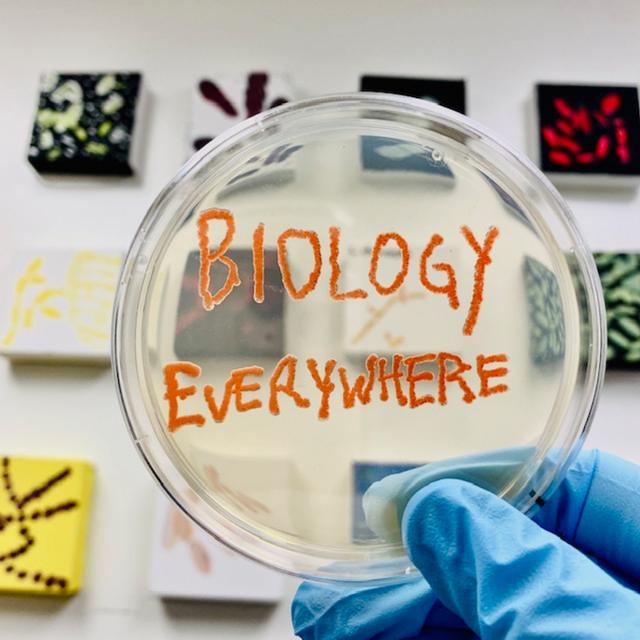
In this course, we will explore the nature of science and biology. We will discuss what the “biology everywhere” philosophy means and the history of the “biology everywhere” project. We will also discuss what science (and biology) are as a discipline of inquiry and how chemistry is foundational to understanding biology.

Class Deals by MOOC List - Click here and see Coursera's Active Discounts, Deals, and Promo Codes.

What You Will Learn

  • Describe the biology everywhere philosophy.
  • Explain how the process of science works and identify common misconceptions.
  • Explain and critique the criteria for identifying living and non-living entities.
  • Explain the relationship between chemistry and biology.

Course 1 of 4 in the Biology Everywhere Specialization

Syllabus

WEEK 1
Why biology everywhere?
In this module, we'll explore the principles behind biology everywhere and Dr. Peffer's motivation for writing Biology Everywhere:How the science of life matters to everyday life and the creation of this Coursera specialization.

WEEK 2
...because Science
In this module, we'll discuss the foundations of what science is (and isn't)

WEEK 3
What is life and consequently biology?
In this module we'll discuss what it means to be alive.

WEEK 4
Chemical basis of biology
Chemistry is foundational to understanding biology. In this module, we'll explore the chemical basis of biology.

Go to Class
MOOC List is learner-supported. When you buy through links on our site, we may earn an affiliate commission.

Related Courses

Epidemics - the Dynamics of Infectious Diseases (Coursera) Coursera
Pennsylvania State University

Epidemics - the Dynamics of Infectious Diseases (Coursera)

Not so long ago, it was almost guaranteed that you would die of an infectious disease. In fact, had you been born just 150 years ago, your chances of dying of an infectious disease before you've reached the tender age of 5 would have been extremely high. Since then, science has come a long way in understanding infectious diseases - what they are, how they spread, and how they can be prevented. But diseases like HIV/AIDS, Malaria, Tuberculosis, or the flu are still major killers worldwide, and novel emerging diseases are a constant threat to public health. In addition, the bugs are evolving. Antibiotics, our most potent weapon against bacterial infections, are losing their power because the bacteria are becoming resistant. In this course, we'll explore the major themes of infectious diseases dynamics.

Jun 22nd 2026
5-12 Weeks
Introduction to the Biology of Cancer (Coursera) Coursera
Johns Hopkins University

Introduction to the Biology of Cancer (Coursera)

Over 500,000 people in the United States and over 8 million people worldwide are dying every year from cancer. As people live longer, the incidence of cancer is rising worldwide and the disease is expected to strike over 20 million people annually by 2030. This open course is designed for people who would like to develop an understanding of cancer and how it is prevented, diagnosed, and treated.

Jun 22nd 2026
5-12 Weeks
Preventing Chronic Pain: A Human Systems Approach (Coursera) Coursera
University of Minnesota

Preventing Chronic Pain: A Human Systems Approach (Coursera)

Chronic pain is at epidemic levels and has become the highest-cost condition in health care. This course uses both creative and experiential learning to better understand chronic pain conditions and how they can be prevented through self-management in our cognitive, behavioral, physical, emotional, spiritual, social, and environmental realms.

Jun 22nd 2026
5-12 Weeks
Curanderismo: Global & Cultural Influences of Traditional Healing (Coursera) Coursera
University of New Mexico

Curanderismo: Global & Cultural Influences of Traditional Healing (Coursera)

As the last of four courses on Curanderismo, the art of Hispanic/Latino traditional medicine, this course focuses specifically on traditional healing using different techniques of many countries around the world. As an educational and cultural platform, this course will share a number of traditional global perspectives.

Jun 22nd 2026
5-12 Weeks
Sit Less, Get Active (Coursera) Coursera
University of Edinburgh

Sit Less, Get Active (Coursera)

Physical inactivity and sedentariness are “silent killers”. Do you feel like you spend too much time sitting? Do you feel like you would like to be more active? Are you unsure about how to incorporate physical activity into your daily life? We are here to help. Join us on a journey to learn about how to sit less and become more active. Use this FREE course to learn how to monitor your own activity and set physical activity goals.

Jun 28th 2026
3 Weeks
An Introduction to the U.S. Food System: Perspectives from Public Health (Coursera) Coursera
Johns Hopkins University

An Introduction to the U.S. Food System: Perspectives from Public Health (Coursera)

A food system encompasses the activities, people and resources involved in getting food from field to plate. Along the way, it intersects with aspects of public health, equity and the environment. In this course, we will provide a brief introduction to the U.S. food system and how food production practices and what we choose to eat impacts the world in which we live. Through several case studies, we will discuss some key historical and political factors that have helped shape the current food system and consider alternative approaches from farm to fork.

Jun 22nd 2026
5-12 Weeks
Medical Neuroscience (Coursera) Coursera
Duke University

Medical Neuroscience (Coursera)

Medical Neuroscience explores the functional organization and neurophysiology of the human central nervous system, while providing a neurobiological framework for understanding human behavior. In this course, you will discover the organization of the neural systems in the brain and spinal cord that mediate sensation, motivate bodily action, and integrate sensorimotor signals with memory, emotion and related faculties of cognition. The overall goal of this course is to provide the foundation for understanding the impairments of sensation, action and cognition that accompany injury, disease or dysfunction in the central nervous system. The course will build upon knowledge acquired through prior studies of cell and molecular biology, general physiology and human anatomy, as we focus primarily on the central nervous system.

Jun 22nd 2026
13-24 Weeks
The Science of the Solar System (Coursera) Coursera
Caltech

The Science of the Solar System (Coursera)

Learn about the science behind the current exploration of the solar system in this free class. Use principles from physics, chemistry, biology, and geology to understand the latest from Mars, comprehend the outer solar system, ponder planets outside our solar system, and search for habitability in our neighborhood and beyond. This course is generally taught at an advanced level assuming a prior knowledge of undergraduate math and physics, but the majority of the concepts and lectures can be understood without these prerequisites.

Jun 22nd 2026
5-12 Weeks