Introduction to Physical Chemistry (Coursera)

Introduction to Physical Chemistry (Coursera)

Chemical reactions underpin the production of pretty much everything in our modern world. But, what is the driving force behind reactions? Why do some reactions occur over geological time scales whilst others are so fast that we need femtosecond-pulsed lasers to study them? Ultimately, what is going on at the atomic level? Discover the answers to such fundamental questions and more on this course in introductory physical chemistry.

Class Deals by MOOC List - Click here and see Coursera's Active Discounts, Deals, and Promo Codes.

The course covers the key concepts of three of the principal topics in first-year undergraduate physical chemistry: thermodynamics, kinetics and quantum mechanics. These three topics cover whether or not reactions occur, how fast they go and what is actually going on at the sub-atomic scale.

Syllabus

WEEK 1
Thermodynamics I
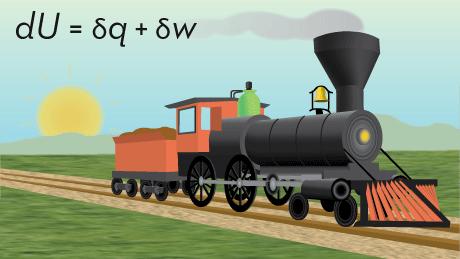
This module explores thermodynamic definitions, the zeroth law of thermodynamics and temperature, the first law of thermodynamics and enthalpy, reversible expansion, and heat capacity.

WEEK 2
Thermodynamics II
This module explores the second law of thermodynamics and entropy, the second law of thermodynamics and spontaneity, the second law of thermodynamics and equilibrium, the third law of thermodynamics and absolute entropy, and Hess' Law.

WEEK 3
Virtual Lab 1: Thermodynamics
This lab allows you to further explore thermodynamics.

WEEK 4
Chemical Kinetics I
This module explores the rate of reaction, stoichiometry and order, zero order reactions, first order reactions, second order reactions, determination of reaction order, and effect of temperature on reaction rate.

WEEK 5
Chemical Kinetics II
This module explores complex reactions, steady-state approximation, and catalysis.

WEEK 6
Virtual Lab 2: Kinetics
This lab allows you to further explore kinetics.

WEEK 7
Quantum Chemistry I
This module explores Planck's quantum of energy, particle nature of light, wave nature of matter, Heissenberg's uncertainty principle, the Schrödinger equation, free particle & the particle in a box, Born's interpretation of the wavefunction, and normalisation of the wavefunction.

WEEK 8
Virtual Lab 3: Particle in a Box
This experiment involves the visible absorption spectra of dyes.

WEEK 9
Quantum Chemistry II
This module explores hydrogen atoms, hydrogen atom quantum numbers, radial and angular solutions for hydrogenic atoms, and energy levels for hydrogenic atoms.

WEEK 10
Virtual Lab 4: Hydrogen Emission Spectroscopy
This lab allows you to further explore quantum chemistry.

Go to Class
MOOC List is learner-supported. When you buy through links on our site, we may earn an affiliate commission.

Related Courses

Non-Equilibrium Applications of Statistical Thermodynamics (Coursera) Coursera
University of Colorado Boulder

Non-Equilibrium Applications of Statistical Thermodynamics (Coursera)

Course 5 of Statistical Thermodynamics explores three different applications of non-equilibrium statistical thermodynamics. The first is the transport behavior of ideal gases, with some discussion of transport in dense gases and liquids. It starts with simple estimates of the transport properties of an ideas gas. It then introduces the Boltzmann Equation and describes the Chapman-Enskog solution of that equation in order to obtain the transport properties. It closes with a discussion of practical sources of transport properties.

Jun 22nd 2026
3 Weeks
Electron and Ion Beam Characterization (Coursera) Coursera
Arizona State University

Electron and Ion Beam Characterization (Coursera)

Electron and ion beams are widely used for both qualitative and quantitative analysis of semiconductor materials and devices. They can be used to image structures with sub-nm resolution and to provide information about elemental composition and dopant concentration. This course describes the fundamentals of electron and ion beam characterization and includes a project that analyzes the surface roughness of a solar cell.

Jun 22nd 2026
5-12 Weeks
Predictive Models for Toxic Chemical Releases (Coursera) Coursera
University of California, Davis

Predictive Models for Toxic Chemical Releases (Coursera)

Discover the core principles of process safety and risk analysis in chemical engineering through our dynamic course. Gain expertise in modeling liquid and gas leaks, accurately assessing potential material releases, and calculating downwind exposures to toxic chemicals using state-of-the-art dispersion models. This course equips chemical engineers with essential skills to evaluate and mitigate hazardous concentrations effectively, ensuring industrial process safety.

Jun 22nd 2026
4 Weeks
The Science of the Solar System (Coursera) Coursera
Caltech

The Science of the Solar System (Coursera)

Learn about the science behind the current exploration of the solar system in this free class. Use principles from physics, chemistry, biology, and geology to understand the latest from Mars, comprehend the outer solar system, ponder planets outside our solar system, and search for habitability in our neighborhood and beyond. This course is generally taught at an advanced level assuming a prior knowledge of undergraduate math and physics, but the majority of the concepts and lectures can be understood without these prerequisites.

Jun 22nd 2026
5-12 Weeks
Engineering Practices for Building Quality Software (Coursera) Coursera
University of Minnesota

Engineering Practices for Building Quality Software (Coursera)

Agile embraces change which means that team should be able to effectively make changes to the system as team learns about users and market. To be good at effectively making changes to the system, teams need to have engineering rigor and excellence else embracing change becomes very painful and expensive. In this course, you will learn about engineering practices and processes that agile and traditional teams use to make sure the team is prepared for change. In additional, you will also learn about practices, techniques and processes that can help team build high quality software. You will also learn how to calculate a variety of quantitative metrics related to software quality.

Jun 22nd 2026
4 Weeks
Iniciándome en la Química (Coursera) Coursera
Universidad Autónoma Metropolitana

Iniciándome en la Química (Coursera)

En este curso aprenderás los conocimientos básicos de química general que te permitirán tener una mejor comprensión del estudio de la química, así como de la naturaleza. A lo largo del curso aprenderás la clasificación de la materia y sus propiedades, las teorías atómicas, la clasificación periódica, los tipos de enlaces y nomenclatura inorgánica.

Jun 22nd 2026
4 Weeks
Particle Dynamics (Coursera) Coursera
Korea Advanced Institute of Science and Technology - KAIST

Particle Dynamics (Coursera)

This course teaches dynamics, one of the basic mechanics subjects of Mechanical Engineering. Students would be able to organize their knowledge about force and motion, work-energy, impulse-momentum in view of Newton's 2nd law and its integration over time and displacement. The Engineering Dynamics consists of two parts: particle dynamics and rigid body dynamics.

Jun 22nd 2026
13-24 Weeks
Theory of Angular Momentum (Coursera) Coursera
University of Colorado Boulder

Theory of Angular Momentum (Coursera)

This course can also be taken for academic credit as ECEA xxxx, part of CU Boulder’s Master of Science in Electrical Engineering degree. This course introduces the quantum mechanical concept of angular momentum operator and its relationship with rotation operator. It then presents the angular momentum operators, their eigenvalues and eigenfunctions. Finally, it covers the theory of angular momentum addition.

Jun 22nd 2026
3 Weeks
Renewable Energy Futures (Coursera) Coursera
University of Colorado Boulder

Renewable Energy Futures (Coursera)

Renewable energy's future is bright, yet uncertain. Will it continue to grow rapidly? Is current growth sufficient to achieve climate stabilization? How do related technologies, like electric vehicles and heat pumps, fit in? This course will shed light on the many confusing and at-times inconsistent claims and predictions for renewable energy.

Jun 22nd 2026
5-12 Weeks
Chemical Hazards: Toxicology & Reactivity (Coursera) Coursera
University of California, Davis

Chemical Hazards: Toxicology & Reactivity (Coursera)

This course aims to provide process safety experience for engineers, particularly relevant to chemical engineering but applicable to any field involving process operations. This course introduces you to the important, practical, value-added skills and information that will aid your career, or preparation for a career, in chemical process engineering.

Jun 22nd 2026
4 Weeks