Atmospheric Chemistry: Planets and Life Beyond Earth (FutureLearn)

Offered by University of Leeds,
Atmospheric Chemistry: Planets and Life Beyond Earth (FutureLearn)

Learn about the atmospheric chemistry of planets and celestial bodies and explore the possibility of finding life beyond Earth. Discover the extraordinary world of atmospheric chemistry. On this course you will learn about planetary atmospheres across our solar system and beyond. You will discover what an atmosphere is, how it’s formed, and how data collected from space missions is used to determine a planet’s atmosphere.

Class Deals by MOOC List - Click here and see FutureLearn's Active Discounts, Deals, and Promo Codes.

You’ll also look into the factors needed to support life, explore the possibility of life beyond Earth and start the search for habitable planets. You’ll understand how atmospheric chemistry is communicated in the media and get a flavour of one of the most fascinating subjects explored during an undergraduate degree in Chemistry.

What topics will you cover?

  • Planetary observation using active and passive space missions.
  • How scientists analyse the composition of planetary atmospheres.
  • How atmospheres are created and evolve.
  • The factors needed to support life.
  • The search for habitable planets outside our solar system.

Learning on this course
You can take this self-guided course and learn at your own pace. On every step of the course you can meet other learners, share your ideas and join in with active discussions in the comments.

What will you achieve?
By the end of the course, you'll be able to...

  • Explore the diversity of planetary atmospheres across the solar system.
  • Investigate what scientific data on the composition of planetary atmospheres can be gathered from Earth and from space probes.
  • Reflect on the search for habitable planets.
  • Assess how the science of planetary atmospheres is presented in the media.

Who is the course for?
The course is for anyone with a general interest in atmospheric chemistry but it will be particularly useful for students at schools and colleges who want to study chemistry at university. The course is part of the Going to University collection and completing it can help improve your university application by broadening your chemistry knowledge and developing your independent learning skills. The course can also be used as a teachers’ classroom enrichment resource.

Go to Class
MOOC List is learner-supported. When you buy through links on our site, we may earn an affiliate commission.

Related Courses

Our Solar System and Beyond: Teaching Primary Science (FutureLearn) FutureLearn
Royal Observatory Greenwich

Our Solar System and Beyond: Teaching Primary Science (FutureLearn)

Improve your knowledge of space science to help you deliver primary science lessons that are out of this world. Understanding the Solar System and how to teach it can be a tricky business. Fortunately astronomers at the Royal Observatory Greenwich are here to help. In this online course, they’ll help you understand space, address some common misconceptions, and introduce you to the science and people behind real-life, cutting-edge discoveries.

Available now
3 Weeks
Mastering bitumen for better roads and innovative applications (Coursera) Coursera
École des Ponts ParisTech

Mastering bitumen for better roads and innovative applications (Coursera)

During the four coming weeks, best experts in bitumen will bring you their knowledge and experience to build a strong understanding of today’s realities and new perspectives on the future of bitumen. Total is the European leader on bitumen markets. Innovation has always been the key to sustainability and durability in the products they develop. Their main objective here is to share technical knowledge and experience to insure bitumen are being used in the most effective and efficient ways for their different applications in road works.

Jun 15th 2026
4 Weeks
Moons (FutureLearn) FutureLearn
The Open University

Moons (FutureLearn)

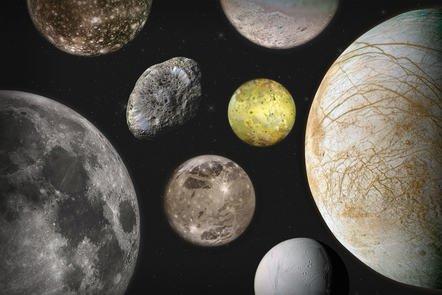
Explore the many moons of our Solar System. Find out what makes them special and ask whether we send humans to our Moon again. Discover the amazing diversity of moons in our Solar System. There are lots of moons in our Solar System. The Earth is the only planet with just a single moon. Some are bigger than ours. Many are much smaller. Some moons have ongoing volcanic eruptions. Others have rivers of liquid methane. A small handful may even be home to primitive life. This online course will allow you to explore the rich diversity of moons in our Solar System.

Mar 4th 2024
5-12 Weeks
Ideal Gases (Coursera) Coursera
University of Colorado Boulder

Ideal Gases (Coursera)

Course 3 of Statistical Thermodynamics, Ideal Gases, explores the behavior of systems when intermolecular forces are not important. This done by evaluating the appropriate partition functions for translational, rotational, vibrational and/or electronic motion. We start with pure ideal gases including monatomic, diatomic and polyatomic species.

Jun 22nd 2026
3 Weeks
Iniciándome en la Química (Coursera) Coursera
Universidad Autónoma Metropolitana

Iniciándome en la Química (Coursera)

En este curso aprenderás los conocimientos básicos de química general que te permitirán tener una mejor comprensión del estudio de la química, así como de la naturaleza. A lo largo del curso aprenderás la clasificación de la materia y sus propiedades, las teorías atómicas, la clasificación periódica, los tipos de enlaces y nomenclatura inorgánica.

Jun 22nd 2026
4 Weeks
Materials Data Sciences and Informatics (Coursera) Coursera
Georgia Institute of Technology

Materials Data Sciences and Informatics (Coursera)

This course aims to provide a succinct overview of the emerging discipline of Materials Informatics at the intersection of materials science, computational science, and information science. Attention is drawn to specific opportunities afforded by this new field in accelerating materials development and deployment efforts.

Jun 15th 2026
5-12 Weeks
Discovering Science: Atmospheric Chemistry (FutureLearn) FutureLearn
University of Leeds

Discovering Science: Atmospheric Chemistry (FutureLearn)

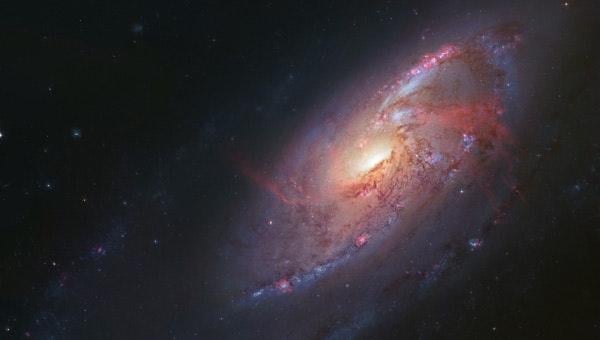
What can we learn about Earth, and other planets in and beyond our solar system, by studying their atmospheres? Learn about the role that radiation and greenhouse gases play in our understanding of atmospheric chemistry. As levels of CO2 in the atmosphere increase, you will discover the solutions scientists are exploring to reduce levels. And discover how missions to other planets and moons in our solar system are revealing extraordinarily diverse atmospheres.

Sep 23rd 2024
2 Weeks
Sustainable Development in the 21st Century with Ban Ki-moon (Coursera) Coursera
Yonsei University

Sustainable Development in the 21st Century with Ban Ki-moon (Coursera)

The course is designed for people that want to learn about the latest development agenda the international community agreed to achieve by 2030. Structured around the five pillars of Agenda 2030 – people, prosperity, planet, peace and justice, and partnership, students will learn that these pillars are interconnected and need to be integrated in practical policy-making and operational activities for development, in both developed and developing country settings.

Jun 22nd 2026
5-12 Weeks
Foundations of Science for Undergraduate Degrees (FutureLearn) FutureLearn
The University of Nottingham

Foundations of Science for Undergraduate Degrees (FutureLearn)

Develop the right skills for study and assessment in higher education while refreshing your core science knowledge.Give yourself an advantage for starting a university degree. With interruptions to education occurring all the time, many school students intending to go to university in the coming years may not feel prepared.

Aug 23rd 2021
5-12 Weeks