EdX

El enlace químico y las interacciones moleculares (edX)

El enlace químico y las interacciones moleculares (edX)

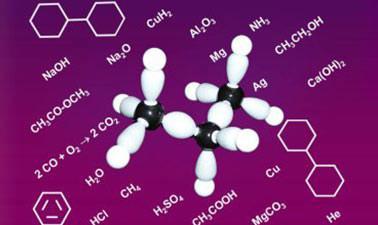
Aprenderemos a identificar los tipos de enlace presentes en los compuestos químicos y a relacionar la estructura de éstos con sus propiedades. Los materiales que utilizamos diariamente y los objetos que nos rodean están formados por sustancias químicas cuyas propiedades, aplicaciones y transformaciones dependen del tipo de enlace que las caracteriza. El tipo de enlace condiciona la interacción entre las moléculas de un compuesto.

Class Deals by MOOC List - Click here and see EdX's Active Discounts, Deals, and Promo Codes.

El estudio del enlace típico de un compuesto y de las interacciones entre sus moléculas es competencia de la Química, una materia básica que se estudia en muchas titulaciones universitarias. Este curso va dirigido a los alumnos que acceden a la Universidad, especialmente aquellos que no han cursado Química y que requieren de los conocimientos básicos en estos aspectos.

En este curso aprenderás a identificar los tipos de enlace que pueden presentarse en los diferentes compuestos químicos y a predecir qué tipo de enlace predomina en un compuesto en base a las características de los elementos que lo constituyen. Así mismo, podrás deducir qué enlace presenta un compuesto observando sus características y comportamiento. Profundizarás en el estudio del enlace covalente y entenderás la relación entre las interacciones moleculares y las propiedades físicas de los compuestos. En definitiva, adquirirás las habilidades necesarias para reconocer todo tipo de enlaces y relacionar la estructura de un compuesto con las propiedades físicas que manifiesta.
En el curso trataremos:

  • Enlace químico y tipos
  • Enlace iónico y metálico
  • Enlace covalente. Geometría y propiedades de las moléculas
  • Interacciones moleculares

This course is part of the Fundamentos de Química XSeries

What you'll learn:

  • Aprenderás a identificar los tipos de enlace que pueden presentarse en los diferentes compuestos químicos
  • Aprenderás a predecir qué tipo de enlace predomina en un compuesto en base a las características de los elementos que lo constituyen
  • Podrás deducir qué enlace presenta un compuesto observando sus características y comportamiento
  • Profundizarás en el estudio del enlace covalente y entenderás la relación entre las interacciones moleculares y las propiedades físicas de los compuestos
Go to Class
MOOC List is learner-supported. When you buy through links on our site, we may earn an affiliate commission.

Related Courses

Pre-University Chemistry (edX) EdX
Delft University of Technology,DelftX

Pre-University Chemistry (edX)

Prepare for university by reviewing the science and technology of chemistry. Become familiar with the way chemistry and chemistry-related topics are taught at university level. Chemistry is the fundamental discipline that helps us explain properties, structure, and behavior of matter. A solid foundation in chemistry is of importance in addressing today’s challenges with innovative chemical technological solutions.

Self Paced
5-12 Weeks
Entropy and Equilibria (edX) EdX
HarvardX,Harvard University

Entropy and Equilibria (edX)

Expand your learning of chemistry and thermodynamics by exploring entropy, free energy, and equilibrium. Nature is driven by spontaneity — processes that move forward without external intervention. In this course, Entropy and Equilibria , you will explore the Second Law of Thermodynamics and get an introduction to the concepts of entropy and equilibrium states.

Self Paced
Self-Paced
Science in Art: The Chemistry of Art Materials and Conservation (edX) EdX
Trinity College, Hartford

Science in Art: The Chemistry of Art Materials and Conservation (edX)

Learn the chemistry behind the visual arts, and how an understanding of art’s material properties helps preserve our cultural heritage. How do artists create visual effects? In order to create an artistic impression, artists select materials that allow image formation, and that lend color, emphasis, shape, and size to the object created.

No sessions available
5-12 Weeks
Synchrotrons and X-Ray Free Electron Lasers (part 1) (edX) EdX
École Polytechnique Fédérale de Lausanne,EPFLx

Synchrotrons and X-Ray Free Electron Lasers (part 1) (edX)

The first MOOC to provide an extensive introduction to synchrotron and XFEL facilities and associated techniques. Are you interested in investigating materials and their properties with unsurpassed accuracy and fidelity? Synchrotrons and XFELs count as Science’s premier microscopic tool in scientific endeavours as diverse as molecular biology, environmental science, cultural heritage, catalytical chemistry, and the electronic properties of novel materials, to name but a few examples.

Self Paced
Self-Paced
Chemical Thermodynamics I: Thermodynamics and Statistical Mechanics (edX) EdX
MIT,MITx

Chemical Thermodynamics I: Thermodynamics and Statistical Mechanics (edX)

Based on 5.601 Thermodynamics I, this course introduces learners to fundamental concepts in thermodynamics and statistical mechanics. Learners will develop an understanding of fundamental thermodynamic principles and how they arise from molecular scale system properties. This course is the first in a series of two thermodynamics courses that together, cover chemical thermodynamics, statistical mechanics, phase equilibria, and kinetics.

Apr 14th 2022
5-12 Weeks
Introduction to Solid State Chemistry (edX) EdX
MIT,MITx

Introduction to Solid State Chemistry (edX)

Learn chemical principles by examining materials with examples from energy generation and storage to emerging technologies. This first-year University chemistry course explores the basic principles of the chemical bond by studying the properties of solids. Properties such as stiffness, electrical conductivity, thermal expansion, strength, and optical properties are the vehicle by which you can learn a great deal of practical chemistry.

Sep 6th 2023
13-24 Weeks
Effects of Radiation: An Introduction to Radiation and Radioactivity (edX) EdX
OECx,Open Education Consortium - OEC

Effects of Radiation: An Introduction to Radiation and Radioactivity (edX)

There are many practical applications of radiation and radioactivity in various fields, including medical, scientific, and industrial activities. In some parts of Japan, people continue to experience environmental radioactivity caused by the nuclear accident at the Fukushima Daiichi Nuclear Power Plant on a daily basis. Understanding the basic science of radiation and radioactivity will form the base of the course, with specific examples from Japan and elsewhere in the world to illustrate concepts.

No sessions available
4 Weeks
Food Fermentation: The Science of Cooking with Microbes (edX) EdX
HarvardX,Harvard University

Food Fermentation: The Science of Cooking with Microbes (edX)

In Food Fermentation: The Science of Cooking with Microbes, explore the history of food and beverage fermentations and how tiny microbes change and enhance flavors, aromas, and tastes in our food. What’s living in your food? Many of the foods that we consume daily owe their distinct characteristics and flavors to microbes, specifically through a biochemical process of fermentation (using bacteria, fungi, and other microorganisms to produce diverse foods).

Self Paced
Self-Paced
The Chemistry of Life (edX) EdX
Kyoto University,KyotoUx

The Chemistry of Life (edX)

Learn how to generate ideas at the interface between chemistry and biology. Chemistry and biology are traditionally taught as separate subjects at the high school level, where students memorize fundamental scientific principles that are universally accepted. However, at the university level and in industry, we learn that science is not as simple as we once thought. We are constantly confronted by questions about the unknown and required to use creative, integrated approaches to solve these problems.

Self Paced
Self-Paced
Food for Thought (edX) EdX
McGill,McGillX

Food for Thought (edX)

A course that offers a scientific framework for understanding food and its impact on health and society from past to present. Eating and understanding the nuances of food has become a complicated and often confusing experience. Virtually every day brings news about some “miracle food” that we should be consuming or some "poison" we should be avoiding.

No sessions available
5-12 Weeks