Introduction to Chemistry: Reactions and Ratios (Coursera)

Offered by Duke University,
Introduction to Chemistry: Reactions and Ratios (Coursera)

This is an introductory course for students with limited background in chemistry; basic concepts involved in chemical reactions, stoichiometry, the periodic table, periodic trends, nomenclature, and chemical problem solving will be emphasized with the goal of preparing students for further study in chemistry as needed for many science, health, and policy professions.

Class Deals by MOOC List - Click here and see Coursera's Active Discounts, Deals, and Promo Codes.

Syllabus

WEEK 1
Introduction
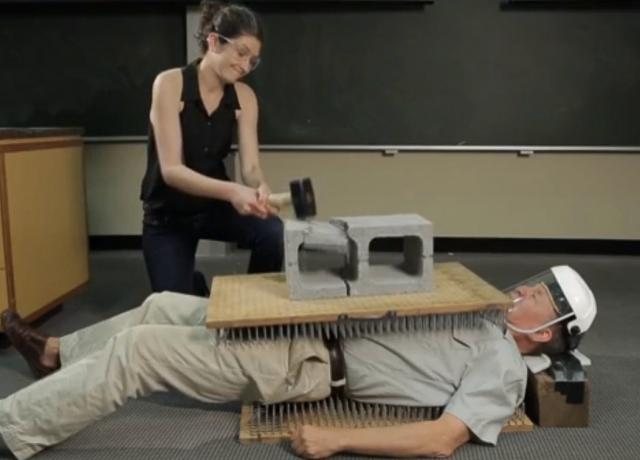
Over the seven weeks of Introduction to Chemistry: Reactions and Ratios, you will be able to progress from a most basic knowledge of matter and energy to solving interesting real world chemical reaction stoichiometry problems. Each lesson in the course introduces some new concepts that allow you to build upon the material from previous lessons, so completing the coursework in the order that it is delivered will be most beneficial for developing a thorough understanding of synthesized information. This course is intended for students with very little background in the subject, but a strong foundation in algebra is needed to solve some of the problems.In the first unit, the course will first introduce the basic concepts of scientific methods and measurement. Then we will talk about matter, energy, and stoichiometry. Last, we prepared several lab demonstrations by Dr. Ken Lyle. I hope that you are as excited as I am to this amazing world of chemistry! Good luck!

WEEK 2
Matter and Energy
This week we will continue our explorations of matter and energy. We will discuss the sub-atomic particles that govern chemical reactions, isotopes, anions, and cations. We will learn how to name compounds, calculate formula masses, convert between grams and moles, examine periodic trends, and more! An advanced problems set is posted now; that is a longer assignment and is optional unless you would like to be eligible for the Honor’s Track. You can still earn a regular verified certificate without completing the advanced problem sets, so please be sure to keep working on the normal weekly exercises.

WEEK 3
Compounds
In this week's videos and exercises (aka quizzes), we will learn how to name compounds, calculate formula masses, convert between grams and moles, examine periodic trends, and more! I hope you enjoyed the last two weeks of learning chemistry. Great work on watching videos, posting on the discussion forum and submitting your exercises!

WEEK 4
Chemical Composition and Reactions
Week 4 for Introduction to Chemistry: Reactions and Ratios is about to begin! This week will be filled with introductions to chemical compositions, chemical reaction terminology, and reaction calculations. If any of the following questions interest you, then watching this week's videos and doing some practice problems are probably a good way to get started! How much sodium is in my diet? What amount of pollutants are in drinking water? How much iron is in iron ore for steel production? These of the types of problems you will be able to address this week.

WEEK 5
Solutions and Solubility Rules
In the past five weeks of the course, we have learned concepts, rules, and skills, including but not limited to: the definitions of atoms, elements, molecules, and compounds; energy changes; Coulomb’s Law, molecular stoichiometry; atomic structures; periodic trends; the mole; compounds; atomic and molecular masses; molecular stoichiometry; balancing chemical equations. In this coming week, we will be discussing aqueous solutions, solubility rules, precipitations and electrolytes! We are also going to learn the first type of chemical reaction equation in this course: Dissolutions.

WEEK 6
Acid-base and Redox Reactions
We are almost at the end of our course! I hope this has been a rewarding experience for you because I know that the course is not an easy one and it is relatively long. So kudos to everyone who has made it this far! Week 6 for Introduction to Chemistry: Reactions and Ratios will include very basic introductions to acid-base and redox reactions. We will also practice combining what we know from previous weeks to complete reaction calculations.

WEEK 7
Final Exam
Congratulations on making through to the final week of the course! It was not an easy journey for the past six weeks with dozens of videos, exercises, problem sets, and forum discussions. Kudos to the many of you who completed the honors lessons on top of the other work. I am proud of all of you!


Go to Class
MOOC List is learner-supported. When you buy through links on our site, we may earn an affiliate commission.

Related Courses

Fundamentals of Macroscopic and Microscopic Thermodynamics (Coursera) Coursera
University of Colorado Boulder

Fundamentals of Macroscopic and Microscopic Thermodynamics (Coursera)

Course 1 first explores the basics of both macroscopic and microscopic thermodynamics from a postulatory point of view. In this view, the meaning of temperature, thermodynamic pressure and chemical potential are especially clear and easy to understand. In addition, the development of the Fundamental Relation and its various transformations leads to a clear path to property relations and to the concept of ensembles needed to understand the relationship between atomic and molecular structural properties and macroscopic properties.

Jun 8th 2026
3 Weeks
Thermodynamique : applications (Coursera) Coursera
École Polytechnique Fédérale de Lausanne

Thermodynamique : applications (Coursera)

Ce cours complète le MOOC « Thermodynamique : fondements » qui vous permettra de mettre en application les concepts fondamentaux de la thermodynamique. Pour atteindre cet objectif, le Professeur J.-Ph. Ansermet de l’Ecole Polytechnique Fédérale de Lausanne s’est entouré d’experts et de spécialistes des différents domaines d’application provenant de diverses institutions partenaires du réseau RESCIF. Vous pourrez ainsi voir l’usage de la thermodynamique en chimie, en ingénierie et en physique.

Jun 8th 2026
5-12 Weeks
Energy and Environment (Coursera) Coursera
Dartmouth College

Energy and Environment (Coursera)

This course deals with both renewable and non-renewable energy. By applying scientific principles and considering real-world examples, you will examine: 1. Non-renewable fossil fuels with a focus on coal, petroleum and natural gas and the benefits and consequences of using each. 2. Renewable fuels such as wind and solar and identify that even renewable “green” energy sources have impacts as well as benefits. 3. Biodiversity and global change, which are the integrating units of environmental science.

Jun 8th 2026
4 Weeks
Electrodynamics: An Introduction (Coursera) Coursera
Korea Advanced Institute of Science and Technology - KAIST

Electrodynamics: An Introduction (Coursera)

The depth and breadth of electromagnetism, the foundation for many fields including materials science, electrical engineering, and physical chemistry, requires a long, steep, and steady learning curve. This course aims to bridge the gap between the fundamental principles taught in electromagnetism and its practical application to specific fields such as materials, physics, and chemistry related to energy storage and harvesting.

Jun 8th 2026
5-12 Weeks
Planet Earth ... and You! (Coursera) Coursera
University of Illinois at Urbana-Champaign

Planet Earth ... and You! (Coursera)

Earthquakes, volcanoes, mountain building, ice ages, landslides, floods, life evolution, plate motions—all of these phenomena have interacted over the vast expanses of deep time to sculpt the dynamic planet that we live on today. Planet Earth presents an overview of several aspects of our home, from a geological perspective. We begin with earthquakes—what they are, what causes them, what effects they have, and what we can do about them. We will emphasize that plate tectonics—the grand unifying theory of geology—explains how the map of our planet's surface has changed radically over geologic time, and why present-day geologic activity—including a variety of devastating natural disasters such as earthquakes—occur where they do. We consider volcanoes, types of eruptions, and typical rocks found there.

Jun 1st 2026
5-12 Weeks
Education on climate change, energy and ecological footprint (Coursera) Coursera
Inter-American Development Bank - IDB

Education on climate change, energy and ecological footprint (Coursera)

This course explores key concepts of climate change, such as climate, terrestrial systems, and energy. Their relationships are analyzed, and a diagnosis is proposed to promote school awareness of the short-term and long-term causes and effects of climate change. Additionally, the identification of local and global actions to mitigate it is encouraged.

Jun 8th 2026
2 Weeks
Grammar and Punctuation (Coursera) Coursera
University of California, Irvine

Grammar and Punctuation (Coursera)

Course 1: Grammar and Punctuation. Do you need to review English grammar? Have you forgotten the grammar you once studied? If so, this course is perfect for you. The first course in this specialization is a refresher on some tools needed for good writing. It will help prepare you for the other courses. You will need about 10 hours to complete this first course. Writing is a skill and to learn a skill well, you need to practice. In this course, you will watch short video lectures and then practice and discuss what you have learned. Make sure you take good notes and use the peer discussions to ask questions. Then you'll be able to remember the rules you learn in this course when you start writing essays in the next course.

Jun 1st 2026
4 Weeks
Oil & Gas Industry Operations and Markets (Coursera) Coursera
Duke University

Oil & Gas Industry Operations and Markets (Coursera)

The oil and gas industry has an enormous impact on all aspects of daily life. Individuals, corporations, and national governments make financial and policy decisions based on the cost, use, and availability of these two natural resources. This two-week course looks at the two most fundamental aspects of the oil and gas industry, its operations and markets, each of which is addressed as a separate module in the course.

Jun 10th 2026
2 Weeks
Chemical Biology (Coursera) Coursera
University of Geneva

Chemical Biology (Coursera)

Chemical biology is a burgeoning field that has rapidly risen to prominence. This surge of interest has been fuelled by chemical biology’s applicability to understanding critical processes in live cells or model organisms in real time. This success has arisen because chemical biology straddles a nexus between chemistry, biology, and physics. Thus, chemical biology can harness rapid chemistry to observe or perturb biological processes, that are in turn reported using physical assays, all in an otherwise unperturbed living entity. Although its boundaries are endless, the multidisciplinary nature of chemical biology can make the field seem daunting; we beg to differ! Here, we deconstruct chemical biology into its core components, and repackage the material.

Jun 8th 2026
5-12 Weeks
Comprendre l'écologie, pour une économie innovante (Coursera) Coursera
ESCP Europe

Comprendre l'écologie, pour une économie innovante (Coursera)

Conçu conjointement par le think-tank Ecolo-Ethik et ESCP Europe, ce MOOC se propose de vous aider à dépasser les idées reçues sur l’écologie, dans le souci d’une démarche ouverte et multiple. A ce titre, de grands experts reconnus interviendront pour illustrer, approfondir et enrichir les différentes thématiques.

Jun 8th 2026
5-12 Weeks
Fundamentals of Credit Analysis (Coursera) Coursera
Starweaver

Fundamentals of Credit Analysis (Coursera)

This foundational course is focused on understanding and evaluating credit quality in corporate issuers. It examines the methods that analysts can use to determine credit quality as it relates to debt issues. In particular, we examine what credit risk is, how to use credit ratings in evaluating borrowers, the 4 Cs of traditional credit analysis, and the ratios and financial analysis metrics that analysts draw on to evaluate credit risk and pricing in bonds.

Jun 8th 2026
1 Week