Take the Lead on Healthcare Quality Improvement (Coursera)

Take the Lead on Healthcare Quality Improvement (Coursera)

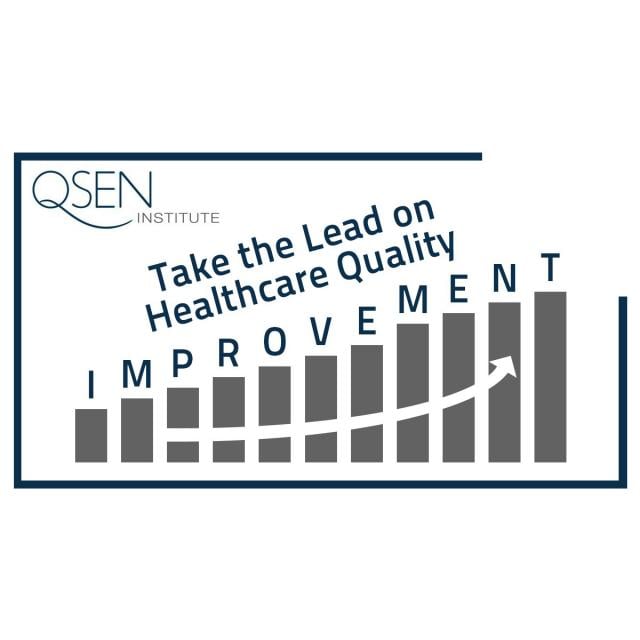
In this course you will learn about the importance of quality in healthcare and how you can contribute by implementing a quality improvement (QI) project to improve processes of care and patient outcomes. You will learn about powerful tools to add to your QI ‘toolbox’ during short lectures and reflective exercises. You will apply these tools to the implementation of a QI project in your own practice setting or an area of personal improvement. At the completion of the course, you will have a storyboard that captures your QI project success to share with others.

Class Deals by MOOC List - Click here and see Coursera's Active Discounts, Deals, and Promo Codes.

The QI project will be considered within the context of interprofessional teams and from a systems perspective. The objective of this course is to empower you, the working healthcare professional, to improve your knowledge and skills in the science of quality improvement so that you can take action in your own clinical setting to improve the quality of care for your patients and their families.
Go to Class
MOOC List is learner-supported. When you buy through links on our site, we may earn an affiliate commission.

Related Courses

Case studies in business analytics with ACCENTURE (Coursera) Coursera
ESSEC Business School

Case studies in business analytics with ACCENTURE (Coursera)

This course is RESTRICTED TO LEARNERS ENROLLED IN Strategic Business Analytics SPECIALIZATION as a preparation to the capstone project. During the first two MOOCs, we focused on specific techniques for specific applications. Instead, with this third MOOC, we provide you with different examples to open your mind to different applications from different industries and sectors. The objective is to give you an helicopter overview on what's happening in this field. You will see how the tools presented in the two previous courses of the Specialization are used in real life projects.

Jun 29th 2026
3 Weeks
Ebola: Essential knowledge for health professionals (Coursera) Coursera
University of Amsterdam,Universiteit Utrecht

Ebola: Essential knowledge for health professionals (Coursera)

March 2014 marked the starting point of the largest outbreak of Ebola virus disease in history. Although the disease seems to be on a decrease, we are not there yet and new outbreaks will surely emerge. New efforts to combat the outbreak are necessary. This is why we developed this online course about Ebola, targeted at health professionals across the world. In this course you will cover the fundamental knowledge any health professional should have with expected or confirmed cases or a general interest in the Ebola disease.

Jun 29th 2026
5-12 Weeks
Vital Signs: Understanding What the Body Is Telling Us (Coursera) Coursera
University of Pennsylvania

Vital Signs: Understanding What the Body Is Telling Us (Coursera)

The vital signs – heart rate, blood pressure, body temperature, respiration rate, and pain – communicate important information about the physiological status of the human body. In this six-part course we explore the anatomy and physiology underlying the vital signs so that you will develop a systematic, integrated understanding of how the body functions.

Jun 29th 2026
5-12 Weeks
Medical Technology and Evaluation (Coursera) Coursera
University of Minnesota

Medical Technology and Evaluation (Coursera)

Innovations in medical technologies are one of the leading areas of economic growth in the world. Whether new technologies take the form of pharmaceutical, medical device, biotechnology, information technology of some combination of these innovations, the opportunities for both private enterprise and social welfare are substantial. However, these innovations are not without cost, and require reimbursement from either a privately or publicly financed health care delivery system to enter the marketplace.

Jun 29th 2026
4 Weeks
Community Change in Public Health (Coursera) Coursera
Johns Hopkins University

Community Change in Public Health (Coursera)

In bringing about behavior change in public health, we often focus on the individual mother, student, or farmer. We should not forget the community structure and norms constrain for encouraging individual health behaviors. This course examines the community context of the changes needed to promote the public’s health. We begin by examining the various definitions of ‘community’ and the processes by which we ‘diagnose’ or seek to understand the structure and characteristics of different types of communities.

Jun 29th 2026
5-12 Weeks
Understanding Prostate Cancer (Coursera) Coursera
Johns Hopkins University

Understanding Prostate Cancer (Coursera)

Welcome to Understanding Prostate Cancer. My name is Ken Pienta, Professor of Urology and Oncology at the Johns Hopkins School of Medicine. I have been studying prostate cancer and treating patients with prostate cancer for over 25 years. I've put together this course in order to introduce you to the essentials of prostate cancer. This Understanding Prostate Cancer Course should be helpful to anyone who wants to develop a deeper understanding of prostate cancer biology and treatment. It should be useful to students who are interested in a deeper understanding of the science of cancer.

Jun 29th 2026
3 Weeks
Global Health at the Human-Animal-Ecosystem Interface (Coursera) Coursera
University of Geneva

Global Health at the Human-Animal-Ecosystem Interface (Coursera)

The University of Geneva, Institute Pasteur, University of Montreal and Centre Virchow-Villermé/University Paris Descartes welcome you to this new MOOC on "Global Health at the Human-Animal-Ecosystem Interface"! Over the next 5 weeks, you will explore and learn about some of the major and current Global Health Challenges at the Human-Animal-Ecosystem Interface: zoonotic emerging infections (e.g. Ebola, Nipah, MERS, Avian Influenza), antimicrobial resistance, neglected tropical diseases (e.g. rabies, leishmaniasis, zoonotic TB), snakebite and other human-animal conflicts etc.

Jun 29th 2026
5-12 Weeks
MRI Fundamentals (Coursera) Coursera
Korea Advanced Institute of Science and Technology - KAIST

MRI Fundamentals (Coursera)

Welcome! In this course learners will develop expertise in basic magnetic resonance imaging (MRI) physics and principles and gain knowledge of many different data acquisition strategies in MRI. In particular, learners will get to know what is magnetic resonance phenomenon, how magnetic resonance signals are generated, how an image can be formulated using MRI, how soft tissue contrast can change with imaging parameters.

Jun 29th 2026
5-12 Weeks
Public Involvement in Research (Coursera) Coursera
Imperial College London

Public Involvement in Research (Coursera)

This course focuses on participatory approaches in research, known as 'public involvement' in the UK. You'll specifically, consider why citizens and patients would be involved in research and explore participatory approaches across and within the research cycle in more detail, diving into questions such as: What kinds of participation can be undertaken at each of the 7 stages of the cycle? How can you utilise participation in research? What examples of using participatory approaches exist in research?

Jul 1st 2026
4 Weeks
Antimicrobial resistance - theory and methods (Coursera) Coursera
Technical University of Denmark - DTU

Antimicrobial resistance - theory and methods (Coursera)

The course will cover the topics related to antimicrobial resistance with basic definitions and overview on antimicrobials their use and the emergence and spread of resistance. The course will guide you through the concepts and the importance of resistance spread and dissemination and how that happens. It will show you how bacteria become resistant and which mechanisms they might use for this. And as part of the course you will also receive some training in methods for antimicrobial susceptibility testing (AST) and detection of specific resistance in the microbiological laboratories with the basic methods available and with focus on the obtention of good quality results which can be interpreted and used for different purposes.

Jun 29th 2026
5-12 Weeks