Service Transformed: Lessons in U.S. Veteran Centered Care (Coursera)

Service Transformed: Lessons in U.S. Veteran Centered Care (Coursera)

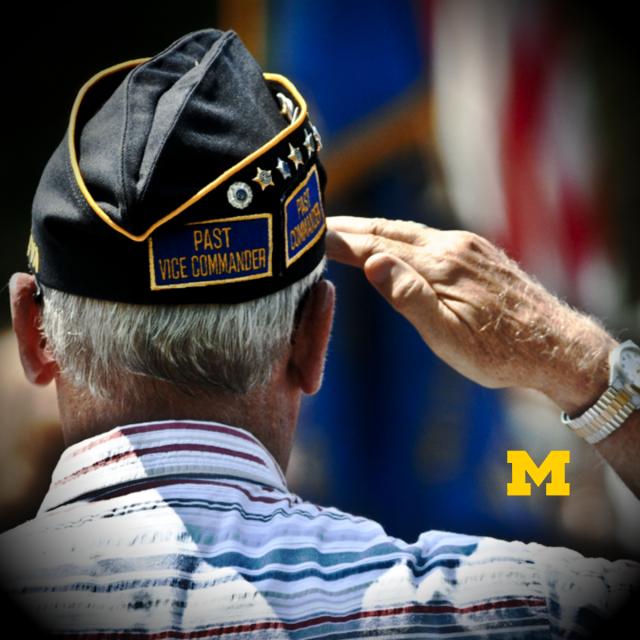
Improving health care for veterans has become a matter of national attention and has gained increasing attention from the medical community. With the current surge of veterans reintegrating into civilian society it is critical to improve the training of the next cadre of providers who will provide care for our veterans. It is widely known that veterans receive care in all aspects of the health system, thus providers in veteran focused care facilities, military health serves and civilian locals must be aware of the unique needs of veterans. It is perhaps even more important to educate civilian providers who may be unfamiliar with the unique physical, mental and emotional needs related to military service.

Class Deals by MOOC List - Click here and see Coursera's Active Discounts, Deals, and Promo Codes.

Course Audience

  • all health professions learners, example:
  • medical students, resident physicians, dental students,
  • nursing students, advanced practice nurses,
  • social work, pharmacy student as graduate level learners
  • as well as any and all health professionals interested in veteran-centered care

What You Will Learn:
This course will provide learners the opportunity to engage with material to facilitate their understanding of the origins of Academic Medical Centers and Veterans Administration affiliations, recognize and manage the influence of bias, class, and power on the clinical encounter and self-reflect on their biases that particularly affect U.S. military veterans. This course also features several video clips from the acclaimed documentary, Where Soldiers Come From, directed by Heather Courtney.
The views expressed in this course are those of the authors and do not necessarily reflect the position or the policy of the Department of Veterans Affairs or the U.S. government.

Syllabus

WEEK 1
Unit 1 highlights the relationship between Academic Medical Centers and Veterans Health Administration and provides an overview of knowledge of the military and basic demographic of U.S. veterans.

WEEK 2
Unit 2 provides clear instruction on conceptual differences between determinants of health and health disparities and health care disparities; illustrate individual-based and system-based sources of health disparities for veterans.

WEEK 3
Unit 3 outlines the fundamental principles of patient-centeredness and cultural competence in health care, provide tools to develop self-awareness of individual assumptions, stereotypes and biases that influence the medical encounter and deliver activities that help learners acknowledge the importance of patients’ values, culture, and beliefs in improving health care.

WEEK 4
Unit 4 illustrates the role of empathy in health care delivery, using key experiences, concerns and perspectives of U.S. military veterans as a clinical context. This unit also describes the relationship between medical history taking and health care delivery as well as develops knowledge in areas related to military and veteran centered care.

WEEK 5
Unit 5 allows learners to use everything they have learned and apply those principles to improving assessment and triage skills for patients with post-traumatic stress disorder (PTSD) and traumatic brain injury (TBI) and identifying anxiety and depression.

WEEK 6
Unit 6 highlights the importance of partnership and collaboration across professional disciplines to enhance veteran centered to achieve optimal health.

WEEK 7
Unit 7 highlights the importance of partnership and collaboration across professional disciplines to enhance veteran centered care.

Go to Class
MOOC List is learner-supported. When you buy through links on our site, we may earn an affiliate commission.

Related Courses

Interprofessional Healthcare Informatics (Coursera) Coursera
University of Minnesota

Interprofessional Healthcare Informatics (Coursera)

Interprofessional Healthcare Informatics is a graduate-level, hands-on interactive exploration of real informatics tools and techniques offered by the University of Minnesota and the University of Minnesota's National Center for Interprofessional Practice and Education. We will be incorporating technology-enabled educational innovations to bring the subject matter to life. Over the 10 modules, we will create a vital online learning community and a working healthcare informatics network.

Aug 17th 2026
5-12 Weeks
Fixing Healthcare Delivery 2.0: Advanced Lean (Coursera) Coursera
University of Florida

Fixing Healthcare Delivery 2.0: Advanced Lean (Coursera)

Lean or Toyota Production System (TPS) is responsible for revolutionizing the auto industry by creating highly reliable and safe cars and trucks. In this course healthcare providers, administrators, engineers, and healthcare professional students will be taught how to apply the principles and tools of Lean to health care. They will learn how to identify and remove of waste, design standardized work, apply 5S, map Value streams, create process maps, conduct rapid improvement events (RIEs), level workflow, use A3 forms and Paredo charts, apply error proofing, and create effective visual controls.

Aug 17th 2026
5-12 Weeks
Psychology of Popularity (Coursera) Coursera
University of North Carolina

Psychology of Popularity (Coursera)

The level of popularity you experienced in childhood and adolescence is still affecting you today in ways that you may not even realize. Learn about how psychologists study popularity and how these same concepts can be used in adulthood to be more successful at work, become better parents, and have a happier life.

Aug 17th 2026
5-12 Weeks
Career 911: Your Future Job in Medicine and Healthcare (Coursera) Coursera
Northwestern University

Career 911: Your Future Job in Medicine and Healthcare (Coursera)

This course aims to help high school students, recent graduates, and those considering career transitions explore health care career options and learn strategies for entry into the health care workforce and health related fields. There are lots of amazing job opportunities in medicine and healthcare! Join us, as we share the strategies and secrets for getting those jobs.

Aug 17th 2026
5-12 Weeks
Traditional herbal medicine in supportive cancer care: From alternative to integrative (Coursera) Coursera
Technion - Israel Institute of Technology

Traditional herbal medicine in supportive cancer care: From alternative to integrative (Coursera)

Please join us for an exciting and innovative journey, examining one of the most important and often overlooked aspects of the oncology setting: Traditional Herbal Medicine in Supportive Cancer Care. This course is presented with short lectures offering a wide range of issues related to the principles and practice of herbal medicine in cancer care.

Aug 17th 2026
13-24 Weeks
Childbirth: A Global Perspective (Coursera) Coursera
Emory University

Childbirth: A Global Perspective (Coursera)

This course will review challenges for maternal and newborn health in the developing world, where a great many women and babies are suffering from complications during pregnancy, childbirth, and the days following birth. Themes covered include the epidemiology of maternal and newborn mortality and morbidity, relevant issues for the global health workforce, community-based interventions to improve maternal and newborn health and survival, and sociocultural dynamics surrounding birth.

Aug 24th 2026
5-12 Weeks
Schizophrenia (Coursera) Coursera
Wesleyan University

Schizophrenia (Coursera)

The main goal of this class are to gain an introductory exposure to the nature of the psychiatric disorder known as schizophrenia as revealed by the scientific method. We will discuss a broad range of findings from the scientific investigation of biological and psychological factors related to schizophrenia and its treatment.

Aug 17th 2026
5-12 Weeks
Medical Neuroscience (Coursera) Coursera
Duke University

Medical Neuroscience (Coursera)

Medical Neuroscience explores the functional organization and neurophysiology of the human central nervous system, while providing a neurobiological framework for understanding human behavior. In this course, you will discover the organization of the neural systems in the brain and spinal cord that mediate sensation, motivate bodily action, and integrate sensorimotor signals with memory, emotion and related faculties of cognition. The overall goal of this course is to provide the foundation for understanding the impairments of sensation, action and cognition that accompany injury, disease or dysfunction in the central nervous system. The course will build upon knowledge acquired through prior studies of cell and molecular biology, general physiology and human anatomy, as we focus primarily on the central nervous system.

Aug 17th 2026
13-24 Weeks
HPV-Associated Oral and Throat Cancer: What You Need to Know (Coursera) Coursera
Icahn School of Medicine at Mount Sinai

HPV-Associated Oral and Throat Cancer: What You Need to Know (Coursera)

This course, offered by the Department of Otolaryngology – Head and Neck Surgery at the Icahn School of Medicine at Mount Sinai, is designed to inform primary care physicians and otolaryngologists (general and head and neck surgeons), as well as medical students, residents, nurses, physician assistants, medical assistants, about HPV-associated oral and throat cancers. It is also applicable to individuals who wish to broaden their knowledge and vernacular about this disease process, especially those who may have been diagnosed with HPV and/or HPV-associated oropharyngeal cancers.

Aug 17th 2026
5-12 Weeks
Feeding the World (Coursera) Coursera
University of Pennsylvania

Feeding the World (Coursera)

This course will explore the concepts driving current food production science (population growth, urbanization, emerging affluence, resource constraints, and underlying biological limits) with the main focus on livestock production. Each of the major food animal species (dairy, swine, beef, and poultry) will be covered in terms of their universal life cycles, constraints to production and emerging societal issues.

Aug 17th 2026
5-12 Weeks
Everyday Chinese Medicine (Coursera) Coursera
The Chinese University of Hong Kong

Everyday Chinese Medicine (Coursera)

This course aims to serve as an education platform on Chinese medicine (CM) for the general public. Our primary goal is to empower healthcare choices by promoting awareness and practical application on CM diagnostic and therapeutic approaches, as well as regulation on CM services and herbal products using international examples.

Aug 17th 2026
5-12 Weeks