Introduction to Reproduction (Coursera)

Introduction to Reproduction (Coursera)

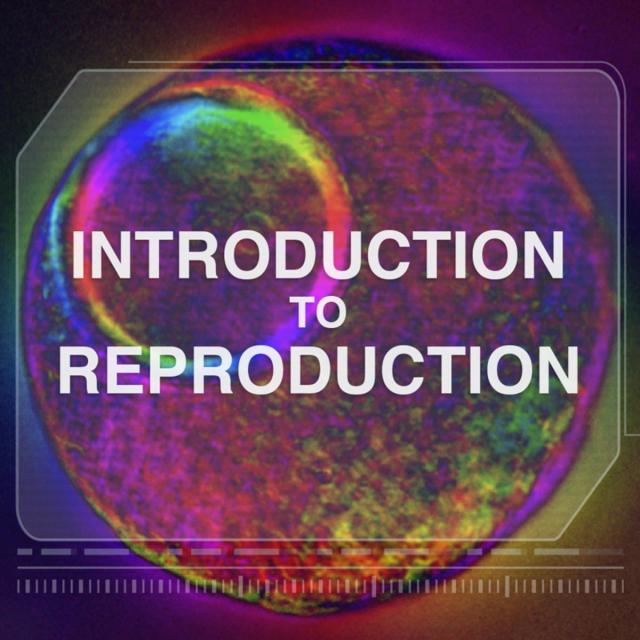
Do you have questions about sex hormones or menstrual cycles? This is a crash-course in human reproductive health through fact and biology-based information on a variety of topics. "Sex 101" will cover reproductive anatomy, key biological changes during puberty, sexual biology and contraceptive methods, reproductive disorders, and a special introduction to the exciting field of Oncofertility. Specific lecture titles are as follows: 1) Reproductive Anatomy & Hormones, 2) Menstrual Cycle, Oocyte Maturation, & Sperm Activation, 3) Sexual Biology, Fertilization, & Contraception, and 4) Reproductive Health & Disorders.

Class Deals by MOOC List - Click here and see Coursera's Active Discounts, Deals, and Promo Codes.

The objective of this course is to ensure you understand reproductive health and not confuse reproduction with sex (or having sex). This course was designed with you in mind, and is aimed at providing you with quality information that is meaningful to you and that may be hard to find otherwise. Reproductive health is an area of knowledge that needs to be demystified. We have designed this course for you to examine reproduction through a biological and scientific lens addressing these issues in a comfortable and interactive format that will lead to a better understanding of holistic health, long-term.

Syllabus

WEEK 1
Anatomy, Development, and Hormones
This module focuses on learning, identifying, and labeling all parts of male and female reproductive anatomy and the function of hormones on development. COURSE GOAL 1: Students will be able to label and analyze the basic functionality of all parts of male and female reproductive anatomy, conceptualize the role of hormones in the interactions between the brain, pituitary, and reproductive tract, and examine the basic functionality of the hormones involved during development and puberty.

WEEK 2
Menstruation, Oocyte Maturation, and Sperm Activation
This module articulates the hormonal implications of the menstruation cycle and sperm activation as it relates to both reproductive health and overall health. COURSE GOAL 2: Students will be able to conceptualize the hormonal implications of the menstruation cycle, oocyte maturation, and sperm activation as it relates to both reproductive health and overall health, analyze how the hormones of the pituitary relate to target tissues, examine the mechanisms behind oocyte maturation and meiosis, and illustrate how sperm development leads to modal function.

WEEK 3
Sex, Sexuality, and Contraception
This module outlines the scientific foundations of contraception beyond social norms. COURSE GOAL 3: Students will be able to classify the scientific foundations of male and female sexual biology and contrast differing contraception options through the lens of reproductive function and beyond social norms.

WEEK 4
Reproductive Health Concerns
This module spotlights the possibility of infertility in the human body and provides an in-depth understanding upon the biology behind infertility, endometriosis, reproductive diseases, and oncofertility. COURSE GOAL 4: Students will be able to identify the possible causes of infertility in the human body, analyze the effects of reproductive tract disorders, recognize the risks and symptoms of sexually transmitted diseases, and discuss the field of oncofertility in relation to sexual and holistic health

Go to Class
MOOC List is learner-supported. When you buy through links on our site, we may earn an affiliate commission.

Related Courses

Curanderismo: Global & Cultural Influences of Traditional Healing (Coursera) Coursera
University of New Mexico

Curanderismo: Global & Cultural Influences of Traditional Healing (Coursera)

As the last of four courses on Curanderismo, the art of Hispanic/Latino traditional medicine, this course focuses specifically on traditional healing using different techniques of many countries around the world. As an educational and cultural platform, this course will share a number of traditional global perspectives.

Sep 14th 2026
5-12 Weeks
Disease Screening in Public Health (Coursera) Coursera
University of Geneva

Disease Screening in Public Health (Coursera)

Current and future public health is characterized by the increase of chronic and degenerative diseases, corresponding to the worldwide ageing of the population. The increasing prevalence of these conditions together with the long incubation period of the chronic diseases and the restless technological innovations, offer new opportunities to develop strategies for early diagnosis.

Sep 14th 2026
5-12 Weeks
Chemicals and Health (Coursera) Coursera
Johns Hopkins University

Chemicals and Health (Coursera)

This course covers chemicals in our environment and in our bodies and how they impact our health. It addresses policies and practices related to chemicals, particularly related to how they get into our bodies (exposures), what they do when they get there (toxicology), how we measure them (biomonitoring) and their impact on our health. Most examples are drawn from the US.

Sep 14th 2026
5-12 Weeks
Population Health: Fundamentals of Population Health Management (Coursera) Coursera
Leiden University

Population Health: Fundamentals of Population Health Management (Coursera)

What are the principles of Population Health Management as a pro-active management approach to improve health and to tackle health disparities? In this course we will discuss the basic principles of Population Health Management that will help you as (future) health care professional or policymaker to analyse current healthcare challenges and to design possible solutions using the Population Health Management Approach.

Sep 14th 2026
4 Weeks
Dopage : Sports, Organisations et Sciences (Coursera) Coursera
University of Lausanne

Dopage : Sports, Organisations et Sciences (Coursera)

L'objectif du cours est de permettre une compréhension distanciée du dopage. C’est pour atteindre cet objectif que le cours s’appuie sur une approche pluridisciplinaire qui constitue une opportunité d'observer comment diverses disciplines abordent un même objet, selon différents angles et de manière complémentaire. Il s'agit également de donner des repères permettant d'appréhender le dopage dans sa complexité.

Sep 14th 2026
4 Weeks
Biochemical Principles of Energy Metabolism (Coursera) Coursera
Korea Advanced Institute of Science and Technology - KAIST

Biochemical Principles of Energy Metabolism (Coursera)

Everyone knows that energy is essential for sustaining life. How can you define energy in life? Have ever thought about ways of how carbohydrates like glucose from your diet can be used for extracting energy? A scientific field that focuses on energy production and flow though living cells and organisms is called bioenergetics. Energy metabolism covers various biochemical ways of energy transformation and regulatory mechanisms of over thousands chemical reactions. Without fine control of those metabolic processes, cells and organisms cannot maintain activities linked to life.

Sep 14th 2026
5-12 Weeks
Everyday Chinese Medicine (Coursera) Coursera
The Chinese University of Hong Kong

Everyday Chinese Medicine (Coursera)

This course aims to serve as an education platform on Chinese medicine (CM) for the general public. Our primary goal is to empower healthcare choices by promoting awareness and practical application on CM diagnostic and therapeutic approaches, as well as regulation on CM services and herbal products using international examples.

Sep 14th 2026
5-12 Weeks
Impacting the Opioid Crisis: Prevention, Education, and Practice for Non-Prescribing Providers (Coursera) Coursera
University of Michigan

Impacting the Opioid Crisis: Prevention, Education, and Practice for Non-Prescribing Providers (Coursera)

This course will empower non-prescribing providers to directly impact the ongoing opioid crisis in the United States through increased knowledge and tools that will transform practice and policies. The course will inform you about the opioid epidemic and provide information and research about evidence-based strategies that are focused on prevention, intervention, education, or policy.

Sep 14th 2026
5-12 Weeks
Population Health: Syndemics (Coursera) Coursera
Leiden University

Population Health: Syndemics (Coursera)

Do you wish to contribute to breaking cycles of ill-health in disadvantaged populations? And explore co-occurrence of diseases, such as substance abuse, infectious and chronic disease, and the relation with social factors (disparities)? Are you disappointed in the poor effectiveness of interventions for combined social and medical problems? Then this syndemics course might provide you with some answers.

Sep 14th 2026
4 Weeks
Preventing Chronic Pain: A Human Systems Approach (Coursera) Coursera
University of Minnesota

Preventing Chronic Pain: A Human Systems Approach (Coursera)

Chronic pain is at epidemic levels and has become the highest-cost condition in health care. This course uses both creative and experiential learning to better understand chronic pain conditions and how they can be prevented through self-management in our cognitive, behavioral, physical, emotional, spiritual, social, and environmental realms.

Sep 14th 2026
5-12 Weeks