Shipwrecks and Submerged Worlds: Maritime Archaeology (FutureLearn)

Shipwrecks and Submerged Worlds: Maritime Archaeology (FutureLearn)

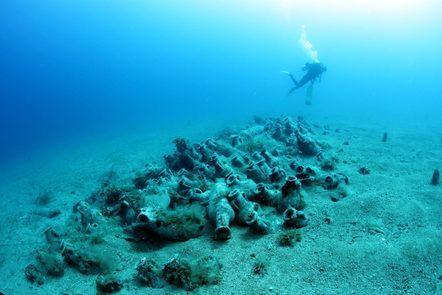
Learn how maritime archaeology investigates our changing relationship with the world’s oceans and seas, from 2.5 million years ago until today. People have explored and depended on the oceans of our planet for millennia. During that time the geography of our world has changed radically as coastal regions have flooded and islands have risen up, or been lost beneath the waves. With 70% of the world’s surface covered by water, an unparalleled, yet largely untouched record of human life has been left beneath the sea for us to discover, from our earliest ancestors right through to present day.

Class Deals by MOOC List - Click here and see FutureLearn's Active Discounts, Deals, and Promo Codes.

Over the length of this ‘Shipwrecks and Submerged Worlds’ course we will learn about maritime archaeology together - exploring underwater landscapes from the ancient Mediterranean to the prehistoric North Sea, and consider Shipwrecks from the Indian Ocean to the Pacific coast of the Americas.
We will introduce you to the pioneers of the discipline and explain what maritime archaeology is and why it is relevant today. We’ll also explore the technologies used to investigate these challenging environments and the new horizons that are opening to us daily. Finally, we’ll help show you ways in which you can become further involved in the exciting world of maritime archaeology.
The Centre for Maritime Archaeology is one of the world’s leading maritime research centres. Its strength lies in the breadth and depth of knowledge held by its staff, its variety of active projects across the globe and the energy and enthusiasm of its students. As you will learn through this course, maritime archaeology is a highly demanding field, drawing on marine geophysics, archaeology, history, environmental science and advanced computing techniques. We hope that the diverse expertise of our team can truly do justice to the potential of this topic to transform our understanding of human society in the past, present and potentially the future.

What topics will you cover?

  • Introduction to Maritime Archaeology
  • Shipwrecks and Seafaring
  • Understanding the Sea
  • Doing Maritime Archaeology
Go to Class
MOOC List is learner-supported. When you buy through links on our site, we may earn an affiliate commission.

Related Courses

Why Do We Age? The Molecular Mechanisms of Ageing (FutureLearn) FutureLearn
University of Groningen,University Medical Center Groningen - UMCG

Why Do We Age? The Molecular Mechanisms of Ageing (FutureLearn)

Why do we age? Is there a limit to human lifespan? Can we prolong our lives? Find out with this free online course. Discover the science behind the ageing process. The “why” and “how” of ageing has puzzled mankind ever since it questioned its place in the universe.

Self Paced
5-12 Weeks
Small and Mighty: Introduction to Microbiology (FutureLearn) FutureLearn
University of Reading

Small and Mighty: Introduction to Microbiology (FutureLearn)

Understand the basics of microbiology and explore the diversity of microbial life in our world. Discover the fascinating world of microbes. Microbes may be invisible to the eye, but they dominate every environment on Earth – including you. Microbes are often associated with disease yet the majority of species help to keep us alive. How can you distinguish the good from the bad?

Self Paced
3 Weeks
Marine Biology (Coursera) Coursera
American Museum of Natural History

Marine Biology (Coursera)

This course is about life in the oceans, from the sunlit surface to the inky depths, from microscopic phytoplankton to the great blue whale. The ocean is among the world’s most inhospitable environments for scientific research, which is why we know as much about the surface of the moon as we do the bottom of the sea. This course uncovers the evolutionary history of marine organisms, adaptations to life in water, the behavior and functional morphology of sea animals, interactions between species, and current threats.

Aug 31st 2026
5-12 Weeks
Health and Wellbeing in the Ancient World (FutureLearn) FutureLearn
The Open University

Health and Wellbeing in the Ancient World (FutureLearn)

Use literary and archaeological evidence to see how ancient Greeks and Romans approached health, well-being and societal issues. What did being healthy in ancient Rome or Greece look like? How can we tell what well-being meant in ancient times? This online course will help you investigate these questions, using both literary and archaeological evidence, to uncover details of real life in ancient societies.

Self Paced
5-12 Weeks
Sino-Japanese Interactions Through Rare Books (FutureLearn) FutureLearn
Keio University

Sino-Japanese Interactions Through Rare Books (FutureLearn)

Learn about the role of books in the relationship between the cultures of Japan and China, with this free online course. Books have played a major role in the formation of Japan’s culture, particularly those brought from China. On this course we’ll examine how big an impact these books have had, as well as looking at how books and religion are connected in Japan and East Asia, and the history of publishing in Japan.

Self Paced
3 Weeks
Discovering Science: Global Challenges (FutureLearn) FutureLearn
University of Leeds

Discovering Science: Global Challenges (FutureLearn)

Can chemistry help to feed a growing population, or overcome increasing bacterial resistance? Find out how the Penicillin class of antibiotics has been a major breakthrough in the treatment of patients. However, with bacteria developing efficient ways of resisting antibiotic treatment, discover how scientists are treating patients with infections resulting from resistant bacteria.

Self Paced
2 Weeks
The Tudors (FutureLearn) FutureLearn
University of Roehampton

The Tudors (FutureLearn)

Go back in time to learn about the dramatic rule of the Tudor monarchs and religious change of the sixteenth century reformation. Uncover the turbulent history of Tudor England and its lasting impact. From magnificence and martyrs to weddings and war, the Tudor period was one of the most eventful in British history. The reigns of the five (or was it six?) monarchs during the late fifteenth to seventeenth century has enthralled historians, students and television and film producers alike.

Self Paced
5-12 Weeks
Inside Cancer: How Genes Influence Cancer Development (FutureLearn) FutureLearn
University of Bath

Inside Cancer: How Genes Influence Cancer Development (FutureLearn)

Understand how genetics influence the development and spread of cancer, with this free, introductory online course. What is the one thing that all cancers have in common? They begin as mutant or rebel cells! In this course we will explore how changes in cancer genetics and epigenetics enables these cells to grow uncontrollably, by exploiting our blood vessels and immune system along with other systemic changes.

Self Paced
4 Weeks
The Book of Kells: Exploring an Irish Medieval Masterpiece (FutureLearn) FutureLearn
Trinity College Dublin

The Book of Kells: Exploring an Irish Medieval Masterpiece (FutureLearn)

Discover medieval Ireland using the Book of Kells, a ninth-century manuscript featuring the four gospels of the new testament. The Book of Kells manuscript, housed at Trinity College Dublin is world famous - it attracts almost one million visitors a year. But what can this book tell us about Irish history? And what significance is the manuscript in today’s world?

Self Paced
4 Weeks
Understanding Insulin (FutureLearn) FutureLearn
University of Southampton

Understanding Insulin (FutureLearn)

Learn more about all things insulin: from how it works, to insulin types, to side effects and guidance on how to prescribe safely. The current spend on diabetes care by the NHS is estimated to be £1.6 million pounds per hour. 80% of this is spent on managing diabetes complications, the risk of which can be significantly reduced through effective blood glucose control using insulin.

Self Paced
4 Weeks