The Scientific Revolution: Understanding the Roots of Modern Science (FutureLearn)

The Scientific Revolution: Understanding the Roots of Modern Science (FutureLearn)

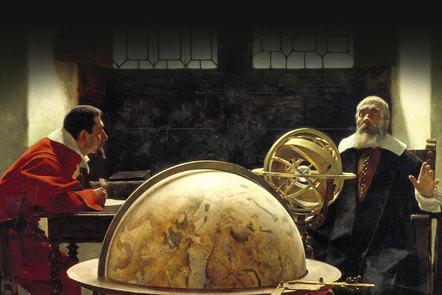
Learn about the seventeenth-century Scientific Revolution and its role in shaping the modern Western world. How did the science of today come about? What constitutes ‘modern’ science? How does science relate to religion? Answer these questions and more with this course that travels back in time to the seventeenth-century Scientific Revolution to explore the roots of modern science.

Class Deals by MOOC List - Click here and see FutureLearn's Active Discounts, Deals, and Promo Codes.

In this course you will critically explore the history of science, challenging established simplistic narratives of how science has developed. You will also examine modern scientific methods, the relationship between science, religion and secularism, and, if you work in science, consider the origins of our own discipline.

Syllabus

Week 1: What was the scientific revolution?
Week 2: What was the scientific method?
Week 3: The Scientific Revolution in context

What will you achieve?
By the end of the course, you'll be able to...

  • Reflect on the historical background of your own scientific discipline by tracing it back to its seventeenth-century roots
  • Interpret texts about scientific practices of the past
  • Engage critically with ideas about the overall role and meaning of scientific disciplines and practices
  • Produce a short blog post about the historical background of your discipline
Go to Class
MOOC List is learner-supported. When you buy through links on our site, we may earn an affiliate commission.

Related Courses

Philosophy, Science and Religion: Philosophy and Religion (Coursera) Coursera
University of Edinburgh

Philosophy, Science and Religion: Philosophy and Religion (Coursera)

Philosophy, Science and Religion mark three of the most fundamental modes of thinking about the world and our place in it. Are these modes incompatible? Put another way: is the intellectually responsible thing to do to ‘pick sides’ and identify with one of these approaches at the exclusion of others? Or, are they complementary or mutually supportive? As is typical of questions of such magnitude, the devil is in the details. For example, it is important to work out what is really distinctive about each of these ways of inquiring about the world. In order to gain some clarity here, we’ll be investigating what some of the current leading thinkers in philosophy, science and religion are actually doing.

Jun 22nd 2026
5-12 Weeks
Epidemics - the Dynamics of Infectious Diseases (Coursera) Coursera
Pennsylvania State University

Epidemics - the Dynamics of Infectious Diseases (Coursera)

Not so long ago, it was almost guaranteed that you would die of an infectious disease. In fact, had you been born just 150 years ago, your chances of dying of an infectious disease before you've reached the tender age of 5 would have been extremely high. Since then, science has come a long way in understanding infectious diseases - what they are, how they spread, and how they can be prevented. But diseases like HIV/AIDS, Malaria, Tuberculosis, or the flu are still major killers worldwide, and novel emerging diseases are a constant threat to public health. In addition, the bugs are evolving. Antibiotics, our most potent weapon against bacterial infections, are losing their power because the bacteria are becoming resistant. In this course, we'll explore the major themes of infectious diseases dynamics.

Jun 22nd 2026
5-12 Weeks
Discovering Science: Global Challenges (FutureLearn) FutureLearn
University of Leeds

Discovering Science: Global Challenges (FutureLearn)

Can chemistry help to feed a growing population, or overcome increasing bacterial resistance? Find out how the Penicillin class of antibiotics has been a major breakthrough in the treatment of patients. However, with bacteria developing efficient ways of resisting antibiotic treatment, discover how scientists are treating patients with infections resulting from resistant bacteria.

Sep 23rd 2024
2 Weeks
Geodesign: Change Your World (Coursera) Coursera
Pennsylvania State University

Geodesign: Change Your World (Coursera)

What happens when creativity and science come together? The power to design our world is unleashed, providing tools to inform choices about how we live! Geodesign is the glue—it’s a process that deploys creativity to connect information to people, using collaboration to better inform how we design our world.

Jun 22nd 2026
5-12 Weeks
Constructivism and Mathematics, Science, and Technology Education (Coursera) Coursera
University of Illinois at Urbana-Champaign

Constructivism and Mathematics, Science, and Technology Education (Coursera)

This course is designed to help participants examine the implications of constructivism for learning and teaching in science, mathematics, and technology focused areas. Course readings, discussions, and assignments will examine constructivist views of learning, research on students' ideas and idea-based interactions, research on instructional approaches taking student ideas into account, and challenges in implementing constructivist perspectives in instruction.

Jun 22nd 2026
5-12 Weeks
Image Analysis Methods for Biologists (FutureLearn) FutureLearn
The University of Nottingham

Image Analysis Methods for Biologists (FutureLearn)

Get an introduction to image acquisition and analysis for biologists – from basic techniques to the future of image analysis. Improve your image analysis knowledge and ability to analyse your images. The use of automatic image analysis in the biological sciences has increased significantly in recent years, especially with automated image capture and the rise of phenotyping.

Available now
4 Weeks
Invisible Worlds: Understanding the Natural Environment (FutureLearn) FutureLearn
University of Exeter,Eden Project

Invisible Worlds: Understanding the Natural Environment (FutureLearn)

Explore the connection between life and the Earth's invisible systems and gain new insights into the natural environment. Discover Earth's invisible systems and transform your understanding of the world. Given the current climate emergency, it’s increasingly important that we have a good understanding of Earth’s life support systems. We rely on these systems for fresh air, clean water, fertile soil, rich biodiversity and a stable climate. On this course, you’ll explore the natural systems we can’t see or feel, from microscopic creatures to gases.

Available Now
4 Weeks
Introduction to Cognitive Psychology: An Experimental Science (FutureLearn) FutureLearn
University of York

Introduction to Cognitive Psychology: An Experimental Science (FutureLearn)

Learn how to use cognitive psychology experiments to explore the internal workings of the mind with this online psychology course. Learn how to conduct, analyse and understand cognitive psychology experiments. Cognitive psychology is the scientific study of internal mental processes. On this course, you will be introduced to two key areas of cognitive psychology: reasoning and thinking and mental imagery.

Available now
3 Weeks
Humphry Davy: Laughing Gas, Literature, and the Lamp (FutureLearn) FutureLearn
Lancaster University,Royal Institution - RI

Humphry Davy: Laughing Gas, Literature, and the Lamp (FutureLearn)

Discover Humphry Davy and his contribution to science and the arts. Before culture was divided into the sciences and the arts there was a chemist who was also a poet. Sir Humphry Davy (1778-1829) is one of the best known men of science of the nineteenth century: he was the first person to inhale nitrous oxide; he isolated nine chemical elements; and he invented the miners’ safety lamp known as the Davy lamp. This course will consider Davy’s life and career using manuscript sources held at the Royal Institution of Great Britain.

Oct 9th 2023
4 Weeks
Inside Cancer: How Genes Influence Cancer Development (FutureLearn) FutureLearn
University of Bath

Inside Cancer: How Genes Influence Cancer Development (FutureLearn)

Understand how genetics influence the development and spread of cancer, with this free, introductory online course. What is the one thing that all cancers have in common? They begin as mutant or rebel cells! In this course we will explore how changes in cancer genetics and epigenetics enables these cells to grow uncontrollably, by exploiting our blood vessels and immune system along with other systemic changes.

Available now
4 Weeks
UFOs: Scanning the Skies Teach-Out (FutureLearn) FutureLearn
University of Michigan

UFOs: Scanning the Skies Teach-Out (FutureLearn)

Explore possible explanations for UFO sightings as you delve into fascinating accounts of unidentified flying objects. Unpack the myths and facts surrounding UFOs. Following the release of the U.S. Pentagon UFO report, there has been a surge of interest in unidentified aerial phenomena (UAPs). People across the world are gripped by the history of UFOs and the stories told by those who have witnessed them.

Feb 7th 2022
2 Weeks