From World War to White Heat: the RAF in the Cold War (FutureLearn)

From World War to White Heat: the RAF in the Cold War (FutureLearn)

Explore the role that the Royal Air Force played in the Cold War through the collections of the RAF Museums at Hendon and Cosford. This free online course is a collaboration between the Royal Air Force (RAF) Museums and the Department of History at Royal Holloway, University of London. It will introduce you to some of the major turning points in the history of Britain in the post-1945 era.

Class Deals by MOOC List - Click here and see FutureLearn's Active Discounts, Deals, and Promo Codes.

Explore the changing role of the RAF during the Cold War
Guided by Dr Ross Mahoney, Aviation Historian, RAF Museum, and Dr Emmett Sullivan, Senior Lecturer in History, Royal Holloway, the course will examine:

  • The role of the RAF in the early Cold War period;
  • RAF’s operations across the globe in an era of decolonisation;
  • Britain’s decision to develop a nuclear deterrent;
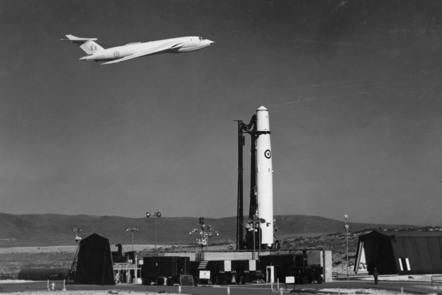
  • The development of the RAF’s strategic nuclear capability, the V-Force;
  • The role of the RAF in defending UK airspace;
  • The re-focus on NATO after East of Suez and the transfer of the strategic nuclear role to the Royal Navy;
  • The RAF’s contribution to NATO.

Consider how the RAF is remembered and memorialised
Finally, we will consider how the RAF has been remembered and memorialised through the Cold War and beyond, with the establishment of the RAF Museums at Hendon and Cosford, the National Cold War Exhibition, and the erection of statues and monuments after 1945.
The course makes extensive use of material from the archives of the RAF Museum to illustrate the Cold War history of the RAF and was filmed on site at RAF Museum Hendon and Cosford.

Syllabus

Week 1: The Early Cold War 1945-1953
Week 2: The RAF, the Empire, and a New Global Role
Week 3: The Independent British Nuclear Deterrent
Week 4: Defending the Skies
Week 5: Aspirations, Cancellations and a New Role
Week 6: Honouring the RAF in the Cold War and After

What will you achieve?
By the end of the course, you'll be able to...

  • Demonstrate an understanding of the role of the RAF at the end of the Second World War.
  • Assess the role of the RAF as it developed in the early Cold War years.
  • Compare the RAF’s responsibilities with respect to Britain’s nuclear deterrent before and after 1968.
  • Debate with educators and learners Britain’s motivation in holding a nuclear arsenal in the Cold War.
  • Develop a knowledge of the Government’s strategy in procuring RAF aircraft from British industry.
  • Discuss the responsibilities of the RAF in an era of decolonisation overseas and with NATO.
  • Evaluate what the Government’s priorities were for the RAF in defending the ‘Home Front’ in the Cold War.
  • Explain why the Royal Navy were destined to deploy Britain’s nuclear deterrent after the Nassau Agreement.
  • Identify key turning points in the Cold War, and how the RAF responded to these.
  • Reflect on the way the public considers the history of the RAF through its museums and public monuments.

Who is the course for?
This course is intended for anyone with an interest in 20th-century history, the Cold War or the history of aviation. It doesn’t require any reading before you start or previous experience of studying the subject.
Go to Class
MOOC List is learner-supported. When you buy through links on our site, we may earn an affiliate commission.

Related Courses

The Life and Afterlife of Mary Queen of Scots (FutureLearn) FutureLearn
University of Glasgow

The Life and Afterlife of Mary Queen of Scots (FutureLearn)

Explore the 16th century life of Mary Queen of Scots, and her place in cultural history in the centuries that followed. Discover the life and lasting legacy of Mary Queen of Scots. Mary Queen of Scots was born and ascended to the throne of Scotland in 1542, before being forced to abdicate in 1567. She was married three times, first to the king of France, and then to two noblemen from the British Isles, one of whom was spectacularly murdered.

Self Paced
3 Weeks
The Tudors (FutureLearn) FutureLearn
University of Roehampton

The Tudors (FutureLearn)

Go back in time to learn about the dramatic rule of the Tudor monarchs and religious change of the sixteenth century reformation. Uncover the turbulent history of Tudor England and its lasting impact. From magnificence and martyrs to weddings and war, the Tudor period was one of the most eventful in British history. The reigns of the five (or was it six?) monarchs during the late fifteenth to seventeenth century has enthralled historians, students and television and film producers alike.

Self Paced
5-12 Weeks
The Modern and the Postmodern (Part 2) (Coursera) Coursera
Wesleyan University

The Modern and the Postmodern (Part 2) (Coursera)

This course examines how the idea of "the modern" develops at the end of the 18th century in European philosophy and literature, and how being modern (or progressive, or hip) became one of the crucial criteria for understanding and evaluating cultural change. Are we still in modernity, or have we moved beyond the modern to the postmodern?

Sep 7th 2026
5-12 Weeks
Film, Images & Historical Interpretation in the 20th Century: The Camera Never Lies (Coursera) Coursera
University of London,Royal Holloway, University of London

Film, Images & Historical Interpretation in the 20th Century: The Camera Never Lies (Coursera)

This course is a short taster on the topic of the use of Images, Film, and their use in historical interpretation in the 20th century. It is primarily provided for those who have a general interest in history that draws on photojournalism as primary evidence, and films based on historical events.

Sep 7th 2026
5-12 Weeks
World War 1: Paris 1919 - A New World Order? (FutureLearn) FutureLearn
University of Glasgow

World War 1: Paris 1919 - A New World Order? (FutureLearn)

This course reassesses the legacy of the Paris Peace Conference (1919) and how it sought to create a new world order. The Paris Peace Conference of 1919 ended a Great War, but it also designed the post-war future. In 1919, world leaders assembled in Paris redrew the map of the world, partitioned and created countries, and ushered in a new era of international relations. The naivety of the peace-makers of 1919 has been justly criticised. However, in setting up a permanent ‘world organisation’, the League of Nations, they changed the management of world affairs forever…

No sessions available
3 Weeks
World War 1: Changing Faces of Heroism (FutureLearn) FutureLearn
University of Leeds

World War 1: Changing Faces of Heroism (FutureLearn)

Learn how the war moved us away from traditional views of heroism and created new kinds of heroes and heroines. Did the First World War make heroism meaningless or was it the conflict that gave it the most meaning? We’ve designed this course in partnership with the BBC to help you explore, discuss and challenge the ways in which First World War heroism has been remembered. Our experts will take you through the changing British, French and German views of heroism and discuss important similarities and differences.

No sessions available
3 Weeks
Peterloo to the Pankhursts: Radicalism and Reform in the 19th Century (FutureLearn) FutureLearn
Royal Holloway, University of London,People’s History Museum

Peterloo to the Pankhursts: Radicalism and Reform in the 19th Century (FutureLearn)

Discover the history of protest, parliament and citizens’ rights. Improve your understanding of important milestones in political history. 16th August 2019 marks the bicentenary of the Peterloo Massacre, a key milestone in the campaign to reform Parliament in the 19th century, and an important part of Britain’s democratic heritage and history. On this course, you will understand this event within a wider context of radicalism and reform over the 19th century.

Available Now
4 Weeks
Accounting for Death in War: Separating Fact from Fiction (FutureLearn) FutureLearn
Royal Holloway, University of London,Every Casualty Counts

Accounting for Death in War: Separating Fact from Fiction (FutureLearn)

Discover the main methods used to account for war deaths, how they've been used and practice using them yourself. Calculating the number of deaths during a war is a difficult, but necessary, task - having accurate information is crucial for political and societal debates and decisions. On this course you will explore the methods currently used to account for war deaths and then apply these methods to particular wars.

Self Paced
3 Weeks
Enlightening the Dark Ages: Early Medieval Archaeology in Italy (FutureLearn) FutureLearn
University of Padova

Enlightening the Dark Ages: Early Medieval Archaeology in Italy (FutureLearn)

Learn what innovative methods and tools applied to the material culture of the past can tell us about the Early Middle Ages. Discovering the cultural heritage of Medieval Europe through archaeology On this archaeology course, you will explore what we can learn about the past through material culture. It focuses on the history of Medieval Europe, from the end of the Roman Empire in the West.

Self Paced
4 Weeks
World War 1: Aviation Comes of Age (FutureLearn) FutureLearn
University of Birmingham

World War 1: Aviation Comes of Age (FutureLearn)

Investigate how the white heat of innovation in World War 1 shaped the history of human flight. Investigate how the early days of aviation gripped the imagination of the general public, galvanised industry and excited far-sighted members of the military, with this free online course from the University of Birmingham’s Centre for War Studies.

No sessions available
3 Weeks