Exploring Our Oceans (FutureLearn)

Exploring Our Oceans (FutureLearn)

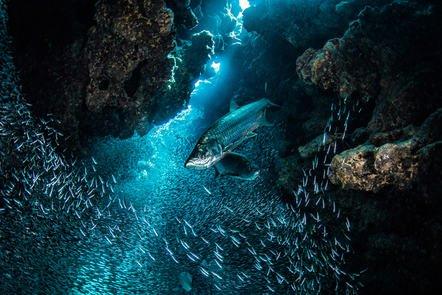
Explore the half of our world covered by deep ocean, and how our lives affect the hidden face of our planet. Discover how you can play a part in the safe keeping of the future of our ocean. What lies in the half of our world covered by water more than two miles deep? How are our everyday lives connected to the ocean depths, and what challenges and opportunities does this previously hidden realm hold for our future?

Class Deals by MOOC List - Click here and see FutureLearn's Active Discounts, Deals, and Promo Codes.

Meet scientists exploring the ocean from the deepest undersea vents to the chilly waters of the Poles and find how what we now know about the ocean depths is as amazing as the unknown that remains. By taking this course, you will see how the deep ocean is no longer out of reach, and join a global debate about the future of our “blue planet”.

Syllabus

Week 1: A hidden landscape
Week 2: Mobilis in mobili
Week 3: A living soup
Week 4: The future of the ocean

What will you achieve?
By the end of the course, you'll be able to...

  • Evaluate the degree to which humans have mapped the ocean and its habitats
  • Identify key controls on seawater composition and circulation
  • Assess the distribution of salt in the ocean
  • Interpret Collector's Curves to estimate numbers of undiscovered new species
  • Explain some adaptations to life in deep ocean habitats
  • Reflect on personal effectiveness in limiting potential impacts on ocean environments
Go to Class
MOOC List is learner-supported. When you buy through links on our site, we may earn an affiliate commission.

Related Courses

Advanced Neurobiology I (Coursera) Coursera
Peking University

Advanced Neurobiology I (Coursera)

Hello everyone! Welcome to advanced neurobiology! Neuroscience is a wonderful branch of science on how our brain perceives the external world, how our brain thinks, how our brain responds to the outside of the world, and how during disease or aging the neuronal connections deteriorate. We’re trying to understand the molecular, cellular nature and the circuitry arrangement of how nervous system works.

Jun 15th 2026
5-12 Weeks
Teaching Primary Biology: Classification (FutureLearn) FutureLearn
National STEM Learning Centre

Teaching Primary Biology: Classification (FutureLearn)

Learn KS2 biology subject knowledge and teaching strategies that will engage pupils in the primary science national curriculum. Enhance your KS2 biology classes with CPD from STEM learning. To teach primary science effectively primary education teachers must have sound subject knowledge, but many primary teachers are not science subject experts. This course will equip you with the key subject knowledge required to effectively teach the biology elements of the primary science national curriculum, focusing on the topic of classification.

Not Available
Course Not Available
Nanotechnology and Nanosensors, Part 2 (Coursera) Coursera
Technion - Israel Institute of Technology

Nanotechnology and Nanosensors, Part 2 (Coursera)

Learn about novel sensing tools that make use of nanotechnology to screen, detect and monitor various events in personal or professional life. Together, we will lay the groundwork for infinite innovative applications, starting from diagnosis and treatments of diseases, continuing with quality control of goods and environmental aspects, and ending with monitoring security issues.

Jun 15th 2026
5-12 Weeks
Shipwrecks and Submerged Worlds: Maritime Archaeology (FutureLearn) FutureLearn
University of Southampton

Shipwrecks and Submerged Worlds: Maritime Archaeology (FutureLearn)

Learn how maritime archaeology investigates our changing relationship with the world’s oceans and seas, from 2.5 million years ago until today. People have explored and depended on the oceans of our planet for millennia. During that time the geography of our world has changed radically as coastal regions have flooded and islands have risen up, or been lost beneath the waves. With 70% of the world’s surface covered by water, an unparalleled, yet largely untouched record of human life has been left beneath the sea for us to discover, from our earliest ancestors right through to present day.

No sessions available
4 Weeks
Small and Mighty: Introduction to Microbiology (FutureLearn) FutureLearn
University of Reading

Small and Mighty: Introduction to Microbiology (FutureLearn)

Understand the basics of microbiology and explore the diversity of microbial life in our world. Discover the fascinating world of microbes. Microbes may be invisible to the eye, but they dominate every environment on Earth – including you. Microbes are often associated with disease yet the majority of species help to keep us alive. How can you distinguish the good from the bad?

Available now
3 Weeks
Biochemistry: the Molecules of Life (FutureLearn) FutureLearn
University of East Anglia

Biochemistry: the Molecules of Life (FutureLearn)

Explore the impact of biochemistry on bioenergy and health, discovering why graduates are in demand; with the Biochemical Society. Biochemistry brings together all of the sciences to study the chemical and physical processes that occur in living organisms. It truly is the science of life. As a scientific discipline in its own right, biochemistry has a major impact on all areas of the life sciences and biochemists are in high demand among employers.

Jan 16th 2023
3 Weeks
Ocean Science in Action: Addressing Marine Ecosystems and Food Security in the Western Indian Ocean (FutureLearn) FutureLearn
National Oceanography Centre

Ocean Science in Action: Addressing Marine Ecosystems and Food Security in the Western Indian Ocean (FutureLearn)

Explore how innovative marine technologies can tackle the challenges of the sustainable management of marine ecosystems. Discover the new technologies that can aid marine resource management. Journey to the Western Indian Ocean alongside experts at the UK’s National Oceanography Centre to learn how we can measure and monitor the oceans in order to better protect them.

Nov 1st 2021
4 Weeks
Why Do We Age? The Molecular Mechanisms of Ageing (FutureLearn) FutureLearn
University of Groningen,University Medical Center Groningen - UMCG

Why Do We Age? The Molecular Mechanisms of Ageing (FutureLearn)

Why do we age? Is there a limit to human lifespan? Can we prolong our lives? Find out with this free online course. Discover the science behind the ageing process. The “why” and “how” of ageing has puzzled mankind ever since it questioned its place in the universe.

Available now
5-12 Weeks
So You Want to Study Life Science? (FutureLearn) FutureLearn
University of Glasgow

So You Want to Study Life Science? (FutureLearn)

Explore the exciting subjects within life sciences and the rewarding careers that studying life sciences at university lead to. This short, free online course will introduce you to studying life sciences at university level.We’ll take you on a whistle stop tour of the exciting world of life sciences, exploring the vast array of subjects within the discipline – from anatomy to zoology and everything in between, including immunology, cellular and molecular biology, genetics, physiology and parasitology.

No sessions available
2 Weeks