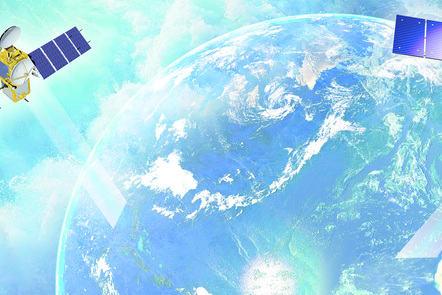
Monitoring the Oceans from Space (FutureLearn)

Offered by EUMETSAT,
Monitoring the Oceans from Space (FutureLearn)

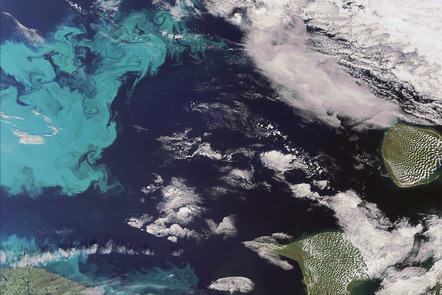
Explore our oceans from space. Discover how Earth observation allows us to monitor ocean health, and inform policy and planning. This free online course will provide an introduction to ocean monitoring Earth Observation (EO) satellite data, and its uses, types and challenges. It will explain how the data is acquired and used, the range of data types available, and the terminology and techniques involved.

Class Deals by MOOC List - Click here and see FutureLearn's Active Discounts, Deals, and Promo Codes.

The course is presented by physicist, oceanographer and broadcaster Dr Helen Czerski from University College London, remote sensing specialist Dr Hayley Evers-King from the Plymouth Marine Laboratory, and the lead educator Dr Mark Higgins from EUMETSAT.
The course is run by EUMETSAT in support of the Copernicus Programme.

Explore ocean monitoring EO data using real-world examples
You will look at practical examples of using ocean monitoring EO data - in real-world case-studies and in a range of areas of policy and decision-making - and will explore emerging technologies and trends.
The course will introduce you to the operational marine data stream from EUMETSAT in the context of the ‘Copernicus’ programme. It will highlight the role of the Sentinel-3, Sentinel-6 and Jason-3 ocean monitoring satellites and the contributing missions providing marine data for Copernicus – such as Metop and Meteosat. You will also explore the role of the Copernicus Marine Environment Service (CMEMS), focussing on the applications of its data for users and its wider benefits to society.

Examine different areas of ocean monitoring week by week
The course consists of five themed weeks:

Week 1 - Oceans and Climate
How do the oceans play a key role in the Earth’s climate system? How are the oceans set to be affected by changes in climate and why is satellite data so valuable for addressing multiple challenges in the marine environment?

Weeks 2 & 3 - Oceans, Weather and Hazards
What role do our oceans play in weather forecasting? How does monitoring our oceans from space play a key role in this and how is satellite data used in weather models? How can we use satellite data to understand ocean hazards?

Week 4 - Living Oceans
How do satellites help to monitor, quantify and preserve ocean biodiversity?

Week 5 - Oceans and Us
How does Earth observation help us to set international policy, manage ocean resources and biodiversity? How can the oceans be used for renewable energy? How can the public get involved in ocean science?

Learn with ocean monitoring experts from EUMETSAT and major research centres
Throughout the course, you will learn with experts from EUMETSAT - one of the key global organisations involved in ocean monitoring using satellite data - and from its research partners including Plymouth Marine Laboratory, National Oceanography Centre, CLS, Mercator Ocean, and the NASA Jet Propulsion Laboratory.
(Animations, data visualisations and imagery from ESA, NASA and CMEMS are provided courtesy of ESA, NASA and CMEMS. This course is produced for EUMETSAT by Imperative Space).

Requirements
This course is designed for people who want to learn and explore more about Earth observation and ocean monitoring from space. It is ideal for new potential EO marine data users as well as existing professionals working in other areas of EO, oceanography or environmental science.
It will also help policy-makers, decision-makers, communicators, educators and the general public gain a better insight into the use of satellite data in environmental and ocean monitoring.

Go to Class
MOOC List is learner-supported. When you buy through links on our site, we may earn an affiliate commission.

Related Courses

Monitoring Climate from Space (FutureLearn) FutureLearn
European Space Agency

Monitoring Climate from Space (FutureLearn)

Explore our planet from space and learn how Earth observation is used to monitor climate change, with this free online course. It is increasingly essential for us to study climate change across the planet at the highest level of detail possible. But how can we achieve such a comprehensive worldwide view?

No sessions available
5-12 Weeks
Processing of Space Monitoring Information (Coursera) Coursera
Moscow Institute of Physics and Technology

Processing of Space Monitoring Information (Coursera)

Observation of near-Earth outer space is an important task for astronomers and scientists at the present time. This task is to determine the coordinate and non-coordinate characteristics of artificial space objects. According to data obtained, a catalogue of objects is created, which should be maintained and updated. For this, optical means (telescopes) can be involved. The data from these means should be processed in order to obtain information about objects in space.

Aug 1st 2022
4 Weeks
Strong sustainability and Europe (FUN) FUN
Université Clermont Auvergne

Strong sustainability and Europe (FUN)

Sustainable development, popularized by the Brundtland Report, was defined at the end of the 1980s in three spheres (economic, environmental and social). It is this representation that continues today to be disseminated to the public and to large companies. The objective of this MOOC is to question the major challenges of development for Europe in a perspective of strong sustainability (energy, climate, biodiversity, food, mobility, agriculture, natural resources, education...) and to propose alternatives.

Sep 12th 2022
5-12 Weeks
The Frozen Frontier: Monitoring the Greenland Ice Sheet from Space (FutureLearn) FutureLearn
European Space Agency

The Frozen Frontier: Monitoring the Greenland Ice Sheet from Space (FutureLearn)

Learn how the Greenland ice sheet is monitored from space and the ground, to understand our past, present and future climate. Made up of layers of compressed snow from over the last 100,000 years, the vast Greenland ice sheet acts as both a valuable record of our past climate and a bellwether for future climate change. This online course highlights how the Greenland ice sheet is monitored from space and the ground. You’ll look at the measurements made possible by Earth Observation (EO) satellites like Cryosat, the technologies and techniques involved, the data generated, and its uses and challenges.

No sessions available
3 Weeks
Introduction to Water and Climate (edX) EdX
Delft University of Technology,DelftX

Introduction to Water and Climate (edX)

Water is a crucial element in climate and for society. Find out about the latest engineering interventions for water management in rivers, coasts and the urban environment. Water is essential for life on Earth and of crucial importance for society. Water also plays a major role in affecting climate. Its natural cycle, from ocean to atmosphere by evaporation, then by precipitation back to land returning via rivers and aquifers to the oceans, has a decisive impact on regional and global climate patterns.

Self Paced
Self-Paced
Marine Biology (Coursera) Coursera
American Museum of Natural History

Marine Biology (Coursera)

This course is about life in the oceans, from the sunlit surface to the inky depths, from microscopic phytoplankton to the great blue whale. The ocean is among the world’s most inhospitable environments for scientific research, which is why we know as much about the surface of the moon as we do the bottom of the sea. This course uncovers the evolutionary history of marine organisms, adaptations to life in water, the behavior and functional morphology of sea animals, interactions between species, and current threats.

Jun 8th 2026
5-12 Weeks
Ecosystems of California (Coursera) Coursera
University of California, Santa Cruz

Ecosystems of California (Coursera)

This course surveys the diversity, structure and functioning of California’s ecosystems through time and the ways they have influenced and responded to human activities and stewardship. Topics include ecosystem drivers such as climate, soils, and land use history; human and ecological prehistory of the state; comparative marine, freshwater, and terrestrial ecosystem dynamics; and managed ecosystems such as range, fisheries and agriculture in California.

Jun 15th 2026
5-12 Weeks
Digitalisation in Space Research (Coursera) Coursera
Technische Universität München - TUM

Digitalisation in Space Research (Coursera)

This course provides an overview of the most important digital applications in the field of aerospace research. The course instructors discuss how digitalisation is impacting and changing both satellite-based and manned spaceflight research. One unit is specifically devoted to exploring the use of artificial intelligence in the evaluation of satellite data.

Jun 15th 2026
3 Weeks
Global Energy and Climate Policy (Coursera) Coursera
University of London,SOAS University of London

Global Energy and Climate Policy (Coursera)

The Global Energy and Climate Policy course offers an introduction to the theoretical and practical understanding of how energy and climate change policies are designed, shaped, advocated and implemented. As energy markets go truly global, domestic energy policies are becoming more and more entangled with wider issues of international governance. Concurrently, the urgent need to mitigate and adapt to climate change and transition to a low-carbon future is adding a further layer of complexity.

Jun 1st 2026
5-12 Weeks