An Introduction to Japanese Subcultures (FutureLearn)

Offered by Keio University,
An Introduction to Japanese Subcultures (FutureLearn)

Explore Japanese subcultures and learn about their history from the 1970s to today. Subcultures have existed for a long time: the greasers of 1950s America, the mods and rockers of the 1960s and 70s in England, the grunge of the 1980s and 90s, to name a few. Each subculture sits within a broader ‘parent’ culture and can often give us an insight into cultural fears and hopes, especially in the youth of the population. On this course you will get an introduction to Japanese subcultures that have developed since the 1970s.

Class Deals by MOOC List - Click here and see FutureLearn's Active Discounts, Deals, and Promo Codes.

Explore different aspects of Japanese subcultures
Japanese subculture has been long considered as ephemeral youth culture compared to authentic traditional culture. It contains, however, subversive power which encourages younger generations to re-create the world they live in. We mainly focus on the significance of immaturity and vulnerability of youth which eventually give permission to younger people (in other words, minorities) to stay as they are.
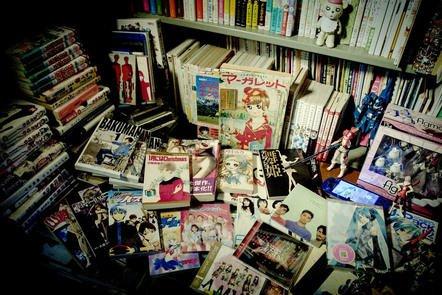
In this course, together with three other specialists, Professor Niijima, Professor Takahashi and Professor Ohwada, we will explore girls comics, boys comics, the Hatsune Miku vocaloid, cosplay, and J-pop idols, focusing on the themes such as Love, Battle, Technology and Fan culture, in which you’ll learn about the different cultural creations that underpin Japanese subcultures. With materials for cultural analysis, you’ll develop a basic knowledge of key Japanese subcultures, learning the recognisable traits of each.

Understand the historic context of Japanese subcultures
On the course you’ll discover historic background of youth culture in Japan, and understand the enormous impact of World War II.

Learn about Japanese subcultures and the youth of Japan
Finally, this course will give you a new perspective on the young people of Japan, exploring how they can be seen to elaborate the world of “immaturity” and “vulnerability.” You will see the reason these characteristics of Japanese subculture attracts “global” attentions.

What topics will you cover?

  • Understanding Japanese youth culture
  • Considering vulnerability and immaturity in Japanese social context
  • Love relationship and self-acknowledgment
  • Battles and competition in educational institutions
  • Machine and Human
  • Derivative works and fun culture
  • A history of subculture since 1970

What will you achieve?
By the end of the course, you'll be able to...

  • Evaluate the significant meanings of youth culture
  • Interpret subcultural materials along with social background
  • Compare the context of Japanese subculture with learners’ own cultural background
  • Investigate the reason why Japanese culture has a strong impact and popularity in global context
Go to Class
MOOC List is learner-supported. When you buy through links on our site, we may earn an affiliate commission.

Related Courses

Steps in Japanese for Beginners3 Part1 (edX) EdX
Waseda University,WasedaX

Steps in Japanese for Beginners3 Part1 (edX)

Learn manners and rules needed develop personal relationships with various people and expressions necessary for natural disasters. A younger student has entered Andy’s dormitory. Andy feels like he wants to help the new student by teaching him what he knows about life in Japan. Unfortunately, the new student does not seem to need Andy’s help and seems to like doing things in his own way.

Self Paced
Self-Paced
Transnational Studies - Japan and the World (edX) EdX
The University of Tokyo,UTokyoX

Transnational Studies - Japan and the World (edX)

Learn to think ‘transnationally’ and understand the border-crossing flows of people, things and ideas. In this course, you will gain foundational knowledge about how to think transnationally. An initial module which introduces key concepts and approaches in transnational studies will be followed by four modules that use concrete case studies centered on Japan to spotlight how the transnational can be fruitfully employed across different disciplines, from history to sustainability studies. In doing so, the course offers foundational knowledge in how to navigate the complexities of our globalized world.

Self Paced
Self-Paced
Sino-Japanese Interactions Through Rare Books (FutureLearn) FutureLearn
Keio University

Sino-Japanese Interactions Through Rare Books (FutureLearn)

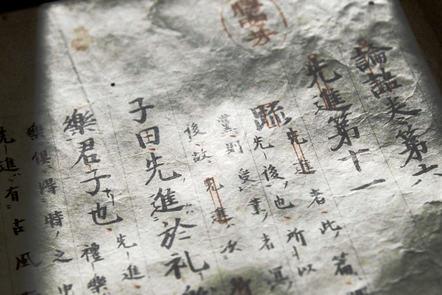
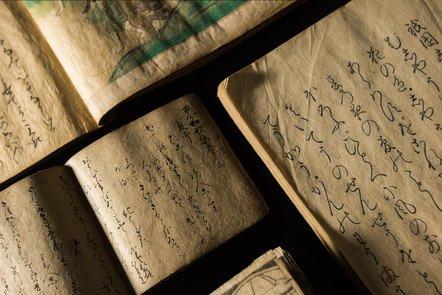
Learn about the role of books in the relationship between the cultures of Japan and China, with this free online course. Books have played a major role in the formation of Japan’s culture, particularly those brought from China. On this course we’ll examine how big an impact these books have had, as well as looking at how books and religion are connected in Japan and East Asia, and the history of publishing in Japan.

Self Paced
3 Weeks
Words Spun Out of Images: Visual and Literary Culture in Nineteenth Century Japan (Coursera) Coursera
The University of Tokyo

Words Spun Out of Images: Visual and Literary Culture in Nineteenth Century Japan (Coursera)

In their ambition to capture “real life,” Japanese painters, poets, novelists and photographers of the nineteenth century collaborated in ways seldom explored by their European contemporaries. This course offers learners the chance to encounter and appreciate behavior, moral standards and some of the material conditions surrounding Japanese artists in the nineteenth century, in order to renew our assumptions about what artistic “realism” is and what it meant.

Nov 2nd 2026
4 Weeks
World War 1: Trauma, Memory, Controversy (FutureLearn) FutureLearn
The Open University

World War 1: Trauma, Memory, Controversy (FutureLearn)

Explore the traumatic effects of WW1 on soldiers and civilians. Discover how we remember and debate the history of this war. In this free online course, you will study the social, cultural, medical and diplomatic history of the First World War. Topics range from physical and mental trauma suffered by combatants to the traumatic experiences of civilians in wartime.

Self Paced
4 Weeks
Business Opportunities and Risks in a Globalized Economy (Coursera) Coursera
IE Business School

Business Opportunities and Risks in a Globalized Economy (Coursera)

This is the last of the three courses part of the Globalization, Economic Growth and Stability Specialization.¨Business Opportunities and Risks in a Globalized World¨ is the the 3rd and final course of the ¨Globalization, Economic Growth and Stability¨ Specialization taught by IE Business School's Professor Gayle Allard. This course is designed to help an investor, businessperson or economist approach macroeconomic, institutional and international data and derive information from the indicators that point to the types of opportunities and risks that they present.

Oct 26th 2026
5-12 Weeks
Visualizing Japan (1850s-1930s): Westernization, Protest, Modernity (edX) EdX
MIT,MITx

Visualizing Japan (1850s-1930s): Westernization, Protest, Modernity (edX)

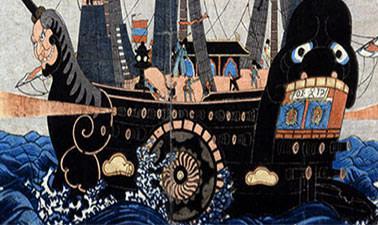
A MITx/HarvardX collaboration, this course explores Japan’s transition into the modern world through the historical visual record. This MITx course was developed in collaboration with HarvardX and is co-taught by MIT, Harvard, and Duke historians. You will examine Japanese history in a new way—through the images created by those who were there—and the skills and questions involved in reading history through images in the digital format.

Self Paced
Self-Paced
Uncovering the Voices of Japanese Literature (edX) EdX
Waseda University,WasedaX

Uncovering the Voices of Japanese Literature (edX)

This course explores issues of agency in premodern and modern Japan. Discover many facets of the Japanese literary, theatrical, and intellectual traditions which, although important, are rarely taught around the world. This course will provide you with an introduction and a basis for further study in Japanese history, culture, literature, arts, and other areas which you may intend to explore in the future.

Self Paced
Self-Paced