Share Food, Cut Waste (POK)

Offered by Politecnico di Milano,
Share Food, Cut Waste (POK)

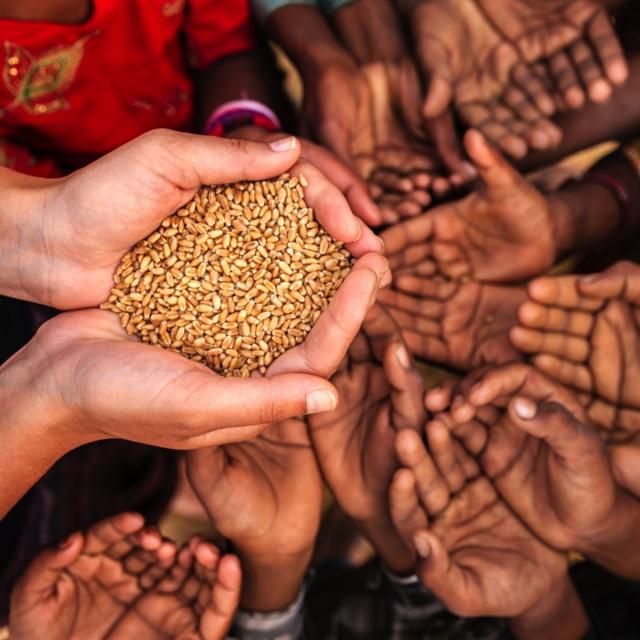
From words to action: surplus food management to tackle food poverty and food waste. This course is addressed to all those who are interested in reducing food waste and enhancing food security for people in need. Producers, food transformers, distributors, HoReCa enterprises and non-profit organizations, as well as consumers and citizens, can get new insights on issues such as the food waste hierarchy, food donation, healthy and responsible patterns of food consumption, food banking.

The course also offers operational guidelines, best practices and conceptual models to managers, employees and volunteers who want to get proficient in surplus food re-use and re-distribution.

After learning the keywords of food sharing and food waste reduction, you will find out how surplus food arises and how unsold or unserved food can still be put at good use, through re-use and re-distribution processes. You will also understand the criteria and operational processes that support an efficient and socially-oriented management of surplus food, and will discover how new materials and new packaging solutions can be used to enhance food safety and resources-efficiency. After that, consumers are put under the lens, because we all can reduce food waste through our shopping choices and consumption behaviours.
A key player is then introduced, namely food banks and their different recovery models. Front-line non-profit organizations are also examined. Finally, the numerous changes occurring in the world of surplus food recovery and food waste reduction are discussed, from new models for non-profits, to new public policies, to innovative services.
You can access the course absolutely free of charge and completely online.

Go to Class
MOOC List is learner-supported. When you buy through links on our site, we may earn an affiliate commission.

Related Courses

Global Postharvest Loss Prevention: Fundamentals, Technologies, and Actors (Coursera) Coursera
University of Illinois at Urbana-Champaign

Global Postharvest Loss Prevention: Fundamentals, Technologies, and Actors (Coursera)

This course provides an overview of the issue of postharvest loss of grains by exploring essential physical, technical, and social dimensions of postharvest supply chains and loss prevention methods globally. Each year, estimates suggest that 1/3 of all food produced is lost or wasted, making postharvest loss a critical global food security and sustainability issue of today. Key knowledge areas are presented including: an overview of postharvest loss; supply chain activities such as harvesting, drying, and storage; economics and markets; an introduction to the network of actors working in this field.

Jul 27th 2026
4 Weeks
Rebuilding Our Relationship with Food (Coursera) Coursera
Stanford University

Rebuilding Our Relationship with Food (Coursera)

Have you ever made a conscious effort to change the way you eat (for health or other reasons) and then felt frustrated when your plans were derailed? You’re not alone. The best laid plans are often sabotaged by a food environment that makes it increasingly hard to make healthier food choices. This can leave many people feeling mistrustful of food or feeling that our relationship with food is somehow broken. In this course, we’ll explore the history of our changing food environment, the science behind cravings for unhealthy foods AND most importantly, you’ll learn some concrete strategies for rebuilding your relationship with food.

Aug 3rd 2026
4 Weeks
Science & Cooking: From Haute Cuisine to Soft Matter Science (chemistry) (edX) EdX
HarvardX,Harvard University

Science & Cooking: From Haute Cuisine to Soft Matter Science (chemistry) (edX)

Top chefs and Harvard researchers explore how everyday cooking and haute cuisine can illuminate basic principles in chemistry, physics, and engineering. Learn about food molecules and how chemical reactions can affect food texture and flavor. During each module of this course, chefs reveal the secrets behind some of their most famous culinary creations — often right in their own restaurants. Inspired by such cooking mastery, the Harvard team will then explain the science behind the recipe.

Self Paced
Self-Paced
Introduction to Environmental Science (edX) EdX
DartmouthX,Dartmouth College

Introduction to Environmental Science (edX)

A scientific study of the natural world and how it is influenced by people. Major topics include: food, energy, human population, biodiversity and global change. Environmental science is the study of patterns and processes in the natural world and their modification by human activity. To understand current environmental problems, we need to consider physical, biological and chemical processes that are often the basis of those problems.

Self Paced
4 Weeks
Food and Mood: Improving Mental Health Through Diet and Nutrition (FutureLearn) FutureLearn
Deakin University,Food & Mood Centre

Food and Mood: Improving Mental Health Through Diet and Nutrition (FutureLearn)

Explore the relationship between nutrition and brain health, why it matters, and how to work towards positive food changes. Learn how healthy dietary choices can improve your mental and brain health. Poor diet and poor mental health are the leading causes of mortality and morbidity worldwide. We now know that diet quality is a modifiable factor that is linked to mental and brain health across all stages of our lives. We will explore how our daily diets may affect our mental and brain health, including the role of our immune system and gut microbiome.

Self Paced
3 Weeks
Small and Mighty: Introduction to Microbiology (FutureLearn) FutureLearn
University of Reading

Small and Mighty: Introduction to Microbiology (FutureLearn)

Understand the basics of microbiology and explore the diversity of microbial life in our world. Discover the fascinating world of microbes. Microbes may be invisible to the eye, but they dominate every environment on Earth – including you. Microbes are often associated with disease yet the majority of species help to keep us alive. How can you distinguish the good from the bad?

Self Paced
3 Weeks
Sustainable Food Production Through Livestock Health Management (Coursera) Coursera
University of Illinois at Urbana-Champaign

Sustainable Food Production Through Livestock Health Management (Coursera)

Learn about the impact of infectious disease on sustainable animal-based food production by understanding the science of growth, immunity, and infection and by learning the problem-solving skills needed to advance animal health and food production through optimal management practices. In this course we will explore the effect of infectious disease on sustainable animal-based food production. The content and learning outcomes of this new course will be designed to be relevant across different food production sectors (i.e., beef, dairy, poultry, and pigs).

Aug 10th 2026
5-12 Weeks
Feeding the World (Coursera) Coursera
University of Pennsylvania

Feeding the World (Coursera)

This course will explore the concepts driving current food production science (population growth, urbanization, emerging affluence, resource constraints, and underlying biological limits) with the main focus on livestock production. Each of the major food animal species (dairy, swine, beef, and poultry) will be covered in terms of their universal life cycles, constraints to production and emerging societal issues.

Aug 17th 2026
5-12 Weeks
Climate Adaptation in Africa (Coursera) Coursera
University of Cape Town

Climate Adaptation in Africa (Coursera)

This course explores why climate change adaptation is important in the African context. Africa is considered one to be one of the most vulnerable regions to climate change. Historically, climate-related hazards such as drought, flooding, pest and disease outbreaks, coastal storms and heat waves have had devastating impacts on people and the environment in which they live.

Aug 3rd 2026
5-12 Weeks
Alimentación y dietética para una vuelta al mundo a vela (Coursera) Coursera
University of Barcelona

Alimentación y dietética para una vuelta al mundo a vela (Coursera)

Comer bien en una vuelta al mundo no es tarea fácil . Aprenda cómo equilibrar alta nutrición con practicidad mientras navega alrededor del mundo. Este curso pretende introducirte en el mundo de la preparación de los deportistas que participan en regatas de navegación transoceánica, como la Barcelona World Race.

Aug 10th 2026
5-12 Weeks
Public Health Perspectives on Sustainable Diets (Coursera) Coursera
Johns Hopkins University

Public Health Perspectives on Sustainable Diets (Coursera)

What we eat and how we produce that food have significant effects on human health and the sustainability of our planet. But what is a ‘sustainable’ diet? A sustainable diet, as defined by the FAO, promotes health and well-being and provides food security for the present population while sustaining human and natural resources for future generations. This short course looks at the urgent need to address the sustainability of our food systems, including better understanding the complex relationship between diet and climate change. We’ll explore current research on dietary shifts needed in high, middle, and low-income countries to achieve both sustainability and food security goals and discuss evidence-based strategies to promote sustainable diets.

Aug 10th 2026
3 Weeks