We are what we eat--morally as well as molecularly. So how should concerns about animals, workers, the environment, and community inform our food choices? Can we develop viable foodways for growing populations while respecting race, ethnic, and religious differences? What does food justice look like in a global industrial food system where there are massive differences in resources, education, and food security?
Class Deals by MOOC List - Click here and see Coursera's Active Discounts, Deals, and Promo Codes.
The main goal of this course is not to prescribe answers to these questions but to give students the tools required to reflect on them effectively. These tools include a knowledge of four leading ethical theories and a grasp of key empirical issues regarding food production, distribution, and consumption.
Syllabus
First Dish: Utilitarianism and Animal Agriculture (and a Side of Beef!)
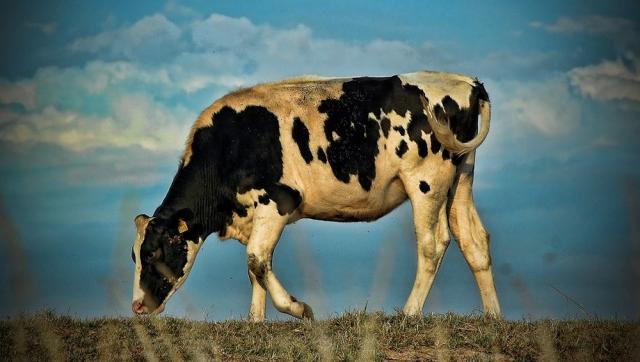
Welcome to Food Ethics! In this first week’s module, we’re including two Starters and the First Dish. In Starters, we will introduce ourselves, explain our plans for the course, and ask you to share some information about your eating practices. In the First Dish, we examine some of the key empirical data regarding the treatment of animals in the Industrial Food System (IFS). We then introduce our first ethical framework, Utilitarianism, and consider whether and why someone might adopt it. We conclude with an optional Side Dish called "The Beef about Beef," – which takes a closer look at how cows are born, weaned, finished, killed, and finally processed into beef. We also consider a “least harm” argument according to which, if you’re going to eat meat, you should only eat beef.
Second Dish: From Utilitarianism to Kantianism (and a Side of Alternative Meat!)
In this Second Dish, we conclude our discussion of Utilitarianism. The goal is to see whether the consequences produced by the Industrial Food System (IFS) justify improving and maintaining it (at least according to Utilitarianism), or simply abandoning it. We then begin our examination of frameworks that account for the rightness of an action in terms of something other than just the goodness of consequences. The “non-consequentialist” framework we consider in this Dish is the Kantian or “deontological” one - in the next Dish we go on to look at Divine Command Theory and Virtue Ethics. Here we focus on Kant’s views regarding the rights of non-human animals in particular. In the optional Side Dish, we serve up discussions of mealworms, insects, and “cultivated” meat, with a special focus on the work of the Good Food Institute. We also talk with an Oxford ethicist about his vision of a future in which we no longer eat animals, and animals don’t eat each other either.
Third Dish: God, Virtue, and some Non-Western Approaches (and a Side of Food Psychology!)
The Third Dish gives us a taste of two additional ethical frameworks, both of which are non-consequentialist. The first is the oldest ethical framework of all: Divine Command Theory. We consider some of the key benefits and costs of that approach (including Plato’s famous Euthyphro Dilemma). We also consider other ways in which a religious identity might shape our relationship to food. We then serve up our final framework: Virtue Ethics. Here the focus is not so much on following rules but on becoming a certain kind of person, and taking account of your situation and background when thinking about how to live. We look at this in the context of feminist debates about “gendered eating” and whether there are any universal (“one-size-fits-all”) prescriptions about food. In the optional Side Dish, we offer lectures and interviews that provide a taste of the non-western ethical traditions that originated in India (Hinduism, Jainism, Buddhism). Our focus here is on their fundamental principles, as well as on the relationship to animals and food that they recommend.
Fourth Dish: Food Justice, Race, and Diet-Related Disease (and a Side of Justice for Farmworkers!)
So far, we have focused on ethical issues raised by our food system's impact on non-human animals. In this Dish, we turn our attention to the ways in which the food system affects human beings. We first serve some empirical facts about food injustice and the way in which lack of access to healthy food and food education leads to diet-related disease, especially in certain populations. Here we focus on the historically racist elements of the American foodscape, and on their ongoing effects. We then dig into some ethical reflections about how to promote food justice. Who is ultimately responsible here: individual consumers, large food corporations, local and national governments? How should we think about global food justice? Along the way, we distinguish concepts like food access, food apartheid, food security, and food sovereignty. In the optional Side Dish, we focus on justice for farmworkers in particular. Our camera team makes an undercover visit to a fruit and vegetable farm near Ithaca and interviews undocumented workers about their jobs and living conditions. We evaluate some arguments about whether the plight of such workers suggests that we should not buy products from the farms that employ them.
Fifth Dish: The "Ithaca-Hopewell" Model (and a Side of New Jersey Choices!)
Some people argue that local, sustainable foods are preferable—nutritionally and economically, but maybe even ethically preferable-–to the products of the industrial food system (IFS). Others believe that the IFS is more efficient and environmentally friendly and that it stands a greater chance of solving the world hunger crisis. There are powerful arguments for both views. In a previous Dish, we heard food scientist Joe Regenstein talk about why he “loves factory farming” – in part because it is the only model that can feed a growing world population. In this Dish, we explore arguments for what we call the “Ithaca-Hopewell Model.” The model is named after towns near Cornell and Princeton, where people are experimenting with local, regenerative alternatives to the IFS. Some of them include animal agriculture in the model; others are more plant-based. In the optional Side Dish, we’ll zoom in on New Jersey, with a menu of on-location interviews with farmers, cider-makers, doctors, and even theologians who are making a difference using food (or drinks!).
Food Politics plus a Doggie Bag of Difference-Making (and a Side of Organic!)
In this final dish, we consider issues concerning the politics and culture of food. How are food guidelines for consumers created, what is the role of government in regulating food, and how does the industry influence those guidelines and regulations, as well as academic research? We also ask what people should do when ethical or political principles come into conflict with cultural traditions? We end the meal by considering those who have less -- and in particular the policy question of whether people everywhere have a “right” to adequate nutrition. We then send learners off (hopefully satisfied) with a Doggie Bag of reflections about how each of us might make a difference with respect to food ethics and justice. In the optional Side Dish, we zoom in on the organic vs. conventional debate.