Act on Climate: Steps to Individual, Community, and Political Action (Coursera)

Act on Climate: Steps to Individual, Community, and Political Action (Coursera)

Are you concerned about climate change? Would you like to learn how to address and respond to this challenge? If so, this course is for you. Act on Climate: Steps to Individual, Community, and Political Action is intended to help learners understand, address and respond to climate change as individuals and in partnership with their communities and political leaders.

Class Deals by MOOC List - Click here and see Coursera's Active Discounts, Deals, and Promo Codes.

The course focuses on how to translate learning into action on climate change in the areas of food, energy, transportation and the built environment (cities). It was designed by students for students, faculty, and learning specialists. A range of academic climate change experts and professional leaders are featured.
As a result of completing this course, you will be able to:
1) Identify individual, community, and political actions you can engage in to effectively address and respond to climate change.
2) Describe how insights from the social sciences can be employed to create change at the individual, community, and political levels.
3) Feel empowered to continue to influence how you, your community, and political leaders address and respond to climate change.

Syllabus

WEEK 1
Introduction
As part of this introductory lesson, we will help you explore your motivations for taking this course, briefly introduce you to the current state of climate science and policy, and prepare you for taking actions on climate change throughout the course.

WEEK 2
Food
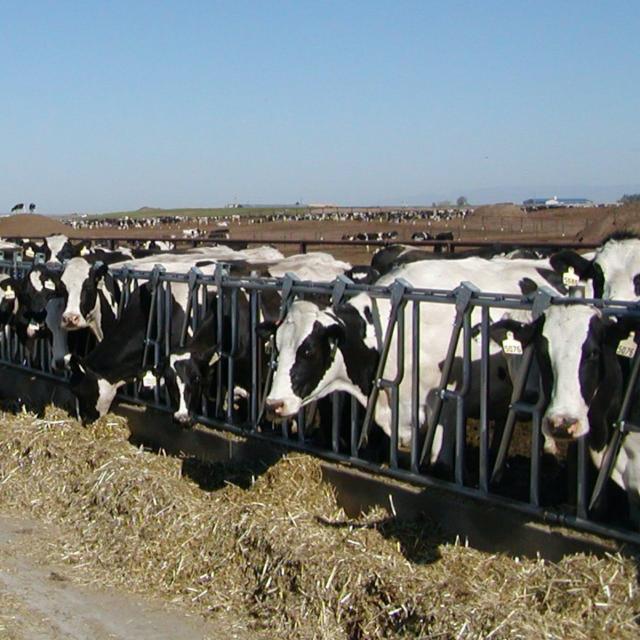
Food is part of our everyday lives. From breakfast to dinner, we make choices that affect the planet. This week, you will hear from Chris about his journey toward vegetarianism, and you will learn from Dr. Sara Soderstrom about social movement theory and food businesses in Detroit, as well as actions that you can take to make food choices that can mitigate climate change.

WEEK 3
Energy
We use energy in almost everything we do, but there are also many ways we can reduce emissions from our energy consumption. This week, you will hear from Benjamin about saving energy in cold winters and from Dr. Kaitlin Raimi about the theory of environmental peer persuasion. You will also learn several actions you can take to reduce energy consumption in your home, on your campus, and in your community.

WEEK 4
Transportation
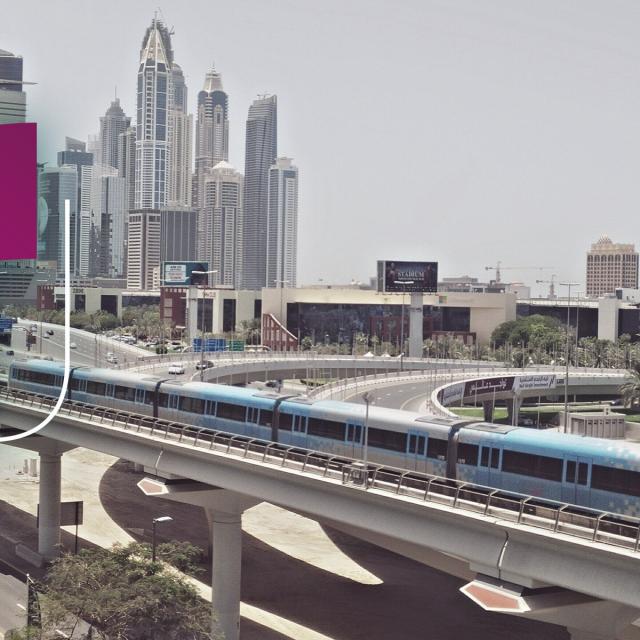
Transportation is part of everyday life. This week, you will hear from Stephanie about the collective impact of personal transportation decisions and from Brandon Schoettle about how driving decisions impact greenhouse gas emissions. You will also examine popular ride-hailing services, as well as actions that you can take to make transportation choices that can mitigate climate change, and ultimately you will learn to support a more resilient transportation system.

WEEK 5
Built Environment
There is a complex relationship between our lives and the built infrastructure with which we interact on a daily basis. This week, you will learn about one theory of urban design - “New Urbanism” - and use it as a way to explore these relationships and how you can reimagine the built environment as a means to act on climate change. You will also learn about how one city used deliberative democracy to transform their built environment and move toward carbon neutrality. Together, the content will assist you in identifying how the built environment can be transformed to address the effects of climate change.

WEEK 6
Climate Action Plan
This week, you will apply ideas you learned in this course, learn about another relevant social change theory, and develop your own Personal Climate Action Plan. As part of this plan you will identify individual and community-related actions that you can take to mitigate the impact of increased greenhouse gas emissions and adapt to climate change after completing this course.

WEEK 7
Conclusion
You have now learned about a variety of theories of social change and tried a range of mitigation and adaptation actions. We hope that this will not be the end! During this concluding week, we will provide you with resources to continue to engage in climate actions, including: making new practices “stick,” how to work with your community, and why you might even consider making a bigger commitment, like running for political office.

Go to Class
MOOC List is learner-supported. When you buy through links on our site, we may earn an affiliate commission.

Related Courses

Arctic Change & the Nexus of Governance, Economics & Culture (Coursera) Coursera
University of Colorado Boulder

Arctic Change & the Nexus of Governance, Economics & Culture (Coursera)

In this course, you will learn how the changing Arctic environment is tied to the growing economic and strategic importance of the North. After setting the stage through a review of the peoples of the Arctic and how they are dealing with change, Arctic governance, economies national defense, attention turns to marine use of the Arctic, oil and gas exploration, mining, fisheries and tourism.

Jun 8th 2026
4 Weeks
Global sustainability and corporate social responsibility: Be sustainable (Coursera) Coursera
Macquarie University

Global sustainability and corporate social responsibility: Be sustainable (Coursera)

It is no longer acceptable for organisations to focus entirely on financial success if they are to be competitive on the global stage. As corporate scandals continue to make headlines, you will expand your strategic thinking beyond your organisation’s competitive financial environment to consider its broader impact on society. You will grapple with the conflicting outcomes of maximising financial return and societal impact as you develop the skills to create a balance that is sustainable.

Jun 8th 2026
5-12 Weeks
Sustainable Development in the 21st Century with Ban Ki-moon (Coursera) Coursera
Yonsei University

Sustainable Development in the 21st Century with Ban Ki-moon (Coursera)

The course is designed for people that want to learn about the latest development agenda the international community agreed to achieve by 2030. Structured around the five pillars of Agenda 2030 – people, prosperity, planet, peace and justice, and partnership, students will learn that these pillars are interconnected and need to be integrated in practical policy-making and operational activities for development, in both developed and developing country settings.

Jun 8th 2026
5-12 Weeks
Principles of Sustainable Finance (Coursera) Coursera
Erasmus University Rotterdam

Principles of Sustainable Finance (Coursera)

Finance is widely seen as an obstacle to a better world. Principles of Sustainable Finance explains how the financial sector can be mobilized to counter this. Using finance as a means to achieve social goals we can divert the planet and its economy from its current path to a world that is sustainable for all. Throughout this course, you will learn about the UN Sustainable Development Goals, how social and environmental factors should not be regarded as externalities, you will learn more about sustainable banking and asset management, about effective engagement, sustainable scenario analysis and long-term value creation.

Jun 8th 2026
5-12 Weeks
Beyond the Sustainable Development Goals (SDGs): Addressing Sustainability and Development (Coursera) Coursera
University of Michigan

Beyond the Sustainable Development Goals (SDGs): Addressing Sustainability and Development (Coursera)

We’re excited you’re here! This course, “Beyond the Sustainable Development Goals (SDGs): Addressing Sustainability and Development,” is the first course in the upcoming Sustainability and Development MasterTrack Certificate program (Fall 2020), but you can also take this course as a stand-alone learning opportunity.

Jun 10th 2026
5-12 Weeks
Comprendre l'écologie, pour une économie innovante (Coursera) Coursera
ESCP Europe

Comprendre l'écologie, pour une économie innovante (Coursera)

Conçu conjointement par le think-tank Ecolo-Ethik et ESCP Europe, ce MOOC se propose de vous aider à dépasser les idées reçues sur l’écologie, dans le souci d’une démarche ouverte et multiple. A ce titre, de grands experts reconnus interviendront pour illustrer, approfondir et enrichir les différentes thématiques.

Jun 8th 2026
5-12 Weeks
Securing Investment Returns in the Long Run (Coursera) Coursera
University of Geneva

Securing Investment Returns in the Long Run (Coursera)

In this course, you will learn about the famous dichotomy between active and passive investing, how to appropriately measure and analyze investment performance and what the future trends in the investment management industry are. You will first learn about absolute and relative performance, risk-adjusted returns and how to decompose investment performance. The focus will then shift to the two main categories of investment vehicles, active and passive funds, and what they entail in terms of expected performance.

Jun 8th 2026
4 Weeks
Electrodynamics: An Introduction (Coursera) Coursera
Korea Advanced Institute of Science and Technology - KAIST

Electrodynamics: An Introduction (Coursera)

The depth and breadth of electromagnetism, the foundation for many fields including materials science, electrical engineering, and physical chemistry, requires a long, steep, and steady learning curve. This course aims to bridge the gap between the fundamental principles taught in electromagnetism and its practical application to specific fields such as materials, physics, and chemistry related to energy storage and harvesting.

Jun 8th 2026
5-12 Weeks
Sharing Cities: Governance and Urban Sustainability (Coursera) Coursera
Lund University

Sharing Cities: Governance and Urban Sustainability (Coursera)

How can we govern the sharing economy in our cities? This course connects the sharing economy, cities, governance and urban sustainability to provide unique knowledge and insights into sharing cities. We utilize a diversity of leading examples of the emerging sharing economy in cities to bring this course to life. The sharing economy can contribute to social, environmental and economic sustainability, and sharing cities can unlock new opportunities and solve urban challenges by facilitating and applying the sharing economy in urban contexts. But it is imperative that the sharing economy is shaped and designed to advance urban sustainability.

Jun 8th 2026
5-12 Weeks
Sustainable Tourism – promoting environmental public health (Coursera) Coursera
University of Copenhagen

Sustainable Tourism – promoting environmental public health (Coursera)

The MOOC introduces learners to key environmental health and natural resources management challenges associated with the rapid growth in international tourist arrivals into low-income countries. Since infrastructural and regulatory capacities in such countries are often limited they are more exposed to the negative implications of such development. The MOOC will present experiences and potential avenues to develop a more sustainable form of tourism.

Jun 8th 2026
3 Weeks