Unravelling solutions for Future Food problems (Coursera)

Offered by Universiteit Utrecht,
Unravelling solutions for Future Food problems (Coursera)

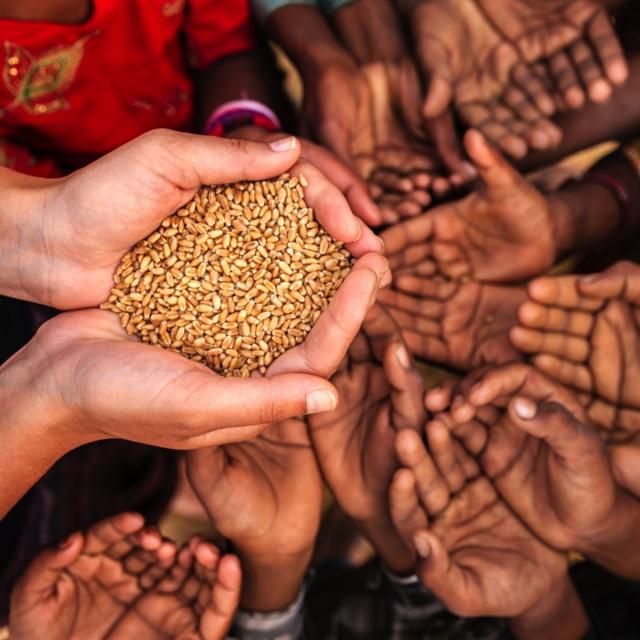
Our society depends on the availability of food and accessibility to it. According to the United Nations nearly 800 million people are hungry and on the other hand, over 650 million people are obese. While many people in developing countries experience food shortage, in industrialized countries people are throwing food away. These facts show how paradoxical and complex the world’s food problem is.

Class Deals by MOOC List - Click here and see Coursera's Active Discounts, Deals, and Promo Codes.

ln this course, more than 10 food researchers from Utrecht University will address the main issues of food consumption. They will handle two interrelated themes; Food shortage and Healthy choices. You will learn to identify the key ingredients of the world’s food challenges and to think about the solutions for enabling changes in the current food system.
We will also look at the possible sustainable solutions for several accut issues: the demands of the growing human population, the role of nutrition, and the need to understand food choices in order to have healthier diet and consider the possibilities of alternative foods.
We invite you to join us on an interdisciplinary journey through the world food problems. You will gain new knowledge and insights that will help you form your own opinion on these subjects and make better choices in your food consumption.
We hope you will enjoy the course!

Syllabus

WEEK 1
Introduction Future Food & Food Shortage Part I

WEEK 2
Food Shortage Part II: Sustainable solutions

WEEK 3
Healthy Choices Part I: Food & Health

WEEK 4
Healthy Choices Part II: Food-related behavior and interventions

WEEK 5
An interdisciplinary approach to food

Go to Class
MOOC List is learner-supported. When you buy through links on our site, we may earn an affiliate commission.

Related Courses

Systems Thinking In Public Health (Coursera) Coursera
Johns Hopkins University

Systems Thinking In Public Health (Coursera)

This course provides an introduction to systems thinking and systems models in public health. Problems in public health and health policy tend to be complex with many actors, institutions and risk factors involved. If an outcome depends on many interacting and adaptive parts and actors the outcome cannot be analyzed or predicted with traditional statistical methods. Systems thinking is a core skill in public health and helps health policymakers build programs and policies that are aware of and prepared for unintended consequences.

Jun 15th 2026
4 Weeks
Alimentación y dietética para una vuelta al mundo a vela (Coursera) Coursera
University of Barcelona

Alimentación y dietética para una vuelta al mundo a vela (Coursera)

Comer bien en una vuelta al mundo no es tarea fácil . Aprenda cómo equilibrar alta nutrición con practicidad mientras navega alrededor del mundo. Este curso pretende introducirte en el mundo de la preparación de los deportistas que participan en regatas de navegación transoceánica, como la Barcelona World Race.

Jun 15th 2026
5-12 Weeks
Primeros Auxilios Psicológicos (PAP) (Coursera) Coursera
Universitat Autònoma de Barcelona

Primeros Auxilios Psicológicos (PAP) (Coursera)

Este curso on-demand (ABIERTO, se puede cursar en cualquier momento), impartido en castellano por la Universidad Autónoma de Barcelona y el Centro de Crisis de Barcelona, está destinado a entrenar en la aplicación de primeros auxilios psicológicos (PAP) a personas afectadas por situaciones altamente estresantes, abarcando tanto emergencias cotidianas (incidentes críticos estadísticamente frecuentes que afectan de manera muy intensa: un accidente de tráfico, una hospitalización, una agresión o la muerte traumática o repentina de una persona, etc.) como emergencias comunitarias y/o masivas (sucesos infrecuentes, que afectan a muchas personas o a una comunidad entera y que sobrepasan con mucho lo que sucede habitualmente en ella: una catástrofe natural, un accidente ferroviario o aéreo o un atentado).

Jun 15th 2026
5-12 Weeks
Sustainable Food Production Through Livestock Health Management (Coursera) Coursera
University of Illinois at Urbana-Champaign

Sustainable Food Production Through Livestock Health Management (Coursera)

Learn about the impact of infectious disease on sustainable animal-based food production by understanding the science of growth, immunity, and infection and by learning the problem-solving skills needed to advance animal health and food production through optimal management practices. In this course we will explore the effect of infectious disease on sustainable animal-based food production. The content and learning outcomes of this new course will be designed to be relevant across different food production sectors (i.e., beef, dairy, poultry, and pigs).

Jun 15th 2026
5-12 Weeks
Acute and Chronic Rhinosinusitis: A Comprehensive Review (Coursera) Coursera
Icahn School of Medicine at Mount Sinai

Acute and Chronic Rhinosinusitis: A Comprehensive Review (Coursera)

This course is designed to inform primary care physicians and general otolaryngologists about the differences between acute and chronic rhinosinusitis and how to distinguish and treat them. It is also applicable to individuals who wish to broaden their knowledge and vernacular about this disease process, especially those who may suffer from this condition.

Jun 15th 2026
5-12 Weeks
Wood Science: Beyond Building (Coursera) Coursera
West Virginia University

Wood Science: Beyond Building (Coursera)

The central question of this course: “why study wood?” If “why study wood” is the question, one answer would be that it is the only raw material available to us that is truly renewable in human life span terms. Wood is as important to society today as it ever was, despite the development of many man-made substitute materials, changing resource availability, and the changing needs of society.

Jun 15th 2026
4 Weeks
Beyond the Sustainable Development Goals (SDGs): Addressing Sustainability and Development (Coursera) Coursera
University of Michigan

Beyond the Sustainable Development Goals (SDGs): Addressing Sustainability and Development (Coursera)

We’re excited you’re here! This course, “Beyond the Sustainable Development Goals (SDGs): Addressing Sustainability and Development,” is the first course in the upcoming Sustainability and Development MasterTrack Certificate program (Fall 2020), but you can also take this course as a stand-alone learning opportunity.

Jun 17th 2026
5-12 Weeks
Engineering Life: Synbio, Bioethics & Public Policy (Coursera) Coursera
Johns Hopkins University

Engineering Life: Synbio, Bioethics & Public Policy (Coursera)

Synbio is a diverse field with diverse applications, and the different contexts (e.g., gain-of-function research, biofuels) raise different ethical and governance challenges. The objective of this course is to increase learners’ awareness and understanding of ethical and policy/governance issues that arise in the design, conduct and application of synthetic biology. The course will begin with a short history of recombinant DNA technology and how governance of that science developed and evolved, and progress through a series of areas of application of synbio.

Jun 15th 2026
5-12 Weeks
Herbal Medicine (Coursera) Coursera
University of Minnesota

Herbal Medicine (Coursera)

There is strong demand for alternatives to pharmaceuticals for a variety of common illnesses due to concerns of safety, efficacy, and a desire for more “natural” products. Despite this growing interest, “conventional” healthcare providers may have little to no knowledge about herbal medicines, which is further compounded by the sometimes misleading information in the media and on the internet. This course provides the necessary background for providers to begin to incorporate herbal medicines into their practice, particularly in regards to their therapeutic properties, efficacy (or lack thereof), and safety concerns, including quality control and potential adverse effects.

Jun 17th 2026
5-12 Weeks
Clinical Epidemiology (Coursera) Coursera
Universiteit Utrecht

Clinical Epidemiology (Coursera)

Evidence forms the basis of modern medicine. Clinical research provides us with this evidence, guiding health professionals towards solutions to problems that they face in daily practice. Transferring existing problems in medical practice to a research setting is a challenging process that requires careful consideration. The practice of clinical epidemiology aims to address this through the application of established approaches for research in human populations, while at all times focussing on the problem at hand from a clinical perspective.

Jun 16th 2026
5-12 Weeks