EdX

Nitrogen: A Global Challenge (edX)

Nitrogen: A Global Challenge (edX)

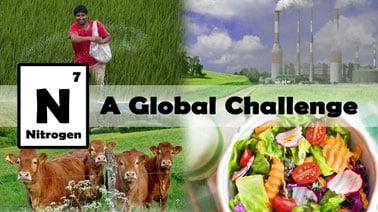
Learn about the global nitrogen challenge, how nitrogen has helped human civilization to develop, and how its misuse now threatens us. It’s a perfect storm. Limited food, water and energy unequally spread between an expanding population, and a warming climate as the bitter icing on the cake. In all these global challenges nitrogen has a leading role to play. Here you will learn just how hard-wired into all of human civilisation nitrogen is, and whether the future will see it as our quiet savior or the toxic villain of the piece.

Class Deals by MOOC List - Click here and see EdX's Active Discounts, Deals, and Promo Codes.

Nitrogen’s story is of the peculiar and the mundane, of water turning red and people turning blue. It is one of climate friend and pollution foe, of meaty feasts and looming famine. If your main thought of nitrogen is as a boring corner of the periodic table then it’s time to look again.

This innovative course, regardless of your background, will teach you core concepts about nitrogen and global change, allowing you to better understand the challenges and opportunities it represents. Key topics include food security, climate change, air pollution, water pollution, human health and more.
Learn through the award-winning teaching approaches of the University of Edinburgh’s faculty team. This course brings an engaging and expert approach to the global challenges of nitrogen, showing how the threats it poses for human civilization can be better integrated and tackled.
Taught by instructors with decades of experience in nitrogen and global change research, this world-first course is a collaboration between leading experts in the UK and India as part of the Newton-Bhabha Virtual Centre on Nitrogen Efficiency.

What you'll learn

  • Learn about the global nitrogen challenge, how nitrogen has helped human civilization to develop, and how its misuse now threatens us
  • Discover how fundamental nitrogen is to agriculture and food security
  • Understand the role of nitrogen in air pollution and its impact on human health
  • Learn how nitrogen can pollute our water and the risks that then arise
  • Examine the solutions to the global challenges of nitrogen and how we can better manage this precious element

Syllabus

Week 1: Global Nitrogen Challenge
Introduction to nitrogen, its uses, and overview of its role in global food production, pollution and climate change

Week 2: Nitrogen and Agriculture
Introduction to the nitrogen cycle, history of nitrogen use for food production, interactions with climate change, future challenges for food security

Week 3: Nitrogen and Air Pollution
How nitrogen causes local and global air pollution, its impacts, trends and future challenges

Week 4: Nitrogen and Water
How nitrogen gets into our water, impacts on freshwater and the oceans, risks to ecosystems and human health

Week 5: Nitrogen Solutions
Improving nitrogen use in agriculture, smart food choices, tackling air and water pollution, integrated management
Go to Class
MOOC List is learner-supported. When you buy through links on our site, we may earn an affiliate commission.

Related Courses

L’eau et les sols - Hydrodynamique des milieux poreux (edX) EdX
LouvainX,Université Catholique de Louvain - UCL

L’eau et les sols - Hydrodynamique des milieux poreux (edX)

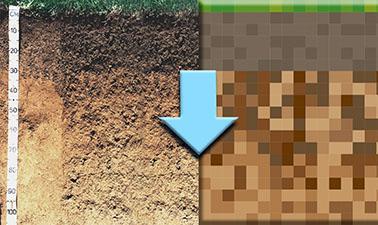
Ce cours de spécialisation vous donnera les clés pour comprendre, modéliser et mesurer les processus de transferts de l’eau dans le sol. Comment l’eau de pluie s'infiltre-t-elle dans le sol (et quelle partie ruisselle) ? Quelle est la recharge d’une nappe ? Quelle quantité d’eau un sol peut-il retenir ? Quelle sont les directions des flux de polluants dans un sol ?

Self Paced
Self-Paced
Water and Wastewater Treatment Engineering: Biochemical Technology (edX) EdX
Tsinghua University,TsinghuaX

Water and Wastewater Treatment Engineering: Biochemical Technology (edX)

Learn the basic principles and characteristics of biochemical technology in water and wastewater treatment engineering. Biochemical technology in water and wastewater treatment engineering is essential in the field of water treatment. In this environmental studies course you will learn the basic principles and characteristics of biochemical technology.

Self Paced
Self-Paced
文物精品与文化中国:农业与制造业 | Relics in Chinese History - Part 1: Agriculture and Manufacturing (edX) EdX
Tsinghua University,TsinghuaX

文物精品与文化中国:农业与制造业 | Relics in Chinese History - Part 1: Agriculture and Manufacturing (edX)

Discover manufacturing and agriculture’s role in the history of China as we explore Chinese culture through artifacts and relics. 本课程以精品文物作引子,将学术界探索中华文明的过程作为线索,介绍古代中国在造船、玉器等诸多领域的杰出成就

Self Paced
Self-Paced
Retos de la Agricultura y la Alimentación en el Siglo XXI (edX) EdX
Universitat Politècnica de València,UPValenciaX

Retos de la Agricultura y la Alimentación en el Siglo XXI (edX)

Reflexionaremos sobre agricultura y alimentación en un planeta que tiene que alimentar a una población creciente con recursos limitados. El planeta se enfrenta al reto de alimentar a una población creciente en un escenario de limitación de recursos, mercados agroalimentarios imperfectos, crisis de alimentos, y población rural vulnerable. El curso invita a una reflexión sobre las alternativas de la agricultura y la alimentación, vistas como solución a los desafíos socio-económicos y ambientales, con énfasis en el papel de la agricultura familiar y en modos de producción sostenibles, en el marco de cadenas de valor más equilibradas.

No sessions available
5-12 Weeks
Backyard Meteorology: The Science of Weather (edX) EdX
HarvardX,Harvard University

Backyard Meteorology: The Science of Weather (edX)

Learn to forecast the weather just by looking out your window. The weather forecasts we see every day are based on an army of meteorological sensing networks and intensive computer modeling. Before the rise of these technologies, predictions were made by methods like discerning cloud formations and wind directions.

Self Paced
Self-Paced
Water: Addressing the Global Crisis (edX) EdX
SDGAcademyX,SDG Academy

Water: Addressing the Global Crisis (edX)

We are living in a water stressed world. It is a global crisis and therefore we must act now! What can we do to save the planet and ensure availability of water for all by 2030? Water isthe source of all life. Without it, neither humans nor nature will survive. Yet lack of access to water is a rapidly growing problem and one of the world’s gravest risks. It is a global crisis.

Self Paced
Self-Paced
Introduction to AP* Human Geography (edX) EdX
University of Texas at Austin,UTAustinX

Introduction to AP* Human Geography (edX)

Explore key issues in human geography, including population, migration, cultural patterns and more as you prepare for the AP exam. Are you interested in what’s happening in your global community? Explore economic, social, political, and environmental issues through the lens of geography.

No sessions available
13-24 Weeks
Climate Change Education (edX) EdX
Inter-American Development Bank - IDB,IDBx

Climate Change Education (edX)

Learn how to work with your students to help them explore climate change through the use of interactive and engaging activities. These activities are designed for students at the primary and secondary levels. Our climate is changing rapidly, and now more than ever we need to be ready to act and prepare the next generation to take care of our planet. This course explores the basic science behind climate change and presents the tools to teach it in a positive, engaging and participatory way. The course also introduces some of the ethical and social issues around climate change.

Self Paced
Self-Paced
Irrigation Efficiency: more food with less water (edX) EdX
KU Leuven University,KULeuvenX

Irrigation Efficiency: more food with less water (edX)

Learn to improve the efficiency of different irrigation system components over varying scales in order to extract less water from our resources while producing more food. How can we meet the demands of our ever hungrier and thirstier world? Irrigation water uses 70% of the fresh water extraction worldwide to produce 40% of the food.

Self Paced
Self-Paced