Sex is, intriguingly, the universal mode of animal and plant reproduction. This unique course, filmed entirely on location, contrasts the richness of sex with its evolutionary conserved foundations, exploring the African savanna, Yellowstone national park, coral reefs, museums, and labs.
Class Deals by MOOC List - Click here and see EdX's Active Discounts, Deals, and Promo Codes.
Sexual reproduction can be defined as the sort of reproduction by which each organism arises from the fusion of two cells. This generally implies, with some exceptions, that each organism has two parents.
This description might sound trivial it is however not at all. Before the appearance of sex, organisms reproduced solely by division. One cell divided into two cells, no partners, no fusion, just simple cell division. This simple cell division is still here. In fact, the trillions of cells that make up your body are all the descendants of a single cell that underwent several dozens of cell divisions. Surprisingly, most multicellular, as well as, many unicellular organisms reproduce by sex. We might take it thus for granted but this course will show you that it is a rather peculiar and enigmatic process.
This course will provide you with the necessary tools to understand how sex works and to marvel at its mysteries. We will start by meeting the actors of this greatest drama in their native habitats, from ancient bacteria that live in thermal geysers in Yellowstone national park to the great mammals that roam the African savanna. We will also briefly discuss the history of life on earth and its contemporary state.
The second unit defines the rules of the game explaining the mechanisms of heredity and evolution.
The third unit focuses on meiosis, the fundamental and conserved molecular event that forms the basis of sex. And that might have led to the appearance of sex in the first place. We will also explain the fertility cycle and male and female germ cell development. The fourth unit describes the striking variability of sex determination throughout the animal kingdom. We will discuss the requirement for two genders and their considerable cost. Finally, we will dive in the gulf of Aqaba to meet organisms that are both male and female either at the same, or at different times.
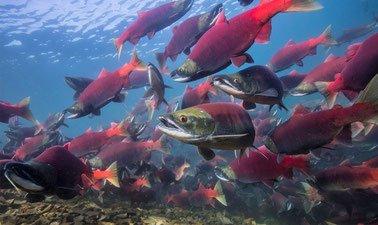
Sex requires cooperation between two individuals – a male and a female – that are in a basic conflict of interest. Furthermore, males and females compete among themselves. This complex network of cooperation and conflict forms the fascinating plot we will tell in the fifth unit that will discuss the patterns of reproduction and social behavior of different animals – corals, insects, spiders, fish, birds, and mammals. We will be intrigued to discover that the same basic conflict is resolved by a huge range of approaches, from altruistic behavior all the way to open warfare and infanticide.
The sixth unit takes us to fertilization and beyond. Starting at an IVF clinic we follow embryonic development throughout the animal kingdom from insects to tadpoles and humans.
The seventh unit is dedicated to flowering plants that made our world colorful, sweet-smelling and tasty and that produce almost all animal food.
What you'll learn
- This course will provide tools, knowledge and case studies that will enable you to reflect upon and appreciate the mysteries and wonders of sexual reproduction. Among other you will learn about:
- The eukaryotic cell and the animal and plant kingdoms
- The principles of heredity and evolution
- The significance of meiosis and how germ cells are generated
- Sex determination and why there are (usually) two sexes
- The fundamental female-male conflict and how it shapes form and behavior
- The basics of embryonal development
- The influence of plant evolution on animal development and the environment
Syllabus
Week 1 – From the eukaryotic cell to biodiversity
This chapter will start in Yellowstone NP to introduce the compound eukaryotic cell, the basis of all multicellular organisms and of sex. We will visit the natural history museum in Tel Aviv to discuss classification and the concept of species and travel to Africa to witness biodiversity. Finally, we will briefly describe the history of life on earth and ask whether we are in the midst of mass extinction.
Week 2 – Heredity and evolution
We will describe the three requirements for evolution – variability, selection, and heritability. We will prepare DNA, explain how it encodes information and learn how heredity works. We will meet peacocks and giraffes and discuss sexual selection.
Week 3 – Meiosis and gametogenesis
We will start by describing how cells divide and then learn about meiosis. This fundamental, ancient and conserved process is the basis of all sex as it is required for sex cell production. We will further learn about the fertility cycle and how male and female germ cells are produced.
Week 4 - Male and/or Female
In this chapter we learn about the diverse manner sex is determined and discuss the cost of sex. We will meet hermaphrodite organisms as well as organisms that change their sex during the course of their life. The basic difference between females and males is their sex cells - eggs and sperm. From this difference, many additional differences appeared in various groups leading to sexual dimorphism.
Weeks 5 - Sociality
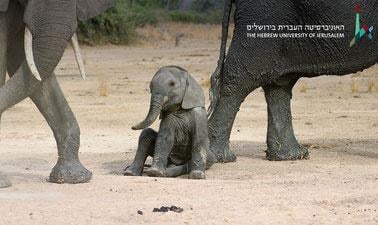
This chapter will discuss the wide and fascinating range of patterns of reproduction in the animal kingdom. The basic narrative is the conflict between males and females as well as between males and between females. We will meet many different organisms in a variety of locations and discuss examples of external vs. internal fertilization. This is the longest chapter of the course and it will focus among others on social structures in birds, mammals, monkeys, elephants, and even humans.
Week 6 – Embryonal development
This chapter will examine how the fertilized egg develops into an organism in a variety of different animal groups. We will be surprised to observe how highly conserved embryonal development is among very diverse animal groups
Week 7 – Flowers
Flowering plants represent the grandest cooperation in the living world. We will start by learning about primitive plants and their reproduction. We will then learn about flowers and pollinators and how they completely transformed our world. We will conclude with the rather peculiar dual-mode of fertilization in flowers.