EdX

Urban Ecology Design (edX)

Urban Ecology Design (edX)

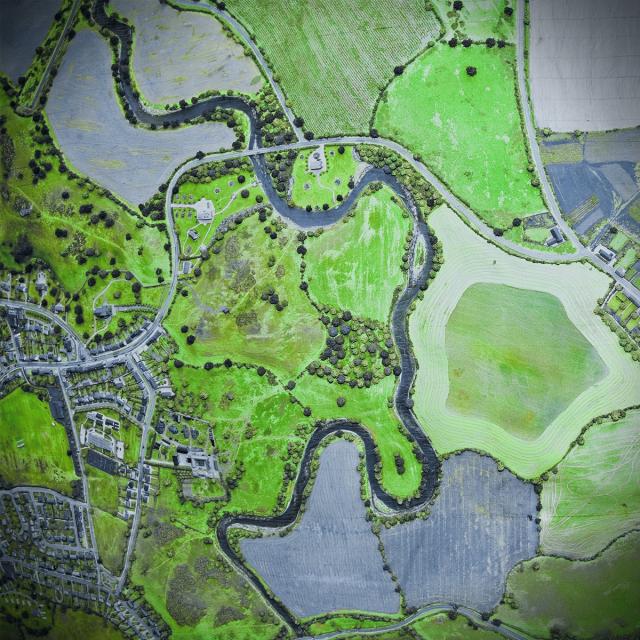
Learn how to contribute to a more biodiverse, nature-inclusive and sustainable built environment by using nature-based solutions in your designs and policies. As our urban habitats become increasingly complex, the need to address the challenges of accommodating a growing human population becomes ever more pressing. These challenges, intricately intertwined with the built environment and its wider surroundings, encompass the perils of heat stress, loss of biodiversity, land degradation, flood risks, and the urgent need to adapt to a changing climate.

Class Deals by MOOC List - Click here and see EdX's Active Discounts, Deals, and Promo Codes.

Designed for a wide range of professionals – architects, landscape architects, urbanists, civil engineers, water managers, decision-makers, budget holders, policymakers and any green stakeholders – this course offers a unique opportunity to deepen your understanding and develop your skills so as to incorporate biodiversity and urban ecology into your designs, policies and practices.
You will delve into the art and science of nature-based urban design, exploring innovative concepts such as (tree) wadis that not only enhance water infiltration and biodiversity but also improve the overall quality of urban spaces.
This course focuses on how to plan spaces for biodiversity. It will show how to bring benefits through ecosystem services as well as examining the spatial layouts and distribution of ecotypes required throughout the built environment, or its agricultural or natural surroundings. The water system, habitat and species level will be the main approach.
Our Approach
Our approach to Urban Ecology Design goes beyond conventional practices, aiming to increase ecological functioning within cities. The core philosophy is to strike a harmonious balance between human culture and the natural environment, considering both the potential and limitations of natural systems, and the intricate relationships between different living organisms, including humans, and their surroundings.
If you are involved or interested in sustainable urban development, this course will equip you with the knowledge and tools to contribute to the creation of healthier, more resilient urban habitats for all species.
Join us in reshaping the future of urban and peri-urban environments through sustainable and nature-based design principles.

What you'll learn
After taking this course, you will be able to:

  • Define different perspectives on urban ecology and identify your own.
  • Evaluate a local urban ecosystem and plan for synergetic effects between ecology, climate adaptation, and other benefits.
  • Identify the differences in ecological values within cities.
  • Design for improvement of the ecological value of an urban area, on several scales.
  • Formulate a well-founded opinion about urban analysis, visions and designs.

Syllabus

Module 1: The Urban Ecosystem
In this module, the Urban Ecology Design approach will be introduced, and you’ll gain knowledge on the Urban Ecosystem. You’ll learn to analyze the Urban Ecosystem by studying the one you live in. What challenges does your living environment, region, or country face?

Module 2: The Urban Habitat
In this module, you’ll gain knowledge on urban habitats via lectures on urban ecology and biodiversity in general, their benefits to the environment and how to design improvements to them. You’ll zoom in from the Urban Ecosystem you studied in module 1 onto a local urban habitat and look at how you could improve it.

Module 3: Urban Ecology Design
In this module, multiple design examples show how you could establish synergetic effects by taking Urban Ecology as the starting point in your (re-) design for an urban location that you encounter regularly. You’ll take the urban analysis and vision making from the previous modules as the basis for a design to improve the urban habitat, for us humans as well as non-humans.


Go to Class
MOOC List is learner-supported. When you buy through links on our site, we may earn an affiliate commission.

Related Courses

Principios ecológicos para la comprensión de la sostenibilidad ambiental (edX) EdX
The Pontificia Universidad Javeriana,JaverianaX

Principios ecológicos para la comprensión de la sostenibilidad ambiental (edX)

Tendencias de la Ecología y la Conservación de la Biodiversidad para generar acción colectiva desde el conocimiento técnico y científico. Hablar del cuidado del medio ambiente y la sostenibilidad parece tarea de todos, pero difícilmente en nuestras acciones cotidianas demostramos estar realmente conscientes de la importancia de conocer nuestra casa común para cuidar de ella.

No sessions available
4 Weeks
Introducción al diseño de hardware con Verilog (edX) EdX
Galileo University,GalileoX

Introducción al diseño de hardware con Verilog (edX)

Aprende el lenguaje de descripción de hardware Verilog, utilizado en la industria en el diseño de hardware digital y microprocesadores a la medida. En la actualidad, el hardware de soporte en sistemas digitales se suele diseñar en un solo circuito integrado FPGA (Field Programmable Gate Array), en parte debido al abundante espacio físico que ocuparía una implementación con varios circuitos integrados dedicados para este fin.

Self Paced
Self-Paced
Principios esenciales de diseño en Tableau (Coursera) Coursera
Universidad Austral

Principios esenciales de diseño en Tableau (Coursera)

En este curso, analizarás y aplicarás principios de diseño esenciales para tus visualizaciones en Tableau. Este curso asume que comprendes las herramientas dentro de Tableau y tienes algún conocimiento de los conceptos fundamentales de visualización de datos. Definirás y examinarás las similitudes y diferencias del análisis exploratorio y estudio, así como comenzarás a hacerte las preguntas correctas sobre lo que se necesita en una visualización.

Sep 14th 2026
4 Weeks
Sustainable Soil Management: Soil for life (edX) EdX
Wageningen University,WageningenX

Sustainable Soil Management: Soil for life (edX)

Learn why soil is so important, how it’s being threatened and what we can do to protect this natural resource so vital to our lives. Soil is the earth’s fragile skin that anchors all life. We depend on soil to build our homes and cities, to grow crops for food and raise livestock, to support transportation and enable recreation. Yet we disregard this crucial and precious resource that lies right under our feet.

Self Paced
Self-Paced
Human-Computer Interaction IV: Evaluation, Agile Methods & Beyond (edX) EdX
Georgia Institute of Technology,GTx

Human-Computer Interaction IV: Evaluation, Agile Methods & Beyond (edX)

Complete your understand of the design life cycle by learning to take interface ideas, prototype them quickly, and evaluate them with real users. Finally, tie principles and methods together and learn the next steps you could take in HCI. This course takes you through the last nine lessons of CS6750: Human-Computer Interaction as taught in the Georgia Tech Online Master of Science in Computer Science program.

Self Paced
Self-Paced
Parametric Designs in Revit (edX) EdX
RUDN University,RUDNx

Parametric Designs in Revit (edX)

You will get a systematic view of the course, learn the basics of parametric designs as a new tool for learning and transforming the world of architecture, the key to the success of modern architecture, demanded by managers who change their companies for the better. Together with practitioners and experts, you will explore the possibilities of innovational designs in architecture. This course represents the study and practical use of topics that are the fundamental basis of architecture.

Sef Paced
Self-Paced
Human-Computer Interaction I: Fundamentals & Design Principles (edX) EdX
Georgia Institute of Technology,GTx

Human-Computer Interaction I: Fundamentals & Design Principles (edX)

Learn the principles of Human-Computer Interaction to create intuitive, usable interfaces, with established design principles like feedback cycles, direct manipulation, affordances, signifiers, and more. This course takes you through the first eight lessons of CS6750: Human-Computer Interaction as taught in the Georgia Tech Online Master of Science in Computer Science program.

Self Paced
Self-Paced
Virtual Building Design for Engineers Using Autodesk Revit (edX) EdX
University of Maryland, College Park,University System of Maryland - USM,USMx,UMD

Virtual Building Design for Engineers Using Autodesk Revit (edX)

This course is a beginners guide to Autodesk Revit software. Students will learn the fundamentals of Autodesk Revit’s functionality and how Design Professionals and Project Teams use Autodesk Revit-centric and BIM-centric workflows for design and construction optimization, coordination, visualization, and automation.

Self Paced
Self-Paced
Stability and Design of Structural Members (edX) EdX
Purdue University,PurdueX

Stability and Design of Structural Members (edX)

Learn fundamental concepts of buckling analysis and design of structural members for stability concerns for beam and column elements. Buckling can be a controlling limit state for many structural elements. This course will cover the intersection of buckling and member design – specifically the behavior of columns and beam elements.

No sessions available
5-12 Weeks
Ergonomics in Design (edX) EdX
The Hong Kong University of Science and Technology - HKUST,HKUSTx

Ergonomics in Design (edX)

The course is designed to provide a basic understanding of ergonomics in design through the introduction of human anatomy, anthropometry, and modeling techniques with the aim of improving safety, productivity, comfort and health of people. Ergonomics is the application of scientific information about people in order to design products and systems so that they are safe, productive, comfortable and healthy for people to use.

Self Paced
Self-Paced