EdX

Medicinal Chemistry: The Molecular Basis of Drug Discovery (edX)

Offered by Davidson College,
Medicinal Chemistry: The Molecular Basis of Drug Discovery (edX)

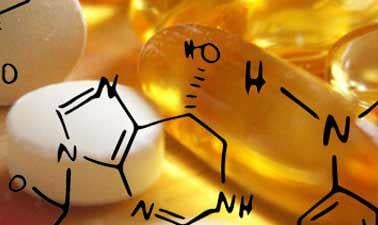
Gain a better understanding of the drug discovery process to learn how safe, effective drugs are developed and optimized. This medicinal chemistry course explores how chemists modify a molecule’s structure to design a safe and effective drug.

Class Deals by MOOC List - Click here and see EdX's Active Discounts, Deals, and Promo Codes.

This course opens with a brief history of drug discovery and introduces the modern drug approval process. Then, we will transition to learning about receptors and enzymes, the body’s molecules most often targeted by drugs. We will also discuss the topics of pharmacokinetics (drug adsorption, elimination, and half-life) and metabolism. The course closes with units on how potential drug molecules are identified and subsequently optimized into safe and effective drugs.

What you'll learn:

  • How to measure the activity of enzymes and receptors
  • Methods for modeling a drug’s half-life
  • How to predict and alter the metabolism of a molecule
  • Techniques for discovering molecules with desired biological activity
  • Approaches for optimizing a molecule into a safe and effective drug

Syllabus

Week 1: Pre-Regulatory Medicine and the Drug Approval Process Early natural products and synthetic molecules used as drugs Safety issues in the first drugs Modern drug discovery and approval process Intellectual property issues with drugs
Week 2: Drug Targets Structure of proteins Enzymes, enzymatic activity, and inhibition Receptors and molecules that modulate their activity Examination 1
Week 3: Pharmacokinetics Drug transport in the blood Clearance Volume of distribution Compartment modeling
Week 4: Metabolism Types of metabolic reactions Genetic and population effects Prodrugs Examination 2
Week 5: Binding, Structure, and Diversity Intermolecular forces Drug-target complementarity Molecular diversity and chemical libraries Combinatorial chemistry
Week 6: Lead Discovery Drug screening Filtering hits to find leads Existing drugs and natural products as leads
Week 7: Lead Optimization Functional group replacements Alkyl group replacements Isosteres and bioisosteres Peptidomimetics Examination 3

Go to Class
MOOC List is learner-supported. When you buy through links on our site, we may earn an affiliate commission.

Related Courses

Cement Chemistry and Sustainable Cementitious Materials (edX) EdX
École Polytechnique Fédérale de Lausanne,EPFLx

Cement Chemistry and Sustainable Cementitious Materials (edX)

Learn the basics of cement chemistry and laboratory best practices for assessment of its key properties. Every day, we see concrete used all around us – to build our houses, offices, schools, bridges, and infrastructure. But few people actually understand what gives concrete its strength, resistance, and utility. The aim of this course is to offer basic cement chemistry to practitioners, as well as new students in the fields of chemistry and engineering.

Self Paced
Self-Paced
Essential Human Biology: Cells and Tissues (edX) EdX
University of Adelaide,AdelaideX

Essential Human Biology: Cells and Tissues (edX)

An introduction to the human body's most fundamental building blocks and their behaviours in health and disease. Are you preparing for a health-related career, or planning to study in the health sciences? Perhaps you're just keen to learn more about the wonders of the human body? Our bodies are amazing but complex biological machines. This course will provide you with an outstanding foundation of knowledge in human anatomy and physiology.

Self Paced
Self-Paced
The Opioid Crisis in America (edX) EdX
HarvardX,Harvard University

The Opioid Crisis in America (edX)

Learn about the opioid epidemic in the United States, including information about treatment and recovery from opioid addiction. On average, 130 Americans die every day from an overdose of opioids, the class of drugs that includes heroin, hydrocodone, codeine, morphine, and fentanyl. Around 70% of all opioid overdose deaths involved a prescription opioid. Drug overdose is now the leading cause of accidental death in the United States — opioid addiction is driving this epidemic.

Self Paced
Self-Paced
Principles of Biochemistry (edX) EdX
HarvardX,Harvard University

Principles of Biochemistry (edX)

This introduction to biochemistry explores the molecules of life, starting at simple building blocks and culminating in complex metabolism. Principles of Biochemistry integrates an introduction to the structure of macromolecules and a biochemical approach to cellular function. Topics addressing protein function will include enzyme kinetics, the characterization of major metabolic pathways and their interconnection into tightly regulated networks, and the manipulation of enzymes and pathways with mutations or drugs.

Self Paced
Self-Paced
Trasplante de órganos: desafíos éticos y jurídicos (edX) EdX
Universidad Autonoma de Madrid,UAMx

Trasplante de órganos: desafíos éticos y jurídicos (edX)

En este curso analizaremos algunos interrogantes éticos y jurídicos que suscita el trasplante de órganos. Desde que en 1954 se realizara el primer trasplante exitoso de un órgano, la cirugía de trasplantes se ha desarrollado espectacularmente brindando esperanza y calidad de vida a muchos enfermos.

Self Paced
Self-Paced
Zoologia (edX) EdX
University of Naples Federico II,FedericaX

Zoologia (edX)

Comprendere gli animali e i sistemi naturali, attraverso il filo conduttore dell’evoluzione. Un viaggio da percorrere con l’entusiasmo di un bambino e la professionalità di uno studioso. La zoologia è la conoscenza degli animali, i nostri coinquilini. Ci sono centinaia di specie animali che interagiscono insieme a noi in una relazione di comunità o ecosistema. Questo corso di Zoologia è una passeggiata nei temi propri della materia come elemento culturale essenziale per il biologo, il naturalista e chiunque si occupi della vita.

Self Paced
Self-Paced
El enlace químico y las interacciones moleculares (edX) EdX
Universitat Politècnica de València,UPValenciaX

El enlace químico y las interacciones moleculares (edX)

Aprenderemos a identificar los tipos de enlace presentes en los compuestos químicos y a relacionar la estructura de éstos con sus propiedades. Los materiales que utilizamos diariamente y los objetos que nos rodean están formados por sustancias químicas cuyas propiedades, aplicaciones y transformaciones dependen del tipo de enlace que las caracteriza. El tipo de enlace condiciona la interacción entre las moléculas de un compuesto.

Self Paced
Self-Paced
Fundamentals of Neuroscience, Part 2: Neurons and Networks (edX) EdX
HarvardX,Harvard University

Fundamentals of Neuroscience, Part 2: Neurons and Networks (edX)

Discover what makes your brain tick in this second part of a four-part introductory series in Neuroscience. Neurons in isolation are fascinating and complicated, but the real magic of neuroscience happens in the interaction between neurons. In this course, we examine how neurons pass signals to one another and how complex dynamics can result from just a few neurons arranged in relatively simple circuits.

Self Paced
Self-Paced
Basic Analytical Chemistry (edX) EdX
The University of Tokyo,UTokyoX

Basic Analytical Chemistry (edX)

Gain a physical understanding of the principles of analytical chemistry and their application in scientific research. Analytical chemistry takes a prominent position among all fields of experimental sciences, ranging from fundamental studies of Nature to industrial or clinical applications. Analytical chemistry covers the fundamentals of experimental and analytical methods and the role of chemistry around us.

Self Paced
Self-Paced
Advanced Cardiac Imaging: Cardiac Magnetic Resonance (CMR) (edX) EdX
University of Hong Kong,HKUx

Advanced Cardiac Imaging: Cardiac Magnetic Resonance (CMR) (edX)

First ever cardiac magnetic resonance (CMR) MOOC! Learn the CMR essentials through short videos, downloadable cases & web forums. Available in multiple languages & follows guidelines for level 1 requirements. This course is for radiologists, cardiologists, radiographers/ technologists and other health professionals who want to learn more about cardiovascular magnetic resonance imaging (CMR). Previous experience in CMR is not required.

Self Paced
Self-Paced