EdX

Molecular Biology - Part 1: DNA Replication and Repair (edX)

Offered by MIT, MITx,
Molecular Biology - Part 1: DNA Replication and Repair (edX)

An in-depth adventure through DNA replication and repair to strengthen your scientific thinking and experimental design skills. You’re acquainted with your DNA, but did you know that your cells synthesize enough DNA during your lifetime to stretch a lightyear in length? How does the cellular machinery accomplish such a feat without making more mistakes than you can survive?

Class Deals by MOOC List - Click here and see EdX's Active Discounts, Deals, and Promo Codes.

Why isn’t the incidence of cancer even higher than it is? And, if the DNA in each and every cell is two meters long, how is this genetic material compacted to fit inside the cell nucleus without becoming a tangled mess?

Are you ready to go beyond the “what" of scientific information presented in textbooks and explore how scientists deduce the details of these molecular models?
Take a behind-the-scenes look at modern molecular genetics, from the classic experimental events that identified the proteins involved in DNA replication and repair to cutting-edge assays that apply the power of genome sequencing. Do you feel confident in your ability to design molecular biology experiments and interpret data from them? We've designed the problems in this course to build your experimental design and data analysis skills.
Let’s explore the limits of our current knowledge about the replication machinery and pathways that protect the fidelity of DNA synthesis. If you are up for the challenge, join us in 7.28x Part 1: DNA Replication and Repair.

What you'll learn

  • How to compare and contrast the mechanisms of DNA replication in prokaryotes and eukaryotes
  • How to describe several enzymatic mechanisms that the cell uses to repair or tolerate DNA damage
  • How to analyze protein structures to infer functional information
  • Design methods for the best experiment to test a hypothesis related to DNA replication or repair proteins
  • How to interpret data from DNA replication and repair experiments

Prerequisites:
7.00x Introduction to Biology and 7.05x Biochemistry or similar (biochemistry, molecular biology, and genetics).
Go to Class
MOOC List is learner-supported. When you buy through links on our site, we may earn an affiliate commission.

Related Courses

Tropical Coastal Ecosystems (edX) EdX
University of Queensland,UQx

Tropical Coastal Ecosystems (edX)

Take the challenge and understand problems and solutions to managing tropical coastal ecosystems. Do you want to develop the skills and knowledge needed to help preserve tropical coastal ecosystems? These habitats provide goods and services for hundreds of millions of people but human activities have led to their global decline.

Self Paced
Self-Paced
Principles of Biochemistry (edX) EdX
HarvardX,Harvard University

Principles of Biochemistry (edX)

This introduction to biochemistry explores the molecules of life, starting at simple building blocks and culminating in complex metabolism. Principles of Biochemistry integrates an introduction to the structure of macromolecules and a biochemical approach to cellular function. Topics addressing protein function will include enzyme kinetics, the characterization of major metabolic pathways and their interconnection into tightly regulated networks, and the manipulation of enzymes and pathways with mutations or drugs.

Self Paced
Self-Paced
AP® Biology - Part 2: Genetics (edX) EdX
Rice University,RiceX

AP® Biology - Part 2: Genetics (edX)

The second course in a comprehensive series designed to prepare you for the AP Biology exam, focusing on genetics and DNA. Preparing for the AP Biology exam requires a deep understanding of many different topics in biology as well as an understanding of the format of the AP exam and the types of questions it asks. This course is Part 2 of the AP Biology series designed to prepare you for the AP Biology exam.

No sessions available
5-12 Weeks
The Chemistry of Life (edX) EdX
Kyoto University,KyotoUx

The Chemistry of Life (edX)

Learn how to generate ideas at the interface between chemistry and biology. Chemistry and biology are traditionally taught as separate subjects at the high school level, where students memorize fundamental scientific principles that are universally accepted. However, at the university level and in industry, we learn that science is not as simple as we once thought. We are constantly confronted by questions about the unknown and required to use creative, integrated approaches to solve these problems.

Self Paced
Self-Paced
Global Warming Science (edX) EdX
MIT,MITx

Global Warming Science (edX)

Learn about the physics, chemistry, biology, and geology of the earth’s climate system. Global Warming Science teaches you about the risks and uncertainties of future climate change by examining the science behind the earth’s climate. You will be able to answer such questions as, “What is the Greenhouse Effect?” and “How and why has earth’s climate changed through geologic history?”

No sessions available
13-24 Weeks
Genomic Medicine Gets Personal (edX) EdX
Georgetown University,GeorgetownX

Genomic Medicine Gets Personal (edX)

This course will provide an introduction to genomic medicine and a better understanding of the issues associated with personal genomic information. While the advances in genomics promise to usher a new era in medical practice and create a major paradigm shift in patient care, the ethical, legal and social impact of genomic medicine will be equally significant. The information and potential use of genomic discoveries are no longer issues left for scientists and medical professionals to handle, but have become ones for the public at large.

No sessions available
4 Weeks
Super-Earths And Life (edX) EdX
HarvardX,Harvard University

Super-Earths And Life (edX)

Learn about the Earth, life, and how we can search for life elsewhere in the universe. Are we alone in this universe? What new information and observations on exoplanets have we discovered? In the past decade, astronomers have made incredible advances in the discovery of planets outside our solar system. Thirty years ago, we knew only of the planets in our own solar system. Now we know of thousands circling nearby stars.

Self Paced
Self-Paced
Exploring Psychology's Core Concepts | 走进心理学 (edX) EdX
Tsinghua University,TsinghuaX

Exploring Psychology's Core Concepts | 走进心理学 (edX)

How do you interpretThe Da Vinci Code? Isa sleepwalker aware of themselves? Is language before the mind or the contrary? This course will answer these questions and more with psychology theories. How to decipher the Da Vinci Code? Does a person know that he is sleepwalking? Which came first, language or thought? This course will use the latest and coolest psychological theories to answer these questions.

Self Paced
Self-Paced
Irrigation Efficiency: more food with less water (edX) EdX
KU Leuven University,KULeuvenX

Irrigation Efficiency: more food with less water (edX)

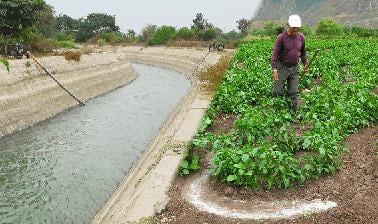
Learn to improve the efficiency of different irrigation system components over varying scales in order to extract less water from our resources while producing more food. How can we meet the demands of our ever hungrier and thirstier world? Irrigation water uses 70% of the fresh water extraction worldwide to produce 40% of the food.

Self Paced
Self-Paced
Innovate & Regulate: Drug Research, Costs, Clinical Trials & Approval (edX) EdX
Davidson College,DavidsonX

Innovate & Regulate: Drug Research, Costs, Clinical Trials & Approval (edX)

At some point in their life, essentially everyone needs to use medication for some type of disease treatment or cure. While medications offer great benefits, the cost of drugs, especially new drugs, and the lack of treatment for some diseases can raise questions about business activity behind the creation of new drugs. Better understanding of how drugs are discovered and developed as well as the legal and regulatory factors that affect the industry can help one better recognize both the shortcomings and opportunities faced by the drug industry at large.

Self Paced
Self-Paced