EdX

Industrial Fermentation (edX)

Industrial Fermentation (edX)

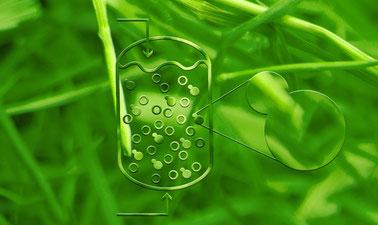
Get introduced to the essentials of industrial fermentation processes, which convert renewable feedstocks into biomaterials, chemicals, nutrition products and biofuels with the help of microorganisms. Industrial fermentation is the central operation in a broad, sustainable value chain, also involving the upstream generation and supply of renewable feedstocks, and downstream purification of the products formed.

Class Deals by MOOC List - Click here and see EdX's Active Discounts, Deals, and Promo Codes.

In this course you will understand how the essential process inputs and outputs are connected via biological and physical mechanisms, and form the basis of process design, scrutiny, optimization and scaling between factory and lab.
This course provides the insights and tools for designing industrial fermentation processes with sustainability advantages, where choices of product and feedstock determine the specific process requirements. Six experienced course leaders will reveal the essentials of industrial fermentation and how to apply these for conceptual design and quantification, resulting in basic mathematical frames and models. Throughout the course, you will apply the theory to a case study where you will produce the building block 1,3-propane diol (PDO) from sugar. Also, you will experience what are the main pitfalls (‘banana skins’) and how to stay away from them.
The course includes guest lectures from industry and universities.
This course is geared towards Biologists, Biotechnologists and Chemical and Environmental Engineers, but will also be of value to others with a different science and engineering background or interest, working in the field of research, development and manufacturing, who wish to deepen their knowledge of industrially relevant fermentation technology and operations.
This course is part of the Industrial Biotechnology and Industrial Fermentation Professional Certificate.

What you'll learn
After this course all learners will be in a position to:

  • Describe the essence of industrial fermentation
  • Utilize insights gained to design an industrial scale quantitative fermentation plant
  • Explain the causes and remedies for scale-up issues, from lab to factory
  • Apply the insights to suggest improvements for industrial fermentation processes and design of down-scaled lab-scale simulators

Syllabus

Getting started and introduction is included in Week 1

Unit 1. Industrial Fermentation

  • Industrial Fermentation: the Great Adventure?
  • Industrial Fermentation Essentials (preliminary title)
  • Benefits for society and sustainability - evaluating the effects of biobased production (preliminary title)
  • Process to produce bio-PDO (1,3-Propanediol)
  • Renewable Feedstocks for Fermentation (preliminary title)

Unit 2. Balances and Microbial Rates

  • Microorganisms and their function in nature
  • Functional understanding of nutrient requirements for microbial growth
  • Learning about the process: broth balances
  • Learning about the process: gas-phase balances
  • Learning about the microorganism: q-rates and chemostat
  • Learning about the process and organism: batch
  • Extra guest lecture: balances
  • Extra: banana skins
  • PDO case
  • Best practice: mixed cultures

Unit 3. The Black Box Model and Process Reaction

  • The process reaction
  • Basics of the black box model
  • Energy consuming and energy producing products
  • A PDO black box model: experiments for parameter identification
  • Black box models: The PDO process reaction as function of μ
  • PDO continuous process design: calculation of inputs and outputs using the process reaction
  • Aerobic PDO process: improving sustainability
  • Introduction to Metabolic Flux Analysis
  • PDO case
  • Best practice: succinic acid

Unit 4. Fermentation Design

  • Introduction to fermentation technology
  • The large-scale fermenter
  • Fermenter operation
  • Gas transport
  • Heat transport
  • Mixing
  • Basic approach to design and then optimize a PDO fermentation process
  • PDO case
  • Best practice: artemisinin

Unit 5. Scale-down and Scale-up

  • Introduction to scale-effects
  • Similarity and scaling approaches
  • Scaling Macro- Micro-balances
  • Dimensional scaling
  • Computational fluid dynamics for scaling
  • Industrial examples

Unit 6. Wrap-up

  • Closing lecture: Industrial Fermentation: where we are now, and where we will go?
  • Final assessment
Go to Class
MOOC List is learner-supported. When you buy through links on our site, we may earn an affiliate commission.

Related Courses

Essential Human Biology: Cells and Tissues (edX) EdX
University of Adelaide,AdelaideX

Essential Human Biology: Cells and Tissues (edX)

An introduction to the human body's most fundamental building blocks and their behaviours in health and disease. Are you preparing for a health-related career, or planning to study in the health sciences? Perhaps you're just keen to learn more about the wonders of the human body? Our bodies are amazing but complex biological machines. This course will provide you with an outstanding foundation of knowledge in human anatomy and physiology.

Self Paced
Self-Paced
Molecular Biology – Part 3: RNA Processing and Translation (edX) EdX
MIT,MITx

Molecular Biology – Part 3: RNA Processing and Translation (edX)

An in-depth adventure through RNA Processing and Translation. Strengthen your scientific thinking and biological experimental design skills. In Part 3 of 7.28x, you’ll explore translation of mRNA to protein, a key part of the central dogma of biology. Do you know how RNA turnover or RNA splicing affects the outcome of translation? Although not official steps in the central dogma, the mechanisms of RNA processing strongly influence gene expression.

Self Paced
Self-Paced
Super-Earths And Life (edX) EdX
HarvardX,Harvard University

Super-Earths And Life (edX)

Learn about the Earth, life, and how we can search for life elsewhere in the universe. Are we alone in this universe? What new information and observations on exoplanets have we discovered? In the past decade, astronomers have made incredible advances in the discovery of planets outside our solar system. Thirty years ago, we knew only of the planets in our own solar system. Now we know of thousands circling nearby stars.

Self Paced
Self-Paced
Cell Biology: Mitochondria (edX) EdX
HarvardX,Harvard University

Cell Biology: Mitochondria (edX)

A human-centered approach to the fundamentals of cell biology with a focus on the power plants of the cell - mitochondria. The cell is a powerful case study to help us explore the functional logic of living systems. All organisms, from single-celled algae to complex multicellular organisms like us, are made up of cells. In this course, you will learn the how and why of biology by exploring the function of the molecular components of cells, and how these cellular components are organized in a complex hierarchy.

Self Paced
Self-Paced
Introduction to Animal Behaviour (edX) EdX
Wageningen University,WageningenX

Introduction to Animal Behaviour (edX)

Explore the amazing range and complexity of wild animal behaviour. Discover how animals learn, communicate, find food, avoid predators, and interact socially. Do you want to understand how and why animals behave the way they do, and how we test hypotheses about behaviour scientifically? This biology and life sciences course provides an introduction to the complexities of wild animal behaviour, and how it is studied.

Self Paced
Self-Paced
Tropical Coastal Ecosystems (edX) EdX
University of Queensland,UQx

Tropical Coastal Ecosystems (edX)

Take the challenge and understand problems and solutions to managing tropical coastal ecosystems. Do you want to develop the skills and knowledge needed to help preserve tropical coastal ecosystems? These habitats provide goods and services for hundreds of millions of people but human activities have led to their global decline.

Self Paced
Self-Paced
Introduction to Biology - The Secret of Life (edX) EdX
MIT,MITx

Introduction to Biology - The Secret of Life (edX)

Explore the secret of life through the basics of biochemistry, genetics, molecular biology, recombinant DNA, genomics and rational medicine. 7.00x is an introductory level biology course hosted by professor Eric Lander, who was one of the leaders of the Human Genome Project. The course content reflects the topics taught in the MIT introductory biology courses and many biology courses across the world.

Mar 12th 2024
13-24 Weeks
The Chemistry of Life (edX) EdX
Kyoto University,KyotoUx

The Chemistry of Life (edX)

Learn how to generate ideas at the interface between chemistry and biology. Chemistry and biology are traditionally taught as separate subjects at the high school level, where students memorize fundamental scientific principles that are universally accepted. However, at the university level and in industry, we learn that science is not as simple as we once thought. We are constantly confronted by questions about the unknown and required to use creative, integrated approaches to solve these problems.

Self Paced
Self-Paced
The Extremes of Life: Microbes and Their Diversity (edX) EdX
Kyoto University,KyotoUx

The Extremes of Life: Microbes and Their Diversity (edX)

Microbes are everywhere! Find out how diverse microbial life is, and what their genome sequences tell us. Life on our planet is diverse. While we can easily recognize this in our everyday surroundings, an even more diverse world of life can be seen when we look under a microscope. This is the world of microorganisms.

This course is archived
4 Weeks