The Outcomes and Interventions of Health Informatics (Coursera)

The Outcomes and Interventions of Health Informatics (Coursera)

For clinical data science to be effective in healthcare—to achieve the outcomes desired—it must translate into decision support of some sort, either at the patient, clinician, or manager level. By the end of this course, students will be able to articulate the need for an intervention, to right size it, to choose the appropriate technology, to describe how knowledge should be obtained, and to design a monitoring plan.

Class Deals by MOOC List - Click here and see Coursera's Active Discounts, Deals, and Promo Codes.

What You Will Learn

  • Identify opportunities for healthcare informatics interventions.
  • Apply a structured framework for articulating the components of decision support.
  • Design knowledge acquisition for decision support.
  • Outline a health informatics solution for decision support

Course 3 of 5 in the Health Informatics Specialization

Syllabus

WEEK 1
Knowing Where to Intervene
In this module, you will be introduced to the course through a range of decision support interventions used in health care. We will examine the Five Rights of decision support and go on to discuss the basics for deciding whether to build an intervention and, having done so, how to evaluate it.

WEEK 2
Defining Decision Support
In this module, we will focus on issues of design, both for decision support and as they apply more broadly across multiple environments.

WEEK 3
Using Transactional and Summative Data and Knowledge for Decision Support
In this module, we return to decision support, focusing on rules-- the key structure in most decision support. We'll provide a key framework for making sure you have all the minimum components for ensuring a successful implementation. We'll also address issues of languages used by rules and how to keep rules consistent within and between institutions.

WEEK 4
Eliciting and Creating Knowledge for Decision Support
In this module, we will go behind the scenes of decision support, examining where and how we get the knowledge that drives decision support --including data science-- for generating knowledge from data.

Go to Class
MOOC List is learner-supported. When you buy through links on our site, we may earn an affiliate commission.

Related Courses

Health for All Through Primary Health Care (Coursera) Coursera
Johns Hopkins University

Health for All Through Primary Health Care (Coursera)

This course explores why primary health care is central for achieving Health for All. It provides examples of how primary health care has been instrumental in approaching this goal in selected populations and how the principles of primary health care can guide future policies and actions. Two of the most inspiring, least understood, and most often derided terms in global health discourse are “Health for All” and “Primary Health Care.”

Jun 28th 2026
5-12 Weeks
Value and Individual Decision Making (Coursera) Coursera
Yunus Social Business Fund Bengaluru

Value and Individual Decision Making (Coursera)

This course is part of a Specialization titled “Strategy and Finance for a Lifecycle of a Social Business”. It is an introduction to time value of money and will help the learner understand the basics of finance with the ultimate goal of valuing a company from a societal lens. The beauty of the modern decision-making framework is that it can be used to understand value creation at any level – the individual, the corporate or nonprofit entity level and from the point of view of society. The applications however become increasingly complex as your lens expands from the individual to the corporate/nonprofit to the global society.

Jun 24th 2026
5-12 Weeks
Medical Neuroscience (Coursera) Coursera
Duke University

Medical Neuroscience (Coursera)

Medical Neuroscience explores the functional organization and neurophysiology of the human central nervous system, while providing a neurobiological framework for understanding human behavior. In this course, you will discover the organization of the neural systems in the brain and spinal cord that mediate sensation, motivate bodily action, and integrate sensorimotor signals with memory, emotion and related faculties of cognition. The overall goal of this course is to provide the foundation for understanding the impairments of sensation, action and cognition that accompany injury, disease or dysfunction in the central nervous system. The course will build upon knowledge acquired through prior studies of cell and molecular biology, general physiology and human anatomy, as we focus primarily on the central nervous system.

Jun 22nd 2026
13-24 Weeks
Preventing Chronic Pain: A Human Systems Approach (Coursera) Coursera
University of Minnesota

Preventing Chronic Pain: A Human Systems Approach (Coursera)

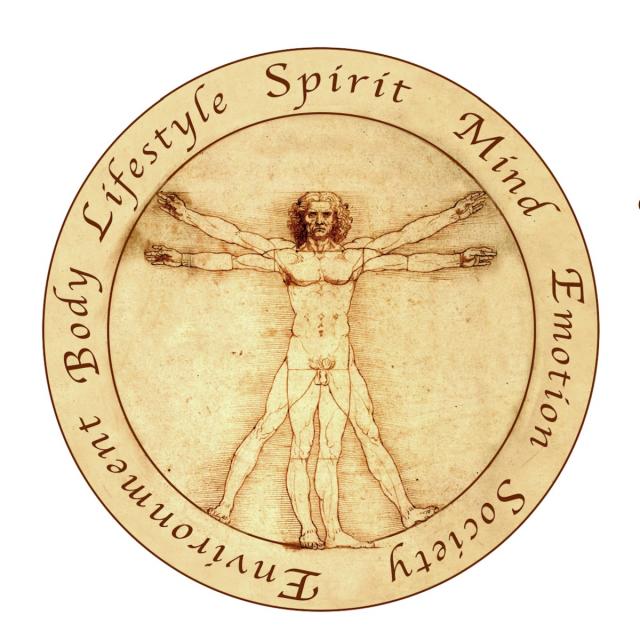
Chronic pain is at epidemic levels and has become the highest-cost condition in health care. This course uses both creative and experiential learning to better understand chronic pain conditions and how they can be prevented through self-management in our cognitive, behavioral, physical, emotional, spiritual, social, and environmental realms.

Jun 22nd 2026
5-12 Weeks
Value and Business Decision Making (Coursera) Coursera
Yunus Social Business Fund Bengaluru

Value and Business Decision Making (Coursera)

This course is part of a Specialization titled “Strategy and Finance for a Lifecycle of a Social Business”. It is an introduction to time value of money and will help the learner understand the basics of finance with the ultimate goal of valuing a company from a societal lens. The beauty of the modern decision-making framework is that it can be used to understand value creation at any level – the individual, the corporate or nonprofit entity level and from the point of view of society. The applications however become increasingly complex as your lens expands from the individual to the corporate/nonprofit to the global society.

Jun 24th 2026
5-12 Weeks
Engaging in Enterprise Growth and Innovation (Coursera) Coursera
Northeastern University

Engaging in Enterprise Growth and Innovation (Coursera)

You will explore the challenges and processes for harnessing technological innovation for new-business development, with special focus on digital healthcare transformation. You will gain an understanding of enterprise growth and innovation topics through readings, cases, and exercises, including learning how firms from different industries gain competitive advantage through distinctive products and services. The vast expertise of faculty combined with topic perspectives from the Mayo Clinic make this an engaging and unique course.

Jun 24th 2026
4 Weeks
The Brain and Space (Coursera) Coursera
Duke University

The Brain and Space (Coursera)

This course is about how the brain creates our sense of spatial location from a variety of sensory and motor sources, and how this spatial sense in turn shapes our cognitive abilities. Knowing where things are is effortless. But “under the hood,” your brain must figure out even the simplest of details about the world around you and your position in it.

Jun 22nd 2026
5-12 Weeks
Interprofessional Healthcare Informatics (Coursera) Coursera
University of Minnesota

Interprofessional Healthcare Informatics (Coursera)

Interprofessional Healthcare Informatics is a graduate-level, hands-on interactive exploration of real informatics tools and techniques offered by the University of Minnesota and the University of Minnesota's National Center for Interprofessional Practice and Education. We will be incorporating technology-enabled educational innovations to bring the subject matter to life. Over the 10 modules, we will create a vital online learning community and a working healthcare informatics network.

Jun 22nd 2026
5-12 Weeks
Regression Models (Coursera) Coursera
Johns Hopkins University

Regression Models (Coursera)

Linear models, as their name implies, relates an outcome to a set of predictors of interest using linear assumptions. Regression models, a subset of linear models, are the most important statistical analysis tool in a data scientist’s toolkit. This course covers regression analysis, least squares and inference using regression models.

Jun 22nd 2026
4 Weeks
The Data Scientist's Toolbox (Coursera) Coursera
Johns Hopkins University

The Data Scientist's Toolbox (Coursera)

In this course you will get an introduction to the main tools and ideas in the data scientist's toolbox. The course gives an overview of the data, questions, and tools that data analysts and data scientists work with. There are two components to this course. The first is a conceptual introduction to the ideas behind turning data into actionable knowledge. The second is a practical introduction to the tools that will be used in the program like version control, markdown, git, GitHub, R, and RStudio.

Jun 22nd 2026
4 Weeks
Introduction to Genomic Technologies (Coursera) Coursera
Johns Hopkins University

Introduction to Genomic Technologies (Coursera)

This course introduces you to the basic biology of modern genomics and the experimental tools that we use to measure it. We'll introduce the Central Dogma of Molecular Biology and cover how next-generation sequencing can be used to measure DNA, RNA, and epigenetic patterns. You'll also get an introduction to the key concepts in computing and data science that you'll need to understand how data from next-generation sequencing experiments are generated and analyzed.

Jun 22nd 2026
4 Weeks