Preventing Chronic Pain: A Human Systems Approach (Coursera)

Preventing Chronic Pain: A Human Systems Approach (Coursera)

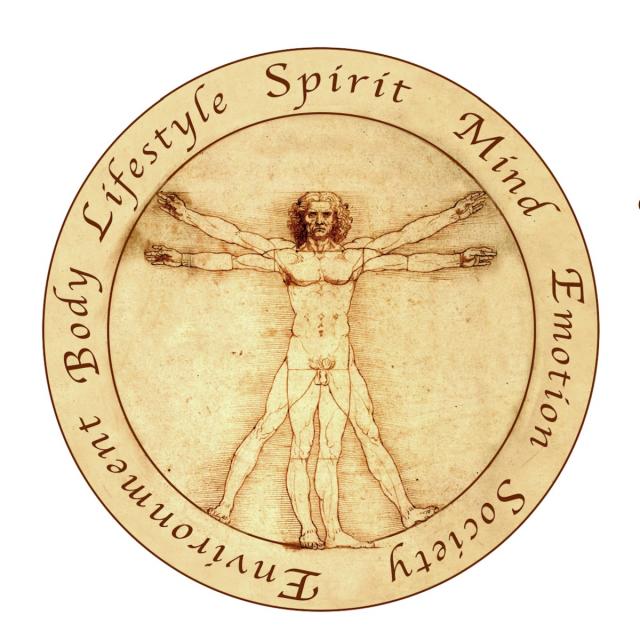
Chronic pain is at epidemic levels and has become the highest-cost condition in health care. This course uses both creative and experiential learning to better understand chronic pain conditions and how they can be prevented through self-management in our cognitive, behavioral, physical, emotional, spiritual, social, and environmental realms.

Class Deals by MOOC List - Click here and see Coursera's Active Discounts, Deals, and Promo Codes.

The goal of this course is to blend creative, experiential, and evidence-based teaching strategies to help participants understand chronic pain conditions and how a human systems approach can be applied to self-management strategies to reduce risk factors, enhance protective factors, and prevent chronic pain. There are four major objectives to the course;

  1. Describe the prevalence, personal impact, and health care dilemma associated with chronic pain.
  2. Recognize the clinical characteristics and underlying etiology of several common pain conditions and the peripheral, central, and genetic mechanisms of chronic pain
  3. Based on the literature associated with risk and protective factors in the seven realms of our lives, learn specific strategies in each realm that can be employed daily to prevent chronic pain and enhance wellness.
  4. Appreciate the value of a human systems approach to health care and how it can provide a basis for integrative, interdisciplinary, and individualized care to preventing pain and enhancing wellness.

Syllabus

WEEK 1
Introduction to the Course
In this first module, we will introduce you to the course and present an overview of the topics to be discussed and format of the course. We will also present information about receiving Continuing Education, joining the International Myopain Society, and supporting the Campaign for Preventing Chronic Pain

WEEK 2
The Problem of Chronic Pain

WEEK 3
Common Pain Conditions and their Mechanisms

WEEK 4
Common Pain Conditions and their Mechanisms

WEEK 5
Common Pain Conditions and their Mechanisms

WEEK 6
Risk and Protective Factors in the Seven Realms

WEEK 7
Risk and Protective Factors in the Seven Realms

WEEK 8
Risk and Protective Factors in the Seven Realms

WEEK 9
Risk and Protective Factors in the Seven Realms

WEEK 10
Implementing Transformative Care

Suggested Reading: The Last Scroll

Go to Class
MOOC List is learner-supported. When you buy through links on our site, we may earn an affiliate commission.

Related Courses

How Music Can Change Your Life (Coursera) Coursera
University of Melbourne

How Music Can Change Your Life (Coursera)

Did you ever wonder how music works? This course provides free video, audio and journal resources that explain six basic principles about how music can influence individual and community health and wellbeing. From biology and neuroscience, to psychotherapy and politics, the ways we engage with music can make all the difference. Music has always played an integral role in the lives of individuals and communities all around the globe.

Jun 22nd 2026
5-12 Weeks
International Hospitality & Healthcare Services Marketing (Coursera) Coursera
Yonsei University

International Hospitality & Healthcare Services Marketing (Coursera)

As the fastest-growing sectors of the current global economy, both hospitality and healthcare services sector offer tremendous growth opportunities for incumbents and entrepreneurial opportunities for new entrants. To flourish on these opportunities, one must first understand each industry's unique characteristics. This course is designed to help those who are interested in career advancement opportunities in these industries or who want to be inspired by these industries to better equip themselves with enlightened and creative management capabilities.

Jun 22nd 2026
3 Weeks
Health for All Through Primary Health Care (Coursera) Coursera
Johns Hopkins University

Health for All Through Primary Health Care (Coursera)

This course explores why primary health care is central for achieving Health for All. It provides examples of how primary health care has been instrumental in approaching this goal in selected populations and how the principles of primary health care can guide future policies and actions. Two of the most inspiring, least understood, and most often derided terms in global health discourse are “Health for All” and “Primary Health Care.”

Jun 28th 2026
5-12 Weeks
Feeding the World (Coursera) Coursera
University of Pennsylvania

Feeding the World (Coursera)

This course will explore the concepts driving current food production science (population growth, urbanization, emerging affluence, resource constraints, and underlying biological limits) with the main focus on livestock production. Each of the major food animal species (dairy, swine, beef, and poultry) will be covered in terms of their universal life cycles, constraints to production and emerging societal issues.

Jun 22nd 2026
5-12 Weeks
Interprofessional Healthcare Informatics (Coursera) Coursera
University of Minnesota

Interprofessional Healthcare Informatics (Coursera)

Interprofessional Healthcare Informatics is a graduate-level, hands-on interactive exploration of real informatics tools and techniques offered by the University of Minnesota and the University of Minnesota's National Center for Interprofessional Practice and Education. We will be incorporating technology-enabled educational innovations to bring the subject matter to life. Over the 10 modules, we will create a vital online learning community and a working healthcare informatics network.

Jun 22nd 2026
5-12 Weeks
Big Data, Genes, and Medicine (Coursera) Coursera
The State University of New York

Big Data, Genes, and Medicine (Coursera)

This course distills for you expert knowledge and skills mastered by professionals in Health Big Data Science and Bioinformatics. You will learn exciting facts about the human body biology and chemistry, genetics, and medicine that will be intertwined with the science of Big Data and skills to harness the avalanche of data openly available at your fingertips and which we are just starting to make sense of.

Jun 22nd 2026
5-12 Weeks
An Introduction to the U.S. Food System: Perspectives from Public Health (Coursera) Coursera
Johns Hopkins University

An Introduction to the U.S. Food System: Perspectives from Public Health (Coursera)

A food system encompasses the activities, people and resources involved in getting food from field to plate. Along the way, it intersects with aspects of public health, equity and the environment. In this course, we will provide a brief introduction to the U.S. food system and how food production practices and what we choose to eat impacts the world in which we live. Through several case studies, we will discuss some key historical and political factors that have helped shape the current food system and consider alternative approaches from farm to fork.

Jun 22nd 2026
5-12 Weeks
The Brain and Space (Coursera) Coursera
Duke University

The Brain and Space (Coursera)

This course is about how the brain creates our sense of spatial location from a variety of sensory and motor sources, and how this spatial sense in turn shapes our cognitive abilities. Knowing where things are is effortless. But “under the hood,” your brain must figure out even the simplest of details about the world around you and your position in it.

Jun 22nd 2026
5-12 Weeks
Medical Neuroscience (Coursera) Coursera
Duke University

Medical Neuroscience (Coursera)

Medical Neuroscience explores the functional organization and neurophysiology of the human central nervous system, while providing a neurobiological framework for understanding human behavior. In this course, you will discover the organization of the neural systems in the brain and spinal cord that mediate sensation, motivate bodily action, and integrate sensorimotor signals with memory, emotion and related faculties of cognition. The overall goal of this course is to provide the foundation for understanding the impairments of sensation, action and cognition that accompany injury, disease or dysfunction in the central nervous system. The course will build upon knowledge acquired through prior studies of cell and molecular biology, general physiology and human anatomy, as we focus primarily on the central nervous system.

Jun 22nd 2026
13-24 Weeks
HPV-Associated Oral and Throat Cancer: What You Need to Know (Coursera) Coursera
Icahn School of Medicine at Mount Sinai

HPV-Associated Oral and Throat Cancer: What You Need to Know (Coursera)

This course, offered by the Department of Otolaryngology – Head and Neck Surgery at the Icahn School of Medicine at Mount Sinai, is designed to inform primary care physicians and otolaryngologists (general and head and neck surgeons), as well as medical students, residents, nurses, physician assistants, medical assistants, about HPV-associated oral and throat cancers. It is also applicable to individuals who wish to broaden their knowledge and vernacular about this disease process, especially those who may have been diagnosed with HPV and/or HPV-associated oropharyngeal cancers.

Jun 22nd 2026
5-12 Weeks
Career 911: Your Future Job in Medicine and Healthcare (Coursera) Coursera
Northwestern University

Career 911: Your Future Job in Medicine and Healthcare (Coursera)

This course aims to help high school students, recent graduates, and those considering career transitions explore health care career options and learn strategies for entry into the health care workforce and health related fields. There are lots of amazing job opportunities in medicine and healthcare! Join us, as we share the strategies and secrets for getting those jobs.

Jun 22nd 2026
5-12 Weeks