Disease Screening in Public Health (Coursera)

Offered by University of Geneva,
Disease Screening in Public Health (Coursera)

Current and future public health is characterized by the increase of chronic and degenerative diseases, corresponding to the worldwide ageing of the population. The increasing prevalence of these conditions together with the long incubation period of the chronic diseases and the restless technological innovations, offer new opportunities to develop strategies for early diagnosis.

Class Deals by MOOC List - Click here and see Coursera's Active Discounts, Deals, and Promo Codes.

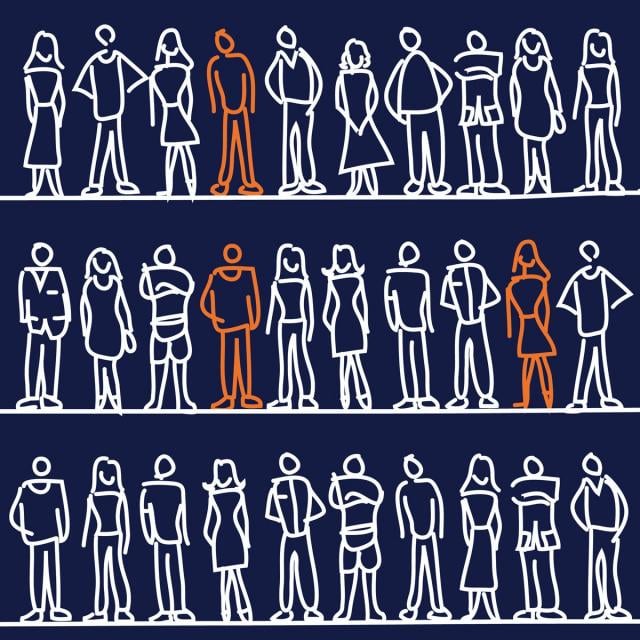
Public Health has an important mandate to critically assess the promises and the pitfalls of disease screening strategies. This MOOC will help you understand important concepts for screening programs that will be explored through a series of examples that are the most relevant to public health today. We will conclude with expert interviews that explore future topics that will be important for screening.
By the end of this MOOC, students should have the competency needed to be involved in the scientific field of screening, and understand the public health perspective in screening programs.

Syllabus

WEEK 1
Introduction to Key Concepts in Screening
This module will provide a brief welcome by Dr. Fred Paccaud and Dr. Antoine Flahault. An overview of screening and an introduction on how the course is organized and evaluated will be provided by Dr. Gillian Bartlett-Esquilant. Dr. Idris Guessous, a Senior Lecturer in the Population Epidemiology Unit in the Department of Community Medicine, Primary Care and Emergency Medicine (Geneva), and in the Department of Ambulatory Care and Community Medicine (PMU Lausanne) & Division of Chronic Diseases at the Institute of Social and Preventive Medicine (Lausanne) will provide lectures on definitions of screening. Natural history of diseases and the characteristics of subclinical conditions allowing early diagnosis will be presented. A quiz on the key concepts for screening will complete this module.

WEEK 2
Screening Metrics
The second module, provided by Dr. Idris Guessous, will address the metrics of screening with concepts related to robustness, validity and impact. A quiz on screening metrics will complete this module.

WEEK 3
Screening in Pregnancy and Newborns
This module on screening in the prenatal (pregnancy) and perinatal (newborn) stage of life is given by Professor Murielle Bochud, MD, PhD, head of the Institute of social and preventive medicine in Lausanne, Switzerland. A quiz will complete this module.

WEEK 4
Screening for Cardiometabolic Conditions
Senior lecturer Arnaud Chiolero, MD, PhD, from the Division of Chronic Diseases at the Institute of Social and Preventive Medicine in Lausanne will be presenting three case studies related to the increasingly prevalent condition of cardiometabolic disease. Three different diseases will be explored in terms of burden of disease, benefits and harms, evidence and issues followed by recommendations about whether screening should be implemented. A quiz will complete this module.

WEEK 5
Cancer Screening
Cancer is a classical field for screening because of both the improvement of the prognosis for most cancers and the usually long incubation period. This part of the MOOC will present current data, evidence and policies regarding the most important cancer sites that include colorectum, prostate, lung, cervix, breast and skin. This module is given by several experts including Elisabetta Rapiti from the Geneva Cancer Registry at the Institute of Global Health in Geneva; Professor Antoine Flahault, who is the Head of the Institute of Global Health in Geneva; and Jean-Luc Buillard who is a Senior Lecturer in the Division of Chronic Diseases at the Institute for Social and Preventive Medicine in Lausanne. A quiz will complete this module.

WEEK 6
Public Mental Health and Screening in Ageing
This module explores the topics of public mental health and screening in the ageing population for neuropsychiatric conditions and physical impairments such as hearing loss. This module is given by several experts including Emiliano Albanese, assistant professor in public mental health in the Department of Psychiatry at the University of Geneva and the Director of the WHO Collaborating Center for Research and Training in mental health at the University of Geneva; Professor Christophe Bula who is the head of the geriatric and geriatric rehabilitation service at the Vaudois University Hospital Centre; Professor Armin von Gunten who is the head of the university service for geriatric psychiatry at the Vaudois University Hospital Service. A quiz will complete this module.

WEEK 7
Screening in Low and Middle-Income Countries and Migrants
The globalization of non-communicable diseases is a major challenge in low and middle income countries (LMIC). At the same time, migration is occurring between these countries and high income countries. Screening for cardiovascular diseases and for cancer in low and middle income countries will be presented and discussed. In addition, the special consideration of screening of migrants from these countries will be addressed. This module is given by: Professor Pascal Bovet from the Division of Chronic Diseases at the Institute of Social and Preventive Medicine in Lausanne; Dr. Catherine Sauvaget from the International Agency for Research on Cancer (IARC) in Lyon, France; and Professor Patrick Bodenmann from the Polimedical University Clinic and head of the Centre for Vulnerable Populations. A quiz will complete this module.

WEEK 8
Evaluation, Planning, Implementation and the Future of Screening Programs
In this final module, important aspects of for the evaluation, planning and decision making about the implementation or stopping of screening programs will be presented. This material is given by Senior lecturer Jean-Luc Bulliard who is an epidemiologist in the Division of Chronic Diseases at the Institute for Social and Preventive Medicine in Lausanne. The conclusion of the module will be a series of interviews with experts on the future of disease screening in public health conducted by Dr. Gillian Bartlett-Esquilant, a visiting professor at the Institute for Social and Preventive Medicine at Lausanne. A quiz will close this module.

Go to Class
MOOC List is learner-supported. When you buy through links on our site, we may earn an affiliate commission.

Related Courses

How Music Can Change Your Life (Coursera) Coursera
University of Melbourne

How Music Can Change Your Life (Coursera)

Did you ever wonder how music works? This course provides free video, audio and journal resources that explain six basic principles about how music can influence individual and community health and wellbeing. From biology and neuroscience, to psychotherapy and politics, the ways we engage with music can make all the difference. Music has always played an integral role in the lives of individuals and communities all around the globe.

Jun 22nd 2026
5-12 Weeks
Confronting Gender Based Violence: Global Lessons for Healthcare Workers (Coursera) Coursera
Johns Hopkins University

Confronting Gender Based Violence: Global Lessons for Healthcare Workers (Coursera)

This course introduces participants from the healthcare sector to gender based violence (GBV), including global epidemiology of GBV; health outcomes; seminal research; and clinical best practices for GBV prevention, support, and management. A core curriculum is supplemented by lectures that contextualize the content with specific examples and programs from around the world.

Jun 22nd 2026
4 Weeks
Epidemiology: The Basic Science of Public Health (Coursera) Coursera
University of North Carolina

Epidemiology: The Basic Science of Public Health (Coursera)

Often called “the cornerstone” of public health, epidemiology is the study of the distribution and determinants of diseases, health conditions, or events among populations and the application of that study to control health problems. By applying the concepts learned in this course to current public health problems and issues, students will understand the practice of epidemiology as it relates to real life and makes for a better appreciation of public health programs and policies. This course explores public health issues like cardiovascular and infectious diseases – both locally and globally – through the lens of epidemiology.

Jun 22nd 2026
5-12 Weeks
Curanderismo: Global & Cultural Influences of Traditional Healing (Coursera) Coursera
University of New Mexico

Curanderismo: Global & Cultural Influences of Traditional Healing (Coursera)

As the last of four courses on Curanderismo, the art of Hispanic/Latino traditional medicine, this course focuses specifically on traditional healing using different techniques of many countries around the world. As an educational and cultural platform, this course will share a number of traditional global perspectives.

Jun 22nd 2026
5-12 Weeks
HPV-Associated Oral and Throat Cancer: What You Need to Know (Coursera) Coursera
Icahn School of Medicine at Mount Sinai

HPV-Associated Oral and Throat Cancer: What You Need to Know (Coursera)

This course, offered by the Department of Otolaryngology – Head and Neck Surgery at the Icahn School of Medicine at Mount Sinai, is designed to inform primary care physicians and otolaryngologists (general and head and neck surgeons), as well as medical students, residents, nurses, physician assistants, medical assistants, about HPV-associated oral and throat cancers. It is also applicable to individuals who wish to broaden their knowledge and vernacular about this disease process, especially those who may have been diagnosed with HPV and/or HPV-associated oropharyngeal cancers.

Jun 22nd 2026
5-12 Weeks
Case Studies in Personalized Medicine (Coursera) Coursera
Vanderbilt University

Case Studies in Personalized Medicine (Coursera)

Learn how advances in biomedicine hold the potential to revolutionize drug development, drug treatments, and disease prevention: where are we now, and what does the future hold? This course will present short primers in genetics and mechanisms underlying variability in drug responses. A series of case studies will be used to illustrate principles of how genetics are being brought to bear on refining diagnoses and on personalizing treatment in rare and common diseases. The ethical and operational issues around how to implement large scale genomic sequencing in clinical practice will be addressed.

Jun 22nd 2026
5-12 Weeks
Medical Neuroscience (Coursera) Coursera
Duke University

Medical Neuroscience (Coursera)

Medical Neuroscience explores the functional organization and neurophysiology of the human central nervous system, while providing a neurobiological framework for understanding human behavior. In this course, you will discover the organization of the neural systems in the brain and spinal cord that mediate sensation, motivate bodily action, and integrate sensorimotor signals with memory, emotion and related faculties of cognition. The overall goal of this course is to provide the foundation for understanding the impairments of sensation, action and cognition that accompany injury, disease or dysfunction in the central nervous system. The course will build upon knowledge acquired through prior studies of cell and molecular biology, general physiology and human anatomy, as we focus primarily on the central nervous system.

Jun 22nd 2026
13-24 Weeks
Business Models for Innovative Care for Older People (Coursera) Coursera
University of Copenhagen,Copenhagen Business School

Business Models for Innovative Care for Older People (Coursera)

This course will introduce you to healthcare innovation within the field of healthy living and active aging. By following two specific cases on diabetes and rehabilitation, this interdisciplinary course will provide you with key theories, tools and concepts for analyzing and developing viable innovative solutions for aging populations. The lectures will cover demographic, biological, economic, social and cultural aspects of active aging and healthy living, along with lectures on current innovation theories and methods.

Jun 22nd 2026
5-12 Weeks
Public Involvement in Research (Coursera) Coursera
Imperial College London

Public Involvement in Research (Coursera)

This course focuses on participatory approaches in research, known as 'public involvement' in the UK. You'll specifically, consider why citizens and patients would be involved in research and explore participatory approaches across and within the research cycle in more detail, diving into questions such as: What kinds of participation can be undertaken at each of the 7 stages of the cycle? How can you utilise participation in research? What examples of using participatory approaches exist in research?

Jun 24th 2026
4 Weeks
Dopage : Sports, Organisations et Sciences (Coursera) Coursera
University of Lausanne

Dopage : Sports, Organisations et Sciences (Coursera)

L'objectif du cours est de permettre une compréhension distanciée du dopage. C’est pour atteindre cet objectif que le cours s’appuie sur une approche pluridisciplinaire qui constitue une opportunité d'observer comment diverses disciplines abordent un même objet, selon différents angles et de manière complémentaire. Il s'agit également de donner des repères permettant d'appréhender le dopage dans sa complexité.

Jun 22nd 2026
4 Weeks
Health for All Through Primary Health Care (Coursera) Coursera
Johns Hopkins University

Health for All Through Primary Health Care (Coursera)

This course explores why primary health care is central for achieving Health for All. It provides examples of how primary health care has been instrumental in approaching this goal in selected populations and how the principles of primary health care can guide future policies and actions. Two of the most inspiring, least understood, and most often derided terms in global health discourse are “Health for All” and “Primary Health Care.”

Jun 28th 2026
5-12 Weeks