Diabetes - a Global Challenge (Coursera)

Diabetes - a Global Challenge (Coursera)

Diabetes and obesity are growing health problems in rich and poor countries alike. With this course you will get updated on cutting-edge diabetes and obesity research including biological, genetic and clinical aspects as well as prevention and epidemiology of diabetes and obesity. All lectures are provided by high-profile scientists from one the world's leading universities in diabetes research.

Class Deals by MOOC List - Click here and see Coursera's Active Discounts, Deals, and Promo Codes.

Syllabus

WEEK 1
Introduction and epidemiology of diabetes
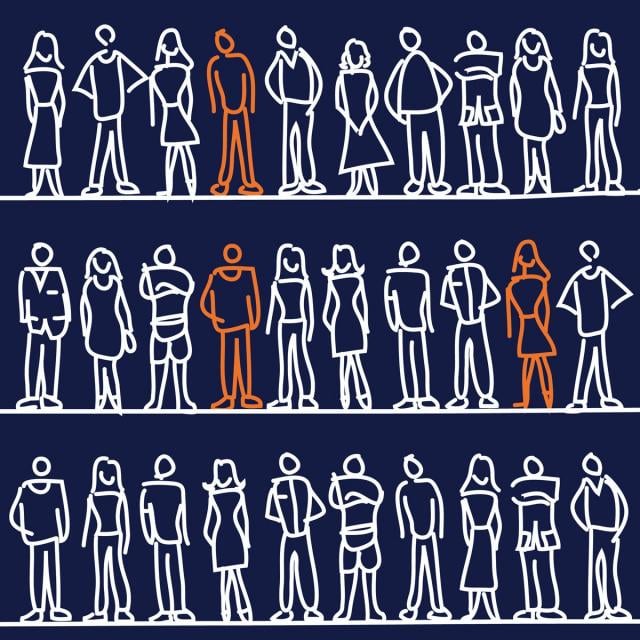
We are delighted to be able to welcome you to Diabetes – a Global Challenge. In module 1, we will focus on the epidemiology of diabetes and obesity which we lead us to this week discussion topic: "What the greatest diabetes challenges of our time might be in your opinion?" You can either post your opinion as text or as a link to a short video statement.

WEEK 2
Obesity and Prevention of Diabetes
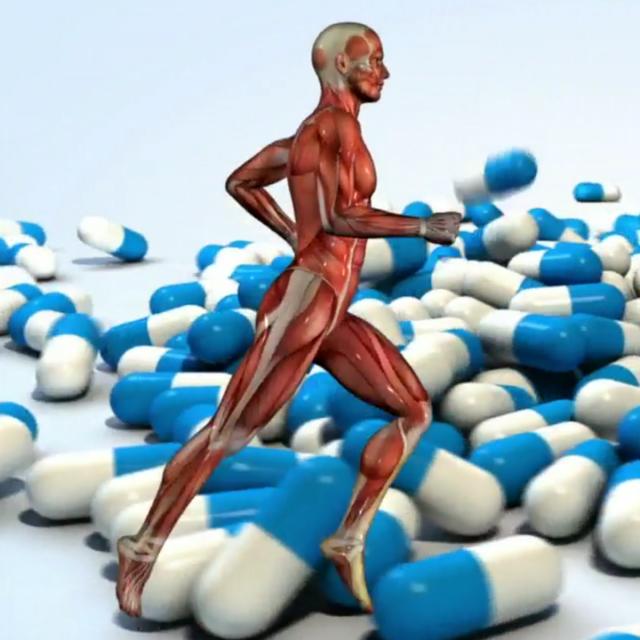
We will start module 2 together by discussing physical activity, its influence on obesity, insulin resistance and the prevention of diabetes.

WEEK 3
Physiological Regulation of Plasma Glucose
During module 3 we will focus on physiological
 regulation of plasma glucose. Professor Jens Juul Holst will guide you through the complex regulation of glucose in humans. This will be difficult but hang on you will see the usefulness of what you learn in this module during the subsequent modules where we will discuss the incretins and treatment of hyperglycemia

WEEK 4
The incretins
Incretin biology is now applied in treating subjects with diabetes and recently approved by the FDA for weight reduction. But what does they do? Don't hesitate to start watching the videos because in this module you will learn all about the incretin lead byProfessor Jens Juul Holst

WEEK 5
Clinical manifestation of Diabetes and Treatment
We hope that you enjoyed last modules about glucose regulation and incretin biology thus it may seems more advanced compared to first modules.We hope you stay with us and learn more about Clinical Manifestation of Diabetes and Treatment by Professor Allan Vaag and treatment of hyperglycemia by Professor Sten Madsbad.

WEEK 6
Inflammatory Beta-cell Destruction in Diabetes
Inflammatory beta-cell destruction in diabetes by professor Thomas Mandrup-Poulsen. During this module we Professor Mandrup-Poulsen will guide you through cytokines mediated destruction of the pancreatic beta-cells furthermore their potentiality as drugs targets.

WEEK 7
Genetic Aspects of Diabetes
Genetics are important for understanding and treating diabetes. In this module Professor Torben Hansen will discuss the genetic aspects of diabetes

WEEK 8
Translational Aspects
Translational medicine? Learn more by watching our new module by Assistant Professor Torekov. In this module we will discuss two case of translational aspects to highlight its importance. In other words we will go from bench to bedside.

WEEK 9
Development of antidiabetic agents
Have you ever thought "how to develop a antidiabetic agent?" Professor Birgitte Holst will take you through some potential drug targets and how to use G-protein coupled receptor for treatment of diabetes

WEEK 10
Stem Cell Based Therapy of Diabetes
Module 10 will focus on 'Stem Cell Based Therapy of Diabetes' and the question 'What are the advantages and disadvantages in cell therapy of diabetes?' is raised by Professor Ole Dragsbæk-Madsen.

WEEK 11
Exercise – How Does it Work?
Exercise has many beneficial effects - but how does it actually work? Professor Bente Klarlund will take you through the latest scientific research on how the exercise of skeletal muscles affect our organs and entire body.

WEEK 12
Peer Graded Assignment
Try to summarize all what you have learn watching these modules and have fun with writing a peer-graded assignment. The goal is simply to integrate what you have learned and put this together in a practical solution based manner.
Go to Class
MOOC List is learner-supported. When you buy through links on our site, we may earn an affiliate commission.

Related Courses

Introduction to the Biology of Cancer (Coursera) Coursera
Johns Hopkins University

Introduction to the Biology of Cancer (Coursera)

Over 500,000 people in the United States and over 8 million people worldwide are dying every year from cancer. As people live longer, the incidence of cancer is rising worldwide and the disease is expected to strike over 20 million people annually by 2030. This open course is designed for people who would like to develop an understanding of cancer and how it is prevented, diagnosed, and treated.

Jun 22nd 2026
5-12 Weeks
Introduction to Translational Science (Coursera) Coursera
University of Rochester

Introduction to Translational Science (Coursera)

Translational science seeks to speed up the process of moving research discoveries from the laboratory into healthcare practices. Numerous scientific and organizational roadblocks can act as obstacles along the path of translation and ultimately hinder the speed of progress in medical research. The National Center for Advancing Translational Sciences (NCATS) was established by the National Institutes of Health (NIH) to transform and accelerate the translational research process, with the intended result of getting treatments to more patients faster.

Jun 22nd 2026
3 Weeks
Sit Less, Get Active (Coursera) Coursera
University of Edinburgh

Sit Less, Get Active (Coursera)

Physical inactivity and sedentariness are “silent killers”. Do you feel like you spend too much time sitting? Do you feel like you would like to be more active? Are you unsure about how to incorporate physical activity into your daily life? We are here to help. Join us on a journey to learn about how to sit less and become more active. Use this FREE course to learn how to monitor your own activity and set physical activity goals.

Jun 28th 2026
3 Weeks
Case Studies in Personalized Medicine (Coursera) Coursera
Vanderbilt University

Case Studies in Personalized Medicine (Coursera)

Learn how advances in biomedicine hold the potential to revolutionize drug development, drug treatments, and disease prevention: where are we now, and what does the future hold? This course will present short primers in genetics and mechanisms underlying variability in drug responses. A series of case studies will be used to illustrate principles of how genetics are being brought to bear on refining diagnoses and on personalizing treatment in rare and common diseases. The ethical and operational issues around how to implement large scale genomic sequencing in clinical practice will be addressed.

Jun 22nd 2026
5-12 Weeks
Health for All Through Primary Health Care (Coursera) Coursera
Johns Hopkins University

Health for All Through Primary Health Care (Coursera)

This course explores why primary health care is central for achieving Health for All. It provides examples of how primary health care has been instrumental in approaching this goal in selected populations and how the principles of primary health care can guide future policies and actions. Two of the most inspiring, least understood, and most often derided terms in global health discourse are “Health for All” and “Primary Health Care.”

Jun 28th 2026
5-12 Weeks
Epidemics (Coursera) Coursera
University of Hong Kong

Epidemics (Coursera)

“If history is our guide, we can assume that the battle between the intellect and will of the human species and the extraordinary adaptability of microbes will be never-ending.” Despite all the remarkable technological breakthroughs that we have made over the past few decades, the threat from infectious diseases has significantly accelerated. In this course, we will learn why this is the case by looking at the fundamental scientific principles underlying epidemics and the public health actions behind their prevention and control in the 21st century.

Jun 22nd 2026
5-12 Weeks
eHealth: More than just an electronic record (Coursera) Coursera
The University of Sydney

eHealth: More than just an electronic record (Coursera)

The MOOC, "eHealth: More than just an electronic record!", is multidisciplinary in nature, and aims to equip the global audience of health clinicians, students, managers, administrators, and researchers to reflect on the overall impact of eHealth on the integration of care. It explores the breadth of technology application, current and emerging trends, and showcases both local and international eHealth practice and research.

Jun 22nd 2026
5-12 Weeks
Public Involvement in Research (Coursera) Coursera
Imperial College London

Public Involvement in Research (Coursera)

This course focuses on participatory approaches in research, known as 'public involvement' in the UK. You'll specifically, consider why citizens and patients would be involved in research and explore participatory approaches across and within the research cycle in more detail, diving into questions such as: What kinds of participation can be undertaken at each of the 7 stages of the cycle? How can you utilise participation in research? What examples of using participatory approaches exist in research?

Jun 24th 2026
4 Weeks
Curanderismo: Global & Cultural Influences of Traditional Healing (Coursera) Coursera
University of New Mexico

Curanderismo: Global & Cultural Influences of Traditional Healing (Coursera)

As the last of four courses on Curanderismo, the art of Hispanic/Latino traditional medicine, this course focuses specifically on traditional healing using different techniques of many countries around the world. As an educational and cultural platform, this course will share a number of traditional global perspectives.

Jun 22nd 2026
5-12 Weeks
Principles of fMRI 1 (Coursera) Coursera
Johns Hopkins University

Principles of fMRI 1 (Coursera)

Functional Magnetic Resonance Imaging (fMRI) is the most widely used technique for investigating the living, functioning human brain as people perform tasks and experience mental states. It is a convergence point for multidisciplinary work from many disciplines. Psychologists, statisticians, physicists, computer scientists, neuroscientists, medical researchers, behavioral scientists, engineers, public health researchers, biologists, and others are coming together to advance our understanding of the human mind and brain. This course covers the design, acquisition, and analysis of Functional Magnetic Resonance Imaging (fMRI) data, including psychological inference, MR Physics, K Space, experimental design, pre-processing of fMRI data, as well as Generalized Linear Models (GLM’s).

Jun 22nd 2026
4 Weeks
Stories of Infection (Coursera) Coursera
Stanford University

Stories of Infection (Coursera)

This course introduces learners to a variety of infectious diseases using a patient-centered, story-based approach. Through illustrated, short videos, learners will follow the course of each patient’s illness, from initial presentation to resolution. Integrating the relevant microbiology, pathophysiology and immunology, this course aims to engage and entice the learner towards future studies in microbiology, immunology and infectious diseases.

Jun 22nd 2026
5-12 Weeks