Organic Chemistry I (saylor.org)

Offered by Saylor.org,
Organic Chemistry I (saylor.org)

Organic chemistry is a branch of chemistry that focuses on a single element: carbon! Carbon bonds strongly with other carbon atoms and with other elements, forming numerous chain and ring structures. As a result, there are millions of distinct carbon compounds known and classified.

The vast majority of the molecules that contain carbon are considered organic molecules, with few debatable exceptions such as carbon nanotubes, diamonds, carbonate ions, and carbon dioxide. Carbon is central to the existence of life as it is an essential component of nucleic acids (DNA and RNA), sugars, lipids, and proteins. A well-rounded student of science must take courses in organic chemistry to understand its application to various topics, such as the study of polymers (plastics and other materials), hydrocarbons, pharmaceuticals, molecular biology, biochemistry, and other life sciences.
In the first semester of organic chemistry, you will learn the basic concepts needed to understand the three-dimensional structure of an organic molecule, predict the reactivity of a given molecule (based on its chemical structure), and recognize the mechanisms behind a chemical reaction. You will explore different explanations of how atoms bind in carbon-based molecules and learn about the simplest carbon structures (alkanes) before moving on to more complex carbon structures (alkenes and alkynes) and their reactions.

Course Requirements: Have completed the following courses as prerequisites: Introduction to Mechanics, Introduction to Electromagnetism, Single-Variable Calculus I, Single-Variable Calculus II, General Chemistry I and General Chemistry II.
Go to Class
MOOC List is learner-supported. When you buy through links on our site, we may earn an affiliate commission.

Related Courses

General Chemistry I (saylor.org) Saylor Academy
Saylor.org

General Chemistry I (saylor.org)

This chemistry survey is designed to introduce students to the world of chemistry. The principles of chemistry were first identified, studied, and applied by ancient Egyptians in order to extract metal from ores, make alcoholic beverages, glaze pottery, turn fat into soap, and much more.

Self Paced
Self-Paced
Beer Quality: Foam (Coursera) Coursera
University of California, Davis

Beer Quality: Foam (Coursera)

As it is one of the most distinctive qualities of beer, achieving the perfect foam is a precise art. In this course, you’ll learn how foam affects the quality of beer. Designed for brewers of all skill levels, this online course is part of a comprehensive series where "The Pope of Foam”, Charlie Bamforth, guides you through the key markers of beer quality: flavor, foam, color/clarity, freshness and quality systems.

Jun 1st 2026
4 Weeks
Chemical Engineering Thermodynamics 1 (Coursera) Coursera
Korea Advanced Institute of Science and Technology - KAIST

Chemical Engineering Thermodynamics 1 (Coursera)

An appreciation of thermodynamics is required to become a chemical and biomolecular engineer. Thermodynamics can assess the viability of a process and is one of the curriculum's most essential topics. The principles are utilized in following engineering courses (kinetics, mass transfer, design, materials) and are applicable to numerous engineering disciplines. The increased emphasis on energy usage and transformation as a result of rising demand, diminishing supply, and global warming necessitates that the engineers who will tackle these issues have a firm grasp of thermodynamics.

Jun 8th 2026
5-12 Weeks
Non-Equilibrium Applications of Statistical Thermodynamics (Coursera) Coursera
University of Colorado Boulder

Non-Equilibrium Applications of Statistical Thermodynamics (Coursera)

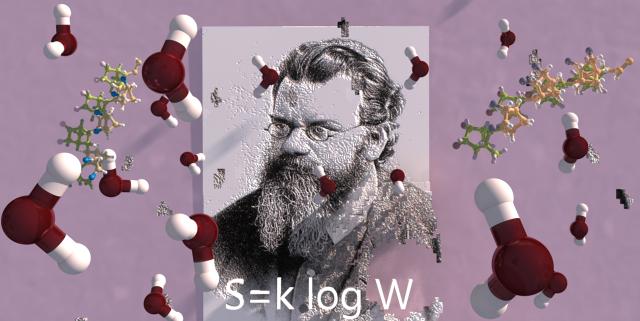
Course 5 of Statistical Thermodynamics explores three different applications of non-equilibrium statistical thermodynamics. The first is the transport behavior of ideal gases, with some discussion of transport in dense gases and liquids. It starts with simple estimates of the transport properties of an ideas gas. It then introduces the Boltzmann Equation and describes the Chapman-Enskog solution of that equation in order to obtain the transport properties. It closes with a discussion of practical sources of transport properties.

Jun 8th 2026
3 Weeks
Beer Quality: Color & Clarity (Coursera) Coursera
University of California, Davis

Beer Quality: Color & Clarity (Coursera)

Welcome to Beer Quality: Color and Clarity led by distinguished professor Charles Bamforth, Ph.D. In this course, you will learn about beer color and how it impacts a consumer's perception of beer. Also discussed are the scientific factors affecting beer color and clarity. The methods of measuring and altering beer color are presented, as are ways to troubleshoot problems with beer color.

Jun 1st 2026
4 Weeks
Ideal Gases (Coursera) Coursera
University of Colorado Boulder

Ideal Gases (Coursera)

Course 3 of Statistical Thermodynamics, Ideal Gases, explores the behavior of systems when intermolecular forces are not important. This done by evaluating the appropriate partition functions for translational, rotational, vibrational and/or electronic motion. We start with pure ideal gases including monatomic, diatomic and polyatomic species.

Jun 8th 2026
3 Weeks
Chemical Hazards: Toxicology & Reactivity (Coursera) Coursera
University of California, Davis

Chemical Hazards: Toxicology & Reactivity (Coursera)

This course aims to provide process safety experience for engineers, particularly relevant to chemical engineering but applicable to any field involving process operations. This course introduces you to the important, practical, value-added skills and information that will aid your career, or preparation for a career, in chemical process engineering.

Jun 8th 2026
4 Weeks
Introduction to Thermodynamics: Transferring Energy from Here to There (Coursera) Coursera
University of Michigan

Introduction to Thermodynamics: Transferring Energy from Here to There (Coursera)

This course provides an introduction to the most powerful engineering principles you will ever learn - Thermodynamics: the science of transferring energy from one place or form to another place or form. We will introduce the tools you need to analyze energy systems from solar panels, to engines, to insulated coffee mugs. More specifically, we will cover the topics of mass and energy conservation principles; first law analysis of control mass and control volume systems; properties and behavior of pure substances; and applications to thermodynamic systems operating at steady state conditions.

Jun 1st 2026
5-12 Weeks
Biology Everywhere Foundations (Coursera) Coursera
University of Colorado Boulder

Biology Everywhere Foundations (Coursera)

In this course, we will explore the nature of science and biology. We will discuss what the “biology everywhere” philosophy means and the history of the “biology everywhere” project. We will also discuss what science (and biology) are as a discipline of inquiry and how chemistry is foundational to understanding biology.

Jun 1st 2026
4 Weeks