Chemistry (Coursera)

Chemistry (Coursera)

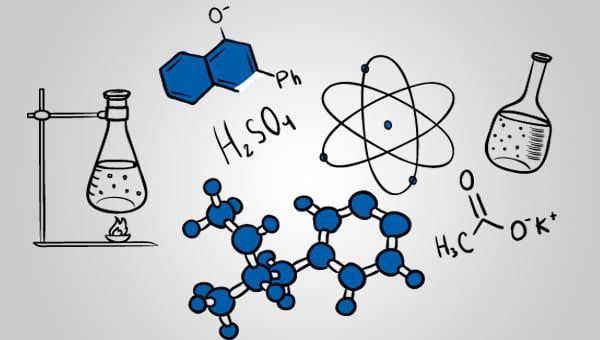
This course is designed to cover subjects in advanced high school chemistry courses, correlating to the standard topics as established by the American Chemical Society. This course is a precursor to the Advanced Chemistry Coursera course. Areas that are covered include atomic structure, periodic trends, compounds, reactions and stoichiometry, bonding, and thermochemistry.

Class Deals by MOOC List - Click here and see Coursera's Active Discounts, Deals, and Promo Codes.

Syllabus

WEEK 1
We will learn about the components inside the atom and look especially at the electrons. The electron structure determines the properties of the elements. So, by the end of this series of lessons, you will know for each elements where the electrons are located in the atom.

WEEK 2
Once we understand the electronic structure, we will be able determine how the periodic table can be used to compare the elements according to atomic size and various energies. We will conclude by seeing how these trends can be used to predict chemical properties of the elements.

WEEK 3
Now that we know the structure of an atom, we can explore how atoms combine to form either molecular or ionic compounds. Then we will learn the rules of nomenclature that ensure that a compound is named according to IUPAC rules. We will end this unit by looking at quantitative relationships for compounds including the molar mass of and mass percent of an element in a compound.

WEEK 4
We will explore how compounds react with one another to form new substances and then write balanced chemical equations to represent what is happening in a reaction. We will explore several different types of reactions including precipitation, acid-base, oxidation-reduction, and combustion reaction.

WEEK 5
This unit will delve into the quantitative relationships we can determine from a balanced chemical equation to determine the relative amounts of substances needed to react or the amount of products formed. We will also explore limiting reagents and percent yield to address practical aspects of chemical reactions because there may be leftover reactants and/or incomplete formation of products.

WEEK 6
This unit looks more in depth at molecular compounds to see how they are bonded together by looking at Lewis structures. These structures provide information about the types of bonds (single, double, or triple) as well as the connectivity of atoms. By knowing the Lewis structure, we can also predict the three-dimensional geometry of an individual molecule.

WEEK 7
In this unit, we will learn about thermochemistry, which is the study of the thermal energy transfer (heat) in chemical reactions. We will learn how these measurements of heat are made via calorimetry. Then, learn to calculate heat transfer using various methods.

Go to Class
MOOC List is learner-supported. When you buy through links on our site, we may earn an affiliate commission.

Related Courses

Introduction to Chemistry: Reactions and Ratios (Coursera) Coursera
Duke University

Introduction to Chemistry: Reactions and Ratios (Coursera)

This is an introductory course for students with limited background in chemistry; basic concepts involved in chemical reactions, stoichiometry, the periodic table, periodic trends, nomenclature, and chemical problem solving will be emphasized with the goal of preparing students for further study in chemistry as needed for many science, health, and policy professions.

May 18th 2026
5-12 Weeks
The Science of Gastronomy (Coursera) Coursera
The Hong Kong University of Science and Technology - HKUST

The Science of Gastronomy (Coursera)

This course introduces a number of basic scientific principles underpinning the methodology of cooking, food preparation and the enjoyment of food. All topics covered have a strong basis in biology, chemistry, and physics application. Among others, they include the consumption of cooked food, the physiological and evolutionary implication of the senses, geographic and cultural influences on food, and the rationale behind food preparation. We will also discuss issues such as coupling of senses to improve sense stimulation; altering flavor by chemical means; and modification of the coloration to improve the appearance of dishes. Following the video demonstrations of the scientific principles of cooking, you will learn to recognize the key ingredients and their combinations for preparing good healthy food.

May 12th 2026
5-12 Weeks
Chemical Engineering Thermodynamics 1 (Coursera) Coursera
Korea Advanced Institute of Science and Technology - KAIST

Chemical Engineering Thermodynamics 1 (Coursera)

An appreciation of thermodynamics is required to become a chemical and biomolecular engineer. Thermodynamics can assess the viability of a process and is one of the curriculum's most essential topics. The principles are utilized in following engineering courses (kinetics, mass transfer, design, materials) and are applicable to numerous engineering disciplines. The increased emphasis on energy usage and transformation as a result of rising demand, diminishing supply, and global warming necessitates that the engineers who will tackle these issues have a firm grasp of thermodynamics.

Jun 8th 2026
5-12 Weeks
Understanding Modern Physics II: Quantum Mechanics and Atoms (Coursera) Coursera
The Hong Kong University of Science and Technology - HKUST

Understanding Modern Physics II: Quantum Mechanics and Atoms (Coursera)

The 20th century was known as the century of physics. In the past 120 years, concepts such as space, time, energy, entropy and particles were understood to much deeper levels. New paradigms of thinking such as relativity and quantum mechanics emerged. This course is the second course in the Understanding Modern Physics series, which covers an introduction to quantum mechanics, atomic physics and quantum information.

Jun 8th 2026
4 Weeks
General Chemistry: Concept Development and Application (Coursera) Coursera
Rice University

General Chemistry: Concept Development and Application (Coursera)

This course will cover the topics of a full year, two semester General Chemistry course. We will use a free on-line textbook, Concept Development Studies in Chemistry, available via Rice’s Connexions project. The fundamental concepts in the course will be introduced via the Concept Development Approach developed at Rice University. In this approach, we will develop the concepts you need to know from experimental observations and scientific reasoning rather than simply telling you the concepts and then asking you to simply memorize or apply them.

Jun 1st 2026
5-12 Weeks
Reasoning Across the Disciplines (Coursera) Coursera
University of North Carolina

Reasoning Across the Disciplines (Coursera)

Critical reasoning skills are a key success factor for students entering their first year of college. They must be able to think logically and form arguments. This course, designed with incoming college freshmen in mind but open to anyone, provides an essential grounding in critical reasoning skills. Faculty from multiple disciplines at the University of North Carolina at Chapel Hill offer guidance on applying critical thinking skills in the context of specific disciplines. By developing these skills, students will learn more, enjoy their courses more, and experience greater academic success.

May 18th 2026
5-12 Weeks
Beer Quality: Freshness (Coursera) Coursera
University of California, Davis

Beer Quality: Freshness (Coursera)

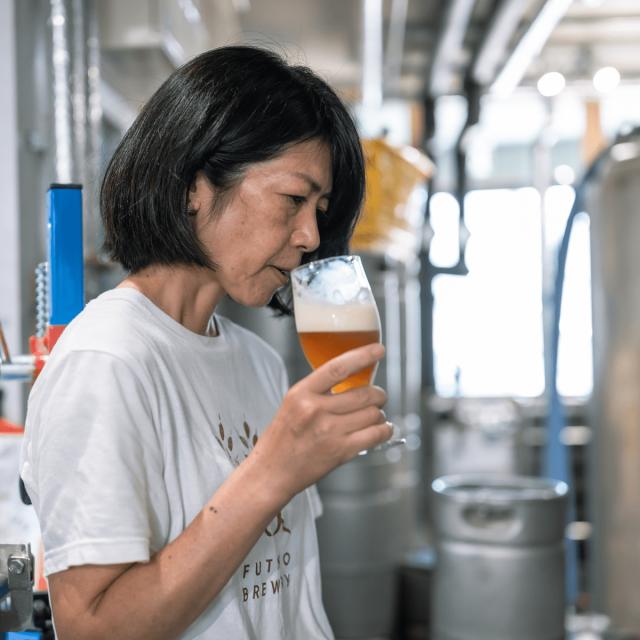
In this third course of the Beer Quality Series on beer freshness, led by distinguished professor Charles Bamforth, Ph.D, you will learn about beer flavor preconceptions, expectations, and causes of flavor instability. You'll also learn about the science of flavor change and the study and process impacts of flavor stability. In addition, you will review light instability and how it can lead to skunking.

Jun 1st 2026
4 Weeks
Más que química (Coursera) Coursera
Universidad Nacional de Colombia

Más que química (Coursera)

El objeto de la química, como disciplina científica, se enfoca en el estudio de la materia y de los cambios que ésta experimenta. En tanto disciplina científica, a la que se le atribuye la reputación de ser una ciencia complicada y aburrida. Esta reputación, bastante inmerecida, obedece al poco conocimiento que se tiene sobre ella y sobre sus enormes posibilidades de aplicación en el mundo científico, en diferentes campos de la industria y la producción, así como en la vida cotidiana.

May 18th 2026
5-12 Weeks
Materials Data Sciences and Informatics (Coursera) Coursera
Georgia Institute of Technology

Materials Data Sciences and Informatics (Coursera)

This course aims to provide a succinct overview of the emerging discipline of Materials Informatics at the intersection of materials science, computational science, and information science. Attention is drawn to specific opportunities afforded by this new field in accelerating materials development and deployment efforts.

May 18th 2026
5-12 Weeks
Ideal Gases (Coursera) Coursera
University of Colorado Boulder

Ideal Gases (Coursera)

Course 3 of Statistical Thermodynamics, Ideal Gases, explores the behavior of systems when intermolecular forces are not important. This done by evaluating the appropriate partition functions for translational, rotational, vibrational and/or electronic motion. We start with pure ideal gases including monatomic, diatomic and polyatomic species.

Jun 8th 2026
3 Weeks
Chemical Biology (Coursera) Coursera
University of Geneva

Chemical Biology (Coursera)

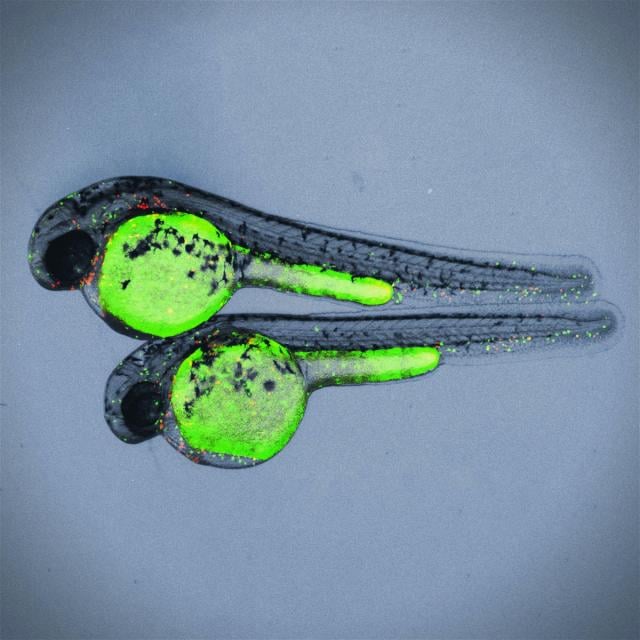
Chemical biology is a burgeoning field that has rapidly risen to prominence. This surge of interest has been fuelled by chemical biology’s applicability to understanding critical processes in live cells or model organisms in real time. This success has arisen because chemical biology straddles a nexus between chemistry, biology, and physics. Thus, chemical biology can harness rapid chemistry to observe or perturb biological processes, that are in turn reported using physical assays, all in an otherwise unperturbed living entity. Although its boundaries are endless, the multidisciplinary nature of chemical biology can make the field seem daunting; we beg to differ! Here, we deconstruct chemical biology into its core components, and repackage the material.

Jun 8th 2026
5-12 Weeks