Physical Chemistry I (saylor.org)

Offered by Saylor.org,
Physical Chemistry I (saylor.org)

This course will focus on the fundamentals of thermodynamics. Thermodynamics is the study of energy and its transformations.

This course will focus on the fundamentals of thermodynamics. Thermodynamics is the study of energy and its transformations. Energy is a physical property that can be converted from one form to another to perform work. For example, a stone rolling down a hill is converting gravitational potential energy into kinetic energy of motion.

Thermodynamics can be applied to systems we use every day—from the operation of refrigerators to the thrusts of rockets. An awareness of thermodynamics will help you learn other concepts involving chemical processes more quickly and will enable you to understand why many physical phenomena (such as automobile engines or chemical explosives) work the way they do, determine how much work they can put out, and know how to optimize their operation.

In this course, you will learn about the three laws of thermodynamics, thermodynamic principles, ideal and real gases, phases of matter, equations of state, and state changes. We will also take a look at chemical kinetics—a branch of study concerned with the rates of reactions and other processes—as well as kinetic molecular theory and statistical mechanics, which relate the atomic-level motion of a large number of particles to the average thermodynamic behavior of the system as a whole.

In this course, we will concentrate on bulk properties of systems that can be described by classical mechanics. However, there are many systems in which quantum mechanical effects influence or dominate. These will be treated in Physical Chemistry II.

Upon successful completion of this course, the student will be able to:

State and use laws of thermodynamics.
Perform calculations with ideal and real gases.
Design practical engines by using thermodynamic cycles.
Predict chemical equilibrium and spontaneity of reactions by using thermodynamic principles.
Describe the thermodynamic properties of ideal and real solutions.
Define the phases of matter, describe phase changes, and interpret/construct phase diagrams.
Relate macroscopic thermodynamic properties to microscopic states by using the principles of statistical thermodynamics.
Describe reaction rates and then do calculations to determine them.
Relate reaction kinetics to potential reaction mechanism.
Calculate the temperature dependence of rate constants and relate that to activation energy.
Describe a variety of complex reactions.
Describe catalysis.
Describe enzymatic catalysis.

Go to Class
MOOC List is learner-supported. When you buy through links on our site, we may earn an affiliate commission.

Related Courses

Politics and Economics of International Energy (Coursera) Coursera
Sciences Po

Politics and Economics of International Energy (Coursera)

Energy issues have always been important in international relations, but in recent years may have become even more important than in the past due to the widespread awareness of existing limits to energy sources and negative climate impacts. The course discusses global trends in energy consumption and production, various available scenarios for potential developments in the coming decades, the availability of oil reserves and the evolution of the oil industry.

Jun 15th 2026
5-12 Weeks
From the Big Bang to Dark Energy (Coursera) Coursera
The University of Tokyo

From the Big Bang to Dark Energy (Coursera)

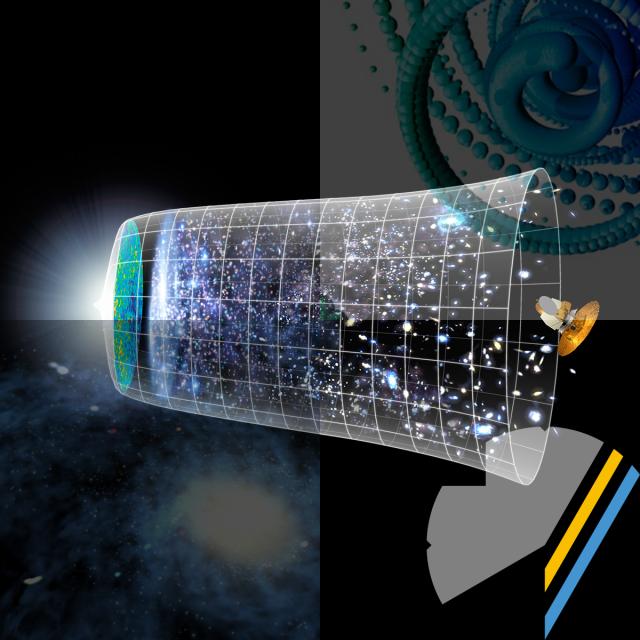
We have learned a lot recently about how the Universe evolved in 13.7 billion years since the Big Bang. More than 80% of matter in the Universe is mysterious Dark Matter, which made stars and galaxies to form. The newly discovered Higgs-boson became frozen into the Universe a trillionth of a second after the Big Bang and brought order to the Universe.

Jun 15th 2026
4 Weeks
Mechanics: Motion, Forces, Energy and Gravity, from Particles to Planets (Coursera) Coursera
UNSW Sydney - University of New South Wales

Mechanics: Motion, Forces, Energy and Gravity, from Particles to Planets (Coursera)

Most of the phenomena in the world around you are, at the fundamental level, based on physics, and much of physics is based on mechanics. Mechanics begins by quantifying motion, and then explaining it in terms of forces, energy and momentum. This allows us to analyse the operation of many familiar phenomena around us, but also the mechanics of planets, stars and galaxies.

Jun 22nd 2026
5-12 Weeks
Dense Gases, Liquids and Solids (Coursera) Coursera
University of Colorado Boulder

Dense Gases, Liquids and Solids (Coursera)

Course 4 of Statistical Thermodynamics addresses dense gases, liquids, and solids. As the density of a gas is increased, intermolecular forces begin to affect behavior. For small departures from ideal gas behavior, known as the dense gas limit, one can estimate the change in properties using the concept of a configuration integral, a modification to the partition function.

Jun 22nd 2026
4 Weeks
Les transitions énergétique-écologiques dans les pays du Sud (Coursera) Coursera
École normale supérieure

Les transitions énergétique-écologiques dans les pays du Sud (Coursera)

Ce MOOC co-produit par l'Agence Française de Développement et l'ENS se situe à la confluence du développement des pays du Sud et le développement durable. Il a : une dimension macroéconomique et financière portée notamment par Gael Giraud et Alain Grandjean en tant qu’intervenants; une dimension écologique et climatique portée notamment par David Claessen et les intervenants de l’ENS, et une dimension de focus sur les pays du Sud portée notamment par les intervenants de l’AFD.

Jun 22nd 2026
5-12 Weeks
Mécanique du point matériel (Coursera) Coursera
École Polytechnique Fédérale de Lausanne

Mécanique du point matériel (Coursera)

Pour illustrer les concepts introduits dans la première partie, on traite ici des problèmes pour lesquels le système mécanique peut être considéré comme un point matériel. Cette partie couvre notamment les problèmes à traiter en coordonnées cylindriques ou sphériques, le problème des orbites des planètes et les référentiels accélérés.

Jun 15th 2026
5-12 Weeks
Energy Justice: Fostering More Equitable Energy Futures (Coursera) Coursera
Dartmouth College

Energy Justice: Fostering More Equitable Energy Futures (Coursera)

Are you motivated by the idea that social justice can be served by the energy transition, but are not sure how to make this happen? Do you want to grow your ability to recognize - and do something about - injustice in the energy space? Are you a sustainability or environmental professional eager to help design just energy systems? Do you wonder how to help advance equity in your community’s energy decisions? This course is for you!

Jun 22nd 2026
3 Weeks
Electric Utilities Fundamentals and Future (Coursera) Coursera
University of Colorado System

Electric Utilities Fundamentals and Future (Coursera)

The approach of this course is truly unique in how it approaches and engages learners. It looks at the electric utility industry, which has remained critical to our quality of life, health and comfort from the eyes of numerous industry experts through on-location interviews, compelling visuals, and animation. You will benefit from having the inside track because you see some behind-the-scenes information not covered in news stories, social media or even if we are in the business ourselves.

Jun 22nd 2026
5-12 Weeks
General Chemistry: Concept Development and Application (Coursera) Coursera
Rice University

General Chemistry: Concept Development and Application (Coursera)

This course will cover the topics of a full year, two semester General Chemistry course. We will use a free on-line textbook, Concept Development Studies in Chemistry, available via Rice’s Connexions project. The fundamental concepts in the course will be introduced via the Concept Development Approach developed at Rice University. In this approach, we will develop the concepts you need to know from experimental observations and scientific reasoning rather than simply telling you the concepts and then asking you to simply memorize or apply them.

Jun 15th 2026
5-12 Weeks