Leading Healthcare Quality and Safety (Coursera)

Leading Healthcare Quality and Safety (Coursera)

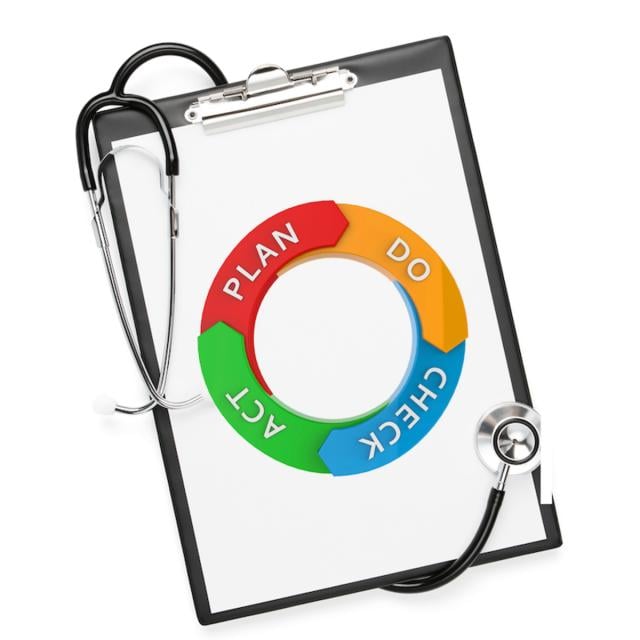
Ensuring patient safety and healthcare quality is critical and should be a key focus of everyone in healthcare practice. This course provides healthcare practitioners and others with an introduction to the knowledge and skills needed to lead patient safety and quality improvement initiatives at the micro and macro levels. Participants will explore the foundations of health care quality and the science underlying patient safety and quality improvement, design and select effective health care measures, analyze patient safety problems and processes using tools such as human factors analysis, apply systematic approaches including the Plan-Do-Study-Act (PDSA) model to address quality improvement challenges, and learn strategies to lead a culture of change

Class Deals by MOOC List - Click here and see Coursera's Active Discounts, Deals, and Promo Codes.

The course takes a world view of patient safety and quality, linking participants to research and resources from the World Health Organization (WHO), the US Agency for Healthcare Research and Quality (AHRQ), the Joint Commission and other international organizations. Course highlights include personal stories, lessons learned from other industries and interviews with the President of the National Committee for Quality Assurance (NCQA) and other leaders in quality movement.

Syllabus

WEEK 1
Establishing a Framework for Quality & Safety
Welcome to Module 1! During this module, you'll learn about the current state of healthcare quality and safety in the US and globally, and the essential characteristics and expected outcomes of safe, high-quality healthcare. We'll also discuss the core elements of quality improvement, and the data needed to assess the safety and quality of care. Finally, we'll examine lessons learned from other industries & disciplines that can be applied to healthcare improvement efforts. We're looking forward to getting started!

WEEK 2
Safety as a First Principle of Quality
Welcome to Module 2! This week, we examine the criticality of patient safety to healthcare and the sciences underlying patient safety. You'll learn a model for systems engineering and a process for anticipating and addressing medical errors. You'll also learn about the importance of a just culture approach to medical error prevention.

WEEK 3
Measures & Measurement
Welcome to Module 3! This week we delve into measures and measurement. You'll learn to apply the basic Donebedian framework for measuring quality in healthcare in terms of structure, process and outcomes. We'll discuss the key attributes of useful (good) healthcare measures and the core concepts of validity and reliability. You'll also learn the most critical elements to consider in choosing and applying a measure or measures to measurement in a given health care setting or situation, and the key characteristics of a measurement process that must be present to provide information that is a valid and useful reflection of quality of care.

WEEK 4
Quality and Safety Improvement Science
Welcome to Module 4! This week you'll learn how to identify quality improvement opportunities and apply the PDSA cycle to address them. We'll also discuss the importance and benefits of team-based approaches to quality improvement, and the value of Health Information Technologies (HIT) and other innovations in improving health care quality.

WEEK 5
Leadership for Quality & Safety
Welcome to Module 5! This week we explore the importance of leadership in supporting and advancing quality and safety at all levels of the healthcare organization. We'll discuss strategies that contribute to a quality culture in health care, and examine different models of organizational change that you can apply as you lead your own quality and safety initiatives.

Go to Class
MOOC List is learner-supported. When you buy through links on our site, we may earn an affiliate commission.

Related Courses

Gender and Sexuality: Diversity and Inclusion in the Workplace (Coursera) Coursera
University of Pittsburgh

Gender and Sexuality: Diversity and Inclusion in the Workplace (Coursera)

What is sex? What is gender? What is sexuality? What do we mean by LGBTQIA? How are these concepts related to the workplace? How have our understandings of these terms changed over time, and how have these changes impacted work and culture? To help you answer these important questions, this course will introduce you to the exciting field of gender, sexuality, and women's studies, and to LGBTQIA identities.

Oct 26th 2026
4 Weeks
Unravelling solutions for Future Food problems (Coursera) Coursera
Universiteit Utrecht

Unravelling solutions for Future Food problems (Coursera)

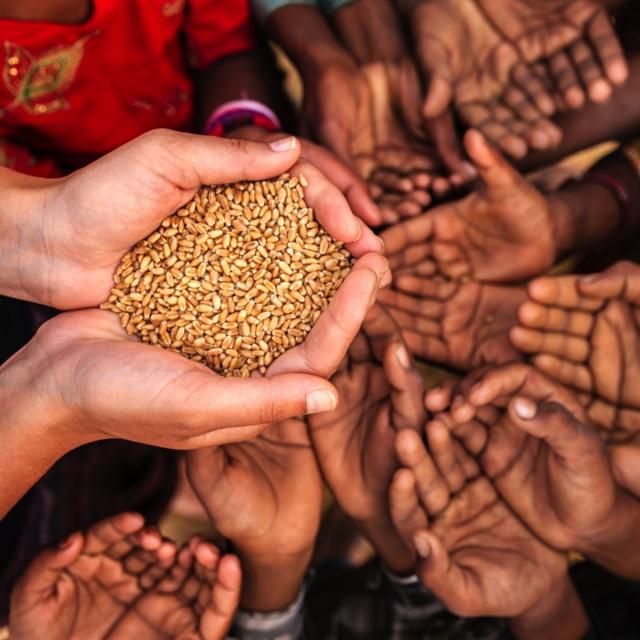
Our society depends on the availability of food and accessibility to it. According to the United Nations nearly 800 million people are hungry and on the other hand, over 650 million people are obese. While many people in developing countries experience food shortage, in industrialized countries people are throwing food away. These facts show how paradoxical and complex the world’s food problem is.

Nov 1st 2026
5-12 Weeks
Diagnosing Health Behaviors for Global Health Programs (Coursera) Coursera
Johns Hopkins University

Diagnosing Health Behaviors for Global Health Programs (Coursera)

Health behavior lies at the core of any successful public health intervention. While we will examine the behavior of individual in depth in this course, we also recognize by way of the Ecological Model that individual behavior is encouraged or constrained by the behavior of families, social groups, communities, organizations and policy makers. We recognize that behavior change is not a simplistic process but requires an understanding of dimensions like frequency, complexity and cultural congruity. Such behavioral analysis is strengthened through the use of a toolkit of theoretical models and practical frameworks.

Oct 26th 2026
4 Weeks
Health Concepts in Chinese Medicine (Coursera) Coursera
The Hong Kong University of Science and Technology - HKUST

Health Concepts in Chinese Medicine (Coursera)

Chinese Medicine and Modern Medicine are two distinct medical systems, yet they both aim at the prevention and treatment of human diseases. With this in mind, we should understand the practice of Chinese Medicine in the context of Modern Medicine. In this course, we explore the basic theories underlying the practice of Chinese Medicine, compare and contrast the use of Chinese Medicine and Modern Medicine in Preventive Health, and discuss how to restore a healthy condition and understand the pharmacological basis of different types of Chinese tonifying herbs.

Oct 26th 2026
5-12 Weeks
Design and Interpretation of Clinical Trials (Coursera) Coursera
Johns Hopkins University

Design and Interpretation of Clinical Trials (Coursera)

Clinical trials are experiments designed to evaluate new interventions to prevent or treat disease in humans. The interventions evaluated can be drugs, devices (e.g., hearing aid), surgeries, behavioral interventions (e.g., smoking cessation program), community health programs (e.g. cancer screening programs) or health delivery systems (e.g., special care units for hospital admissions). We consider clinical trials experiments because the investigators rather the patients or their doctors select the treatment the patients receive.

Oct 26th 2026
5-12 Weeks
Introduction to Reproduction (Coursera) Coursera
Northwestern University

Introduction to Reproduction (Coursera)

Do you have questions about sex hormones or menstrual cycles? This is a crash-course in human reproductive health through fact and biology-based information on a variety of topics. "Sex 101" will cover reproductive anatomy, key biological changes during puberty, sexual biology and contraceptive methods, reproductive disorders, and a special introduction to the exciting field of Oncofertility. Specific lecture titles are as follows: 1) Reproductive Anatomy & Hormones, 2) Menstrual Cycle, Oocyte Maturation, & Sperm Activation, 3) Sexual Biology, Fertilization, & Contraception, and 4) Reproductive Health & Disorders.

Oct 26th 2026
4 Weeks
The New Nordic Diet - from Gastronomy to Health (Coursera) Coursera
University of Copenhagen

The New Nordic Diet - from Gastronomy to Health (Coursera)

The New Nordic Diet is a new food culture developed in 2009-13 with key emphasis on gastronomy, health, and environment. Major research in its effect on acceptability, behaviour and learning skills, and disease prevention have been conducted by the OPUS centre at the University of Copenhagen and the people behind the award-winning restaurant Noma in Copenhagen. This course will give the participants the opportunity to experience a healthy and palatable new food and eating concept diet “The New Nordic Diet” and an understanding of how food and diets can affect mental and physical health and ensure the foundation for a healthier life style for future generations with a regional based diet and food culture.

Oct 26th 2026
5-12 Weeks
Engineering Health: Introduction to Yoga and Physiology (Coursera) Coursera
New York University Tandon School of Engineering

Engineering Health: Introduction to Yoga and Physiology (Coursera)

This course gives you access to an exploration of physiological systems from the perspective of overall health and wellness. In particular, a focus on yoga, meditation and mindfulness as a therapeutic intervention in chronic illness and long term treatment. This course is intended for yoga practitioners and teachers, as well as college students and medical practitioners looking for a deeper understanding of the physiological benefits of yoga.

Oct 26th 2026
5-12 Weeks
HI-FIVE: Health Informatics For Innovation, Value & Enrichment (Social/Peer Perspective) (Coursera) Coursera
Columbia University

HI-FIVE: Health Informatics For Innovation, Value & Enrichment (Social/Peer Perspective) (Coursera)

HI-FIVE (Health Informatics For Innovation, Value & Enrichment) Training is an approximately 10-hour online course designed by Columbia University in 2016, with sponsorship from the Office of the National Coordinator for Health Information Technology (ONC). The training is role-based and uses case scenarios. Our nation’s healthcare system is changing at a rapid pace. Transformative health care delivery programs depend heavily on health information technology to improve and coordinate care, maintain patient registries, support patient engagement, develop and sustain data infrastructure necessary for multi-payer value-based payment, and enable analytical capacities to inform decision making and streamline reporting.

Oct 26th 2026
4 Weeks
An Introduction to Global Health (Coursera) Coursera
University of Copenhagen

An Introduction to Global Health (Coursera)

This course will provide you with an overview of the most important health challenges facing the world today. You will gain insight into how challenges have changed over time, we will discuss the likely determinants of such changes and examine future projections. Successful international strategies and programs promoting human health will be highlighted and global health governance structures will be mapped and the role of the key actors explored.

Oct 26th 2026
5-12 Weeks