Improving Immunity Based on Traditional Eastern Exercises (Coursera)

Improving Immunity Based on Traditional Eastern Exercises (Coursera)

Exercise is medicine. Regular and moderate exercise can effectively strengthen immune system so as to reduce the risk of virus infection and also improve or assist in the treatment of dysthymic disorders like anxiety and depression. This course provides suggestions for the general public about how to actively respond to the outbreak of novel coronavirus. It also explains: how the immune system reacts when viruses invade into the body; why exercises can enhance immunity and what is the mechanism; what the difference is between western sports and traditional eastern exercises.

Class Deals by MOOC List - Click here and see Coursera's Active Discounts, Deals, and Promo Codes.

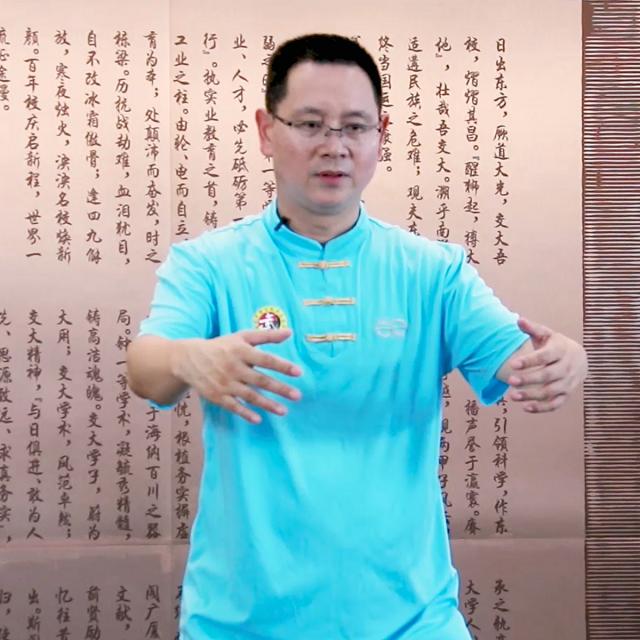
Besides, the course includes training lessons on Baduanjin, Zhanzhuang, Daoyin, Yoga and other exercises conducive to immunity improvement.
This course is characteristic for its combination of physical education and medicine, so the course will be taught by experts in either sports or medicine. The teaching content covers both disciplinary theory and specific training method, showcasing the unique culture and charm of the East while conducting cross-cultural communication as well as sharing the wisdom of traditional exercises and modern research and application in this regard.

What You Will Learn

  • Knowledge learning: understanding the human immune system, the theoretical basis of enhancing immunity through l eastern exercises.
  • Skill learning: practicing Baduanjin, Standing Qigong, Daoyin, Yoga and other traditional eastern exercises conducive to immunity improvement.

Syllabus

WEEK 1: Lecture One Introduction to the Course
WEEK 2: Lecture Two Active Response to Public Health Emergency
WEEK 3: Lecture Three Human Immune System (1)
WEEK 4: Lecture Four Human Immune System (2)
WEEK 5: Lecture Five The Theoretical Basis of Exercises Improving Human Immunity (1)
WEEK 6: Lecture Six The Theoretical Basis of Exercises Improving Human Immunity (2)
WEEK 7: Lecture Seven Cases of Eastern Exercises Improving Human Immunity
WEEK 8: Lecture Eight Traditional Chinese Exercise (Daoyin)
WEEK 9: Lecture Nine Traditional Chinese Exercise (Zhan Zhuang)
WEEK 10: Lecture Ten Yoga Pranayama
WEEK 11: Lecture Eleven Basic Yoga Asana
WEEK 12: Lecture Twelve Yoga combination for improving immunity

Go to Class
MOOC List is learner-supported. When you buy through links on our site, we may earn an affiliate commission.

Related Courses

Diagnosing Health Behaviors for Global Health Programs (Coursera) Coursera
Johns Hopkins University

Diagnosing Health Behaviors for Global Health Programs (Coursera)

Health behavior lies at the core of any successful public health intervention. While we will examine the behavior of individual in depth in this course, we also recognize by way of the Ecological Model that individual behavior is encouraged or constrained by the behavior of families, social groups, communities, organizations and policy makers. We recognize that behavior change is not a simplistic process but requires an understanding of dimensions like frequency, complexity and cultural congruity. Such behavioral analysis is strengthened through the use of a toolkit of theoretical models and practical frameworks.

Sep 28th 2026
4 Weeks
Lecture Series for Preventing and Controlling COVID-19 (Coursera) Coursera
Xi'an Jiaotong University

Lecture Series for Preventing and Controlling COVID-19 (Coursera)

In December 2019, a cluster of patients with pneumonia of unknown cause appeared in Wuhan, Hubei. Governments at all levels and Department of Health Administration highly valued and rapidly organized the centers for Disease Control and Prevention (CDC), medical institutions, and scientific research academies to conduct a survey, rescue, and collaborative research. This new antigen was quickly identified as a novel coronavirus, named as 2019-nCoV by World Health Organization (WHO).

Sep 28th 2026
3 Weeks
Toxicology 21: Scientific Applications (Coursera) Coursera
Johns Hopkins University

Toxicology 21: Scientific Applications (Coursera)

This course familiarizes students with the novel concepts being used to revamp regulatory toxicology in response to a breakthrough National Research Council Report “Toxicity Testing in the 21st Century: A Vision and a Strategy.” We present the latest developments in the field of toxicology—the shift from animal testing toward human relevant, high content, high-throughput integrative testing strategies. Active programs from EPA, NIH, and the global scientific community illustrate the dynamics of safety sciences.

Sep 28th 2026
5-12 Weeks
Living with Dementia: Impact on Individuals, Caregivers, Communities and Societies (Coursera) Coursera
Johns Hopkins University

Living with Dementia: Impact on Individuals, Caregivers, Communities and Societies (Coursera)

Health professionals and students, family caregivers, friends of and affected individuals, and others interested in learning about dementia and quality care will benefit from completing the course. Led by Drs. Nancy Hodgson and Laura Gitlin, participants will acquire foundational knowledge in the care of persons with Alzheimer’s Disease and other neurocognitive disorders.

Sep 28th 2026
5-12 Weeks
Gender and Sexuality: Diversity and Inclusion in the Workplace (Coursera) Coursera
University of Pittsburgh

Gender and Sexuality: Diversity and Inclusion in the Workplace (Coursera)

What is sex? What is gender? What is sexuality? What do we mean by LGBTQIA? How are these concepts related to the workplace? How have our understandings of these terms changed over time, and how have these changes impacted work and culture? To help you answer these important questions, this course will introduce you to the exciting field of gender, sexuality, and women's studies, and to LGBTQIA identities.

Sep 28th 2026
4 Weeks
Regulated Competition in Healthcare Systems: Theory & Practice (Coursera) Coursera
Erasmus University Rotterdam

Regulated Competition in Healthcare Systems: Theory & Practice (Coursera)

In this MOOC you will learn about the theory and practice of 'regulated competition' (also known as 'managed competition') in healthcare systems. Many countries have implemented or consider implementation of regulated competition in healthcare. Examples include Australia, Belgium, Chile, Colombia, Germany, Ireland, Israel, The Netherlands, Switzerland and the United States.

Sep 28th 2026
5-12 Weeks
The New Nordic Diet - from Gastronomy to Health (Coursera) Coursera
University of Copenhagen

The New Nordic Diet - from Gastronomy to Health (Coursera)

The New Nordic Diet is a new food culture developed in 2009-13 with key emphasis on gastronomy, health, and environment. Major research in its effect on acceptability, behaviour and learning skills, and disease prevention have been conducted by the OPUS centre at the University of Copenhagen and the people behind the award-winning restaurant Noma in Copenhagen. This course will give the participants the opportunity to experience a healthy and palatable new food and eating concept diet “The New Nordic Diet” and an understanding of how food and diets can affect mental and physical health and ensure the foundation for a healthier life style for future generations with a regional based diet and food culture.

Sep 28th 2026
5-12 Weeks
Voice Disorders: What Patients and Professionals Need to Know (Coursera) Coursera
Icahn School of Medicine at Mount Sinai

Voice Disorders: What Patients and Professionals Need to Know (Coursera)

Knowledge regarding vocal production physiology and management options for voice disorders have experienced rapid growth over the past 40 years. This growth has resulted in a knowledge gap amongst patients and practitioners. Entirely new subspecialties of laryngology under otolaryngology and vocology under speech-language pathology have developed in response to this gap. This MOOC (Massive Open Online Course) is designed to educated patients, allied healthcare providers, vocal trainers/coaches, general medical practitioners and otolaryngologists.

Sep 28th 2026
5-12 Weeks
An Introduction to Global Health (Coursera) Coursera
University of Copenhagen

An Introduction to Global Health (Coursera)

This course will provide you with an overview of the most important health challenges facing the world today. You will gain insight into how challenges have changed over time, we will discuss the likely determinants of such changes and examine future projections. Successful international strategies and programs promoting human health will be highlighted and global health governance structures will be mapped and the role of the key actors explored.

Sep 28th 2026
5-12 Weeks
Introduction to Reproduction (Coursera) Coursera
Northwestern University

Introduction to Reproduction (Coursera)

Do you have questions about sex hormones or menstrual cycles? This is a crash-course in human reproductive health through fact and biology-based information on a variety of topics. "Sex 101" will cover reproductive anatomy, key biological changes during puberty, sexual biology and contraceptive methods, reproductive disorders, and a special introduction to the exciting field of Oncofertility. Specific lecture titles are as follows: 1) Reproductive Anatomy & Hormones, 2) Menstrual Cycle, Oocyte Maturation, & Sperm Activation, 3) Sexual Biology, Fertilization, & Contraception, and 4) Reproductive Health & Disorders.

Sep 28th 2026
4 Weeks
Water Supply and Sanitation Policy in Developing Countries Part 1: Understanding Complex Problems (Coursera) Coursera
University of Manchester

Water Supply and Sanitation Policy in Developing Countries Part 1: Understanding Complex Problems (Coursera)

Our course explores what can be done to solve the complex problem that half a billion people worldwide do not have improved water supplies and two billion do not have improved sanitation. We look forward to you joining us. We want to help you develop the skills you need to address this major global challenge of the 21st century.

Sep 28th 2026
5-12 Weeks