HPV-Associated Oral and Throat Cancer: What You Need to Know (Coursera)

HPV-Associated Oral and Throat Cancer: What You Need to Know (Coursera)

This course, offered by the Department of Otolaryngology – Head and Neck Surgery at the Icahn School of Medicine at Mount Sinai, is designed to inform primary care physicians and otolaryngologists (general and head and neck surgeons), as well as medical students, residents, nurses, physician assistants, medical assistants, about HPV-associated oral and throat cancers. It is also applicable to individuals who wish to broaden their knowledge and vernacular about this disease process, especially those who may have been diagnosed with HPV and/or HPV-associated oropharyngeal cancers.

Class Deals by MOOC List - Click here and see Coursera's Active Discounts, Deals, and Promo Codes.

The course has been divided into four modules, each of which is followed by multiple choice questions to help attendees further understand this condition.
The primary objective of this course is to provide physicians with a thorough understanding of how to better diagnose and treat patients who have HPV-related oral and throat cancers.

Syllabus

WEEK 1
CME Information and Accreditation
Introduction

WEEK 2
Module I: HPV-associated Throat Cancer: An Epidemic
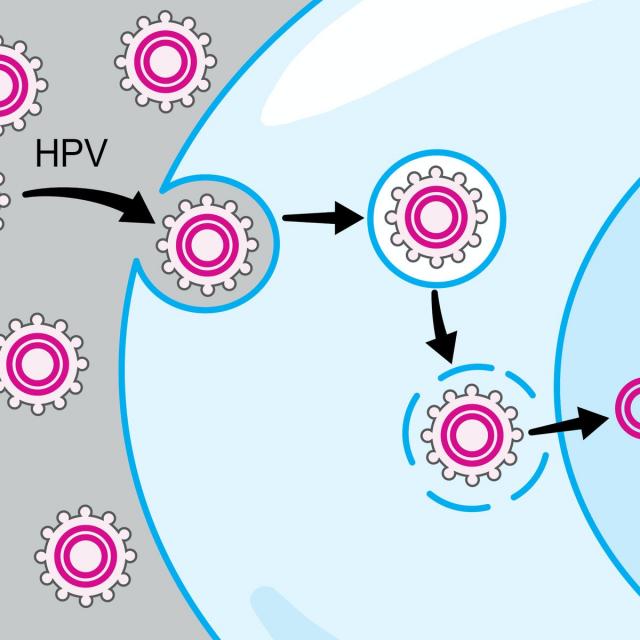
This module describes the nature of the Human Papillomavirus and the effect of a viral infection. The module explains the emerging epidemic and its impact on the development of throat cancer. The module concludes with the current state of population awareness and the impact that erroneous information can have on the spread of disease and the risk of malignancy.

WEEK 3
Module II: HPV Risk Factors and Clinical Presentation
This module describes the risk factors associated with transmission of HPV and the development of HPV-associated cancer. We will review how the virus is transmitted and malignant transformation. We will also explore the clinical presentation of HPV-associated throat cancer, early signs, and the clinical manifestations of advanced disease.

WEEK 4
Module III: Management of HPV-associated Oropharyngeal Cancer
This module describes options for treating oropharyngeal throat cancer and the advantages and disadvantages of each option. In this module, we discuss the indications and contraindications for treatment.

WEEK 5
Module IV: Prevention, Vaccination, and the Horizon
This module describes nature of HPV infection and techniques for preventing infection. This module reviews the nature of the HPV vaccine and its effectiveness. We also review indications for vaccination and commonly asked questions.
Activity Evaluation
All learners are urged to complete an evaluation. Your comments are essential for improving the effectiveness of Icahn School of Medicine at Mount Sinai’s continuing medical education activities.

Go to Class
MOOC List is learner-supported. When you buy through links on our site, we may earn an affiliate commission.

Related Courses

Clinical Kidney, Pancreas and Islet Transplantation (Coursera) Coursera
Leiden University,Leiden University Medical Center

Clinical Kidney, Pancreas and Islet Transplantation (Coursera)

Kidney transplantation is a major advance of modern medicine which provides high-quality of life for patients with end-stage renal disease. What used to be an experimental, risky, and very limited treatment option more than 50 years ago is now routinely performed in many countries worldwide. The number of renal transplants is expected to rise sharply in the next decade since the proportion of patients with end stage renal disease is increasing.

Oct 12th 2026
4 Weeks
Everyday Chinese Medicine (Coursera) Coursera
The Chinese University of Hong Kong

Everyday Chinese Medicine (Coursera)

This course aims to serve as an education platform on Chinese medicine (CM) for the general public. Our primary goal is to empower healthcare choices by promoting awareness and practical application on CM diagnostic and therapeutic approaches, as well as regulation on CM services and herbal products using international examples.

Oct 12th 2026
5-12 Weeks
PrEParing: PrEP for Providers and Patients (Coursera) Coursera
Johns Hopkins University

PrEParing: PrEP for Providers and Patients (Coursera)

Pre-Exposure Prophylaxis (PrEP) using the antiretroviral medication emtricitibine/tenofovir approved in countries around the world is a highly effective means of reducing transmission of HIV through sexual encounters and needle sharing. This Johns Hopkins University course PrEPares you with essential information, concepts and practical advice regarding PrEP from leaders in the field. A first of its kind learning opportunity, both providers and patients learn from the same experts through content that meets the needs of both audiences, while facilitating the opportunity for a shared community space.

Oct 12th 2026
5-12 Weeks
Traditional herbal medicine in supportive cancer care: From alternative to integrative (Coursera) Coursera
Technion - Israel Institute of Technology

Traditional herbal medicine in supportive cancer care: From alternative to integrative (Coursera)

Please join us for an exciting and innovative journey, examining one of the most important and often overlooked aspects of the oncology setting: Traditional Herbal Medicine in Supportive Cancer Care. This course is presented with short lectures offering a wide range of issues related to the principles and practice of herbal medicine in cancer care.

Oct 12th 2026
13-24 Weeks
Psychology of Popularity (Coursera) Coursera
University of North Carolina

Psychology of Popularity (Coursera)

The level of popularity you experienced in childhood and adolescence is still affecting you today in ways that you may not even realize. Learn about how psychologists study popularity and how these same concepts can be used in adulthood to be more successful at work, become better parents, and have a happier life.

Oct 12th 2026
5-12 Weeks
Medical Neuroscience (Coursera) Coursera
Duke University

Medical Neuroscience (Coursera)

Medical Neuroscience explores the functional organization and neurophysiology of the human central nervous system, while providing a neurobiological framework for understanding human behavior. In this course, you will discover the organization of the neural systems in the brain and spinal cord that mediate sensation, motivate bodily action, and integrate sensorimotor signals with memory, emotion and related faculties of cognition. The overall goal of this course is to provide the foundation for understanding the impairments of sensation, action and cognition that accompany injury, disease or dysfunction in the central nervous system. The course will build upon knowledge acquired through prior studies of cell and molecular biology, general physiology and human anatomy, as we focus primarily on the central nervous system.

Oct 12th 2026
13-24 Weeks
The Brain and Space (Coursera) Coursera
Duke University

The Brain and Space (Coursera)

This course is about how the brain creates our sense of spatial location from a variety of sensory and motor sources, and how this spatial sense in turn shapes our cognitive abilities. Knowing where things are is effortless. But “under the hood,” your brain must figure out even the simplest of details about the world around you and your position in it.

Oct 12th 2026
5-12 Weeks
Epidemics (Coursera) Coursera
University of Hong Kong

Epidemics (Coursera)

“If history is our guide, we can assume that the battle between the intellect and will of the human species and the extraordinary adaptability of microbes will be never-ending.” Despite all the remarkable technological breakthroughs that we have made over the past few decades, the threat from infectious diseases has significantly accelerated. In this course, we will learn why this is the case by looking at the fundamental scientific principles underlying epidemics and the public health actions behind their prevention and control in the 21st century.

Oct 12th 2026
5-12 Weeks
Diabetes - a Global Challenge (Coursera) Coursera
University of Copenhagen

Diabetes - a Global Challenge (Coursera)

Diabetes and obesity are growing health problems in rich and poor countries alike. With this course you will get updated on cutting-edge diabetes and obesity research including biological, genetic and clinical aspects as well as prevention and epidemiology of diabetes and obesity. All lectures are provided by high-profile scientists from one the world's leading universities in diabetes research.

Oct 12th 2026
5-12 Weeks
Medical Cannabis for Pain Control (Coursera) Coursera
Technion - Israel Institute of Technology

Medical Cannabis for Pain Control (Coursera)

Cannabis is a group of flowering plants that has been long used for industrial, recreational and medical purposes. When relating to its medical use, the terms "Medical Cannabis" or "Medical marijuana" has become prevalent. In this course we will use the term "Medical Cannabis". Nowadays, Medical Cannabis involves multiple medical disciplines such as neuroscience, pain, pharmacology, oncology, psychiatry and more. Moreover, it has cultural, agricultural and social, legal and political implications.

Oct 12th 2026
5-12 Weeks