Curanderismo: Global & Cultural Influences of Traditional Healing (Coursera)

Curanderismo: Global & Cultural Influences of Traditional Healing (Coursera)

As the last of four courses on Curanderismo, the art of Hispanic/Latino traditional medicine, this course focuses specifically on traditional healing using different techniques of many countries around the world. As an educational and cultural platform, this course will share a number of traditional global perspectives.

Class Deals by MOOC List - Click here and see Coursera's Active Discounts, Deals, and Promo Codes.

Learners will not become certified traditional healers at the completion of this course but will be able apply basic principles or traditional medicine for health and illnesses. They will become familiar specifically with African traditional medicine from Uganda, African healing through music from Gabon, Afro-Cuban and Afro Puerto-Rican healing techniques, medicinal plants for women, Native American feather healing and other topics.

What you will learn

  • Examine Curanderismo in Latin America, Southwestern United States, Africa, Cuba, Puerto Rico, Peru, as well as the Mayan and Native American views.
  • Recognize the contributions of the famous Mexican healer Niño Fidencio and how his healing methods have been influenced by healers like Chenchito.
  • Discuss the influences of traditional medicine from indigenous beliefs, rituals & herbal medications.
  • Explain how traditional medicine has been valued throughout the generations.

Syllabus

WEEK 1
El ultimo Chenchito, the last of the fidencista healers
In this module you will watch a rare film of the life and healings of Mexico’s most important healer, Niño Fidencio, and a great video of one of his disciples and Dr. Torres teacher and mentor, Chenchito who is interviewed about his journey in the Fidencista healing movement.

WEEK 2
African traditional medicine & African healing through music
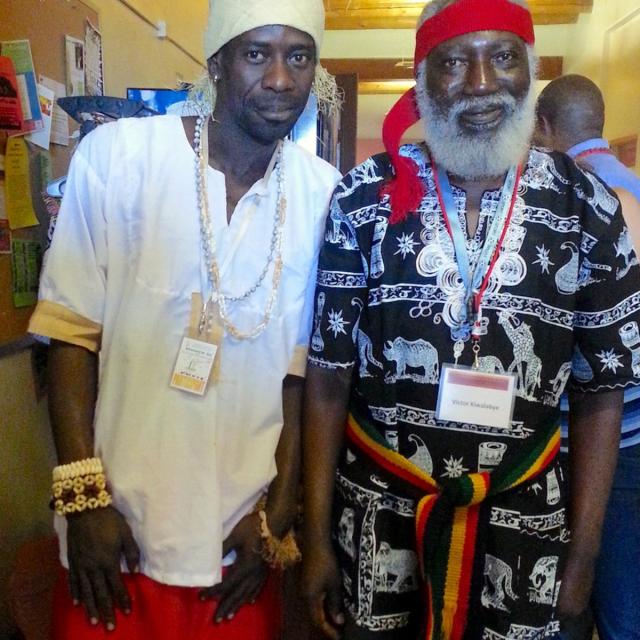
Students will see a Ugandan group of traditional healers discuss the African traditional herbal remedies. Bokaye from Gabon, Africa, plays the Mogongo musical instrument, which is used in his tradition to communicate with the spirits.

WEEK 3
Afro-Latino healing through music and dance & Afro-Cuban healing techniques
Sina demonstrates the ritual of honoring the four directions through dance and the vibrations of the drum. David and Pedro, explain and perform a Cuban limpia with smoke of the cigar, coconut, and other components during a spiritual cleansing.

WEEK 4
Afro-Puerto ricas healing modalities & sacred tobacco or peru/medicinal plants for women
Dr. Ysamur Flores describes the use of black and red fabrics that will hold the energetic vibrations during the Osain spiritual cleansing. Asheninka Mino performs a Peruvian opening blessing and presents a ritual with the sacred tobacco. Herbalist Bernadette Torres discusses medicinal plants for women.

WEEK 5
Native American feather healing & mayan acupuncture
Anthropologist Bob Vetter will demonstrate a Native American cleansing using feathers, copal smoke, and prayer. Sophia uses Mayan acupuncture to remove heat from the digestive system.
Go to Class
MOOC List is learner-supported. When you buy through links on our site, we may earn an affiliate commission.

Related Courses

Design and Interpretation of Clinical Trials (Coursera) Coursera
Johns Hopkins University

Design and Interpretation of Clinical Trials (Coursera)

Clinical trials are experiments designed to evaluate new interventions to prevent or treat disease in humans. The interventions evaluated can be drugs, devices (e.g., hearing aid), surgeries, behavioral interventions (e.g., smoking cessation program), community health programs (e.g. cancer screening programs) or health delivery systems (e.g., special care units for hospital admissions). We consider clinical trials experiments because the investigators rather the patients or their doctors select the treatment the patients receive.

Jun 8th 2026
5-12 Weeks
Overcoming Dyslexia (Coursera) Coursera
Yale University

Overcoming Dyslexia (Coursera)

Dyslexia is everywhere, touching so many children and adults, and while science has made extraordinary progress in understanding and clarifying the condition, this incredible powerful knowledge rarely reaches those who most need to know and would greatly benefit from it. Our goal is to change all this with the Coursera you are about to view, produced by Dr. Sally Shaywitz, the Audrey G. Ratner Professor in Learning Development, both the leading scientist studying dyslexia and the most devoted advocate for helping those who are dyslexic.

Jun 13th 2026
5-12 Weeks
Take the Lead on Healthcare Quality Improvement (Coursera) Coursera
Case Western Reserve University

Take the Lead on Healthcare Quality Improvement (Coursera)

In this course you will learn about the importance of quality in healthcare and how you can contribute by implementing a quality improvement (QI) project to improve processes of care and patient outcomes. You will learn about powerful tools to add to your QI ‘toolbox’ during short lectures and reflective exercises. You will apply these tools to the implementation of a QI project in your own practice setting or an area of personal improvement. At the completion of the course, you will have a storyboard that captures your QI project success to share with others.

Jun 8th 2026
5-12 Weeks
HI-FIVE: Health Informatics For Innovation, Value & Enrichment (Clinical Perspective) (Coursera) Coursera
Columbia University

HI-FIVE: Health Informatics For Innovation, Value & Enrichment (Clinical Perspective) (Coursera)

HI-FIVE (Health Informatics For Innovation, Value & Enrichment) Training is a 12-hour online course designed by Columbia University in 2016, with sponsorship from the Office of the National Coordinator for Health Information Technology (ONC). The training is role-based and uses case scenarios. Also, it has additional, optional modules on other topics of interest or relevance. Although we suggest to complete the course within a month's timeframe, the course is self-paced and so you can start and finish the course at anytime during a month's time period. No additional hardware or software are required for this course.

Jun 8th 2026
4 Weeks
Sit Less, Get Active (Coursera) Coursera
University of Edinburgh

Sit Less, Get Active (Coursera)

Physical inactivity and sedentariness are “silent killers”. Do you feel like you spend too much time sitting? Do you feel like you would like to be more active? Are you unsure about how to incorporate physical activity into your daily life? We are here to help. Join us on a journey to learn about how to sit less and become more active. Use this FREE course to learn how to monitor your own activity and set physical activity goals.

Jun 14th 2026
3 Weeks
Health Concepts in Chinese Medicine (Coursera) Coursera
The Hong Kong University of Science and Technology - HKUST

Health Concepts in Chinese Medicine (Coursera)

Chinese Medicine and Modern Medicine are two distinct medical systems, yet they both aim at the prevention and treatment of human diseases. With this in mind, we should understand the practice of Chinese Medicine in the context of Modern Medicine. In this course, we explore the basic theories underlying the practice of Chinese Medicine, compare and contrast the use of Chinese Medicine and Modern Medicine in Preventive Health, and discuss how to restore a healthy condition and understand the pharmacological basis of different types of Chinese tonifying herbs.

Jun 8th 2026
5-12 Weeks
Positive Psychology: Resilience Skills (Coursera) Coursera
University of Pennsylvania

Positive Psychology: Resilience Skills (Coursera)

Learn how to incorporate resilience interventions into your personal and professional life with Dr. Karen Reivich. In this course, you are exposed to the foundational research in resilience, including protective factors such as mental agility and optimism. Several types of resilience interventions are explored including cognitive strategies; strategies to manage anxiety and increase positive emotions such as gratitude; and a critical relationship enhancement skill.

Jun 8th 2026
4 Weeks
An Introduction to Global Health (Coursera) Coursera
University of Copenhagen

An Introduction to Global Health (Coursera)

This course will provide you with an overview of the most important health challenges facing the world today. You will gain insight into how challenges have changed over time, we will discuss the likely determinants of such changes and examine future projections. Successful international strategies and programs promoting human health will be highlighted and global health governance structures will be mapped and the role of the key actors explored.

Jun 8th 2026
5-12 Weeks
Voice Disorders: What Patients and Professionals Need to Know (Coursera) Coursera
Icahn School of Medicine at Mount Sinai

Voice Disorders: What Patients and Professionals Need to Know (Coursera)

Knowledge regarding vocal production physiology and management options for voice disorders have experienced rapid growth over the past 40 years. This growth has resulted in a knowledge gap amongst patients and practitioners. Entirely new subspecialties of laryngology under otolaryngology and vocology under speech-language pathology have developed in response to this gap. This MOOC (Massive Open Online Course) is designed to educated patients, allied healthcare providers, vocal trainers/coaches, general medical practitioners and otolaryngologists.

Jun 8th 2026
5-12 Weeks
Public Involvement in Research (Coursera) Coursera
Imperial College London

Public Involvement in Research (Coursera)

This course focuses on participatory approaches in research, known as 'public involvement' in the UK. You'll specifically, consider why citizens and patients would be involved in research and explore participatory approaches across and within the research cycle in more detail, diving into questions such as: What kinds of participation can be undertaken at each of the 7 stages of the cycle? How can you utilise participation in research? What examples of using participatory approaches exist in research?

Jun 10th 2026
4 Weeks
Taking Safety and Quality Improvement Work to the Next Level (Patient Safety VII) (Coursera) Coursera
Johns Hopkins University

Taking Safety and Quality Improvement Work to the Next Level (Patient Safety VII) (Coursera)

In this culminating course in the Patient Safety and Quality Improvement Specialization, you will apply the skills you have acquired across the previous six courses to address a realistic patient safety issue confronting Mercy Grace, a 500-bed urban hospital that is part of a larger hospital system. Based on the scenario provided, you will assess the situation and work through the problem using a variety of tools and strategies.

Jun 8th 2026
5-12 Weeks
Anatomy of the Chest, Abdomen, and Pelvis (Coursera) Coursera
Yale University

Anatomy of the Chest, Abdomen, and Pelvis (Coursera)

Human structure is important to all of us as it has been for millennia. Artists, teachers, health care providers, scientists and most children try to understand the human form from stick figure drawings to electron microscopy. Learning the form of people is of great interest to us – physicians, nurses, physician assistants, emergency medical services personnel and many, many others. Learning anatomy classically involved dissection of the deceased whether directly in the laboratory or from texts, drawings, photographs or videos. There are many wonderful resources for the study of anatomy. Developing an understanding of the human form requires significant work and a wide range of resources.

Jun 8th 2026
4 Weeks