Life, Health and Radiation (Coursera)

Life, Health and Radiation (Coursera)

Radiation is all around us - without it we wouldn’t exist. Yet the word has become synonymous with danger, death and disaster. This MOOC will allow the world to see radiation in a new light, to expose its benefits as well as its risks. X-ray radiation, for example, is a scientific and medical discovery that has improved or prolonged billions of lives. Most of us have had an X-ray at some point in our life, at the Dentist, in a hospital or clinic. Yet few people really understand what X-rays are or where they come from.

Class Deals by MOOC List - Click here and see Coursera's Active Discounts, Deals, and Promo Codes.

In this course, we will travel along the spectrum of electromagnetic radiation from unimaginably long to infinitesimally small wavelengths. At each significant point along the way we will stop and consider:

  • What is the wavelength and frequency of this radiation?
  • Is it ionising or not?
  • Who discovered it and how?
  • What are the uses of this radiation and
  • What are the risks associated with it?

Through this we hope to clarify a topic that is often confusing and concerning for many.

Syllabus

Week 1
Atomic interactions
Welcome to the MOOC! This week, we will drill down and examine the world of atoms. By first understanding the structure of atoms, we can then look at how radiation interacts with them. In this module, we will also unpack the two kinds of radiation: particulate and electromagnetic. We will then take our first glimpse at the electromagnetic spectrum.

Week 2
Longwave radiation
This week, we begin our journey across the electromagnetic spectrum, starting at the long wave radiations. These are essentially radio waves, which cover a wide range of frequencies and properties, and infrared waves. Long wave radiations are not ionising and are therefore not carcinogenic, however there are still many misconceptions about them. Come explore the many applications of long wave radiation in everyday life and dispel the myths surrounding some of them.

Week 3
Light as radiation
We continue on our journey across the electromagnetic spectrum. Next stop: visible light and ultraviolet radiation. We will investigate how ionising radiations are able to interact with our atoms and the kinds of damage they can subsequently have on our bodies. We will also examine how our bodies repair these kinds of damage and (in most cases) protect us from their harmful effects.

Week 4
Lonising radiation
This week we go further down the electromagnetic spectrum to the range with the smallest, most energetic frequencies: X-rays and gamma rays. We will explore how these radiations are produced, the fascinating histories behind their discoveries, plus how they're useful in medical imaging. We will also discuss the link between ionising radiations and cancer, and examine the concept of personalised risk.

Week 5
Radiation in health
As we have now finished our journey across the electromagnetic spectrum, we will now put everything we have learnt so far into a health context. In other words, we will examine how different radiations are used in medical imaging and even for certain treatments. Along the way, you will meet many of my colleagues here at the University of Sydney’s Discipline of Medical Radiation Science.

Go to Class
MOOC List is learner-supported. When you buy through links on our site, we may earn an affiliate commission.

Related Courses

Saúde Baseada em Evidências (Coursera) Coursera
Universidade Estadual de Campinas - UNICAMP

Saúde Baseada em Evidências (Coursera)

Por que as informações na área da saúde são tão conflitantes? Existe algum lugar em que a informação sobre saúde é confiável? O que devo considerar ao deparar com alguma novidade que parece mágica? Como o sistema de saúde é afetado por essas questões? Essas e outras perguntas nortearam o curso Saúde Baseada em Evidências. Além dessas reflexões, são apontados aspectos sobre o desenvolvimento de pesquisas médicas que fornecem subsídios para uma interpretação mais apurada dos fatos.

Sep 7th 2026
5-12 Weeks
Acute and Chronic Rhinosinusitis: A Comprehensive Review (Coursera) Coursera
Icahn School of Medicine at Mount Sinai

Acute and Chronic Rhinosinusitis: A Comprehensive Review (Coursera)

This course is designed to inform primary care physicians and general otolaryngologists about the differences between acute and chronic rhinosinusitis and how to distinguish and treat them. It is also applicable to individuals who wish to broaden their knowledge and vernacular about this disease process, especially those who may suffer from this condition.

Sep 7th 2026
5-12 Weeks
Hacking Exercise For Health. The surprising new science of fitness. (Coursera) Coursera
McMaster University

Hacking Exercise For Health. The surprising new science of fitness. (Coursera)

Renowned exercise physiologists Martin Gibala and Stuart Phillips of McMaster University teach the surprising new science of cardio fitness and strength-building—and then provide you with hacks to get fit and strong (and healthy!) in less time than you ever thought possible. What’s the right mix of exercise between cardio and strength? How do you know if you’re working out hard enough? What’s better, heavy or light weights? These questions and more are addressed through a course designed to provide even the most inexperienced of exercisers the tools you need to design time-efficient workouts that can be done virtually anywhere, from your own home to a city park or even at your workplace.

Sep 7th 2026
4 Weeks
Global Health Policy (Coursera) Coursera
The University of Tokyo

Global Health Policy (Coursera)

In this course, learners will become familiar with principles and theories of global health problems, and major challenges and controversies in improving global population health as well as practical applications of quantitative methods to analyze and interpret issues and challenges for policy. Topics will include health and foreign policy, health governance, acute disease surveillance, non-communicable diseases, burden of disease, universal health coverage, health systems strengthening, health financing, and human resources for health and ageing.

Sep 7th 2026
4 Weeks
Anatomy of the Abdomen and Pelvis; a journey from basis to clinic. (Coursera) Coursera
Leiden University,Leiden University Medical Center

Anatomy of the Abdomen and Pelvis; a journey from basis to clinic. (Coursera)

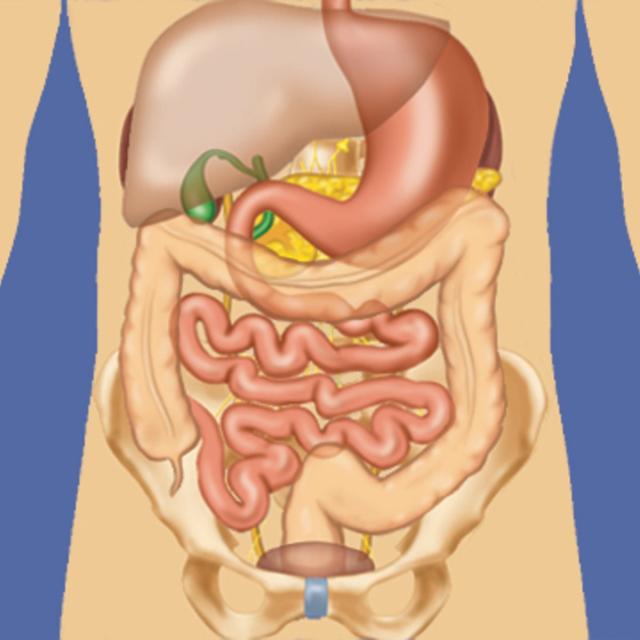
In this anatomy course you will explore the organs involved in our food digestion and discover the common causes of abdominal and pelvic pain. The latest graphics and animations will help you to find new insights and understanding of this part of the body, that has been the focus of anatomical research for centuries and presently arouses renewed scientific interest. You will explore the 3D anatomy of the organs from a basic level, providing thorough anatomical understanding, to its advanced application in surgical procedures.

Sep 7th 2026
5-12 Weeks
Autism Spectrum Disorder (Coursera) Coursera
University of California, Davis

Autism Spectrum Disorder (Coursera)

Understanding the characteristics of autism spectrum disorder (ASD) and their implications for behavior, learning and the ability to process information is critical for anyone working or interacting with those on the spectrum -- educators, clinicians, counselors, therapists, medical staff, family and employers. This course will give you a fundamental understanding of what ASD is, how it is diagnosed, the primary areas of impairment, and why prevalence is increasing.

Sep 7th 2026
5-12 Weeks
Communicating During Global Emergencies (Coursera) Coursera
Emory University

Communicating During Global Emergencies (Coursera)

In collaboration with the Rollins School of Public Health and the CDC's Division of Global Health Protection, Emergency Response, and Recovery Branch, this course introduces basic concepts and principles of communicating during a global crisis or emergency. It explores why communication during an emergency is different and the importance of adapting emergency messages to the needs of affected populations.

Sep 7th 2026
3 Weeks
Cosmetologia em prol do envelhecimento com saúde e beleza (Coursera) Coursera
Universidade Estadual de Campinas - UNICAMP

Cosmetologia em prol do envelhecimento com saúde e beleza (Coursera)

Esse curso foi planejado com muito cuidado e dedicação visando trazer conhecimentos clássicos e atuais sobre o processo de envelhecimento, produtos cosméticos e as múltiplas vias de atuação de substancias ativas aplicadas em produtos para prevenção e atenuação dos sinais de envelhecimento da pele.

Sep 7th 2026
5-12 Weeks
Air Pollution – a Global Threat to our Health (Coursera) Coursera
University of Copenhagen

Air Pollution – a Global Threat to our Health (Coursera)

We all have to breathe to live. But the air we breathe is polluted both outdoors and indoors. Each year, this pollution costs 7 million lives across the globe – and a lot of suffering. 1 in 8 deaths is due to air pollution. This course will provide you with an introduction to the most recent research in the field of health effects of air pollution as well as a broader understanding of sources and spread of air pollution and what we should do about it.

Sep 7th 2026
3 Weeks
Introduction to Acoustics (Part 2) (Coursera) Coursera
Korea Advanced Institute of Science and Technology - KAIST

Introduction to Acoustics (Part 2) (Coursera)

Learners might have learned the basic concepts of the acoustics from the ‘Introduction to Acoustics (Part 1).’ Now it is time to apply to the real situation and develop their own acoustical application. Learners will analyze the radiation, scattering, and diffraction phenomenon with the Kirchhoff –Helmholtz Equation. Then learners will design their own reverberation room or ducts that fulfill the condition they have set up.

Sep 7th 2026
5-12 Weeks
Urbanisation and Health - Promoting Sustainable Solutions (Coursera) Coursera
University of Copenhagen

Urbanisation and Health - Promoting Sustainable Solutions (Coursera)

More than half of world’s population lives in cities while only 5% did so in the 18th century. The rapid urbanisation has resulted in for example inadequate infrastructure, physical inactivity, gentrification, air pollution, and growing numbers of slum dwellers. All factors challenging health and wellbeing of the people living in the cities. In addition, when addressing climate change it has become of paramount importance to look at mitigation and adaptation investments tailored to the urban context.

Sep 7th 2026
5-12 Weeks