Gravity! The Big Bang, Black Holes and Gravitational Waves (FutureLearn)

Gravity! The Big Bang, Black Holes and Gravitational Waves (FutureLearn)

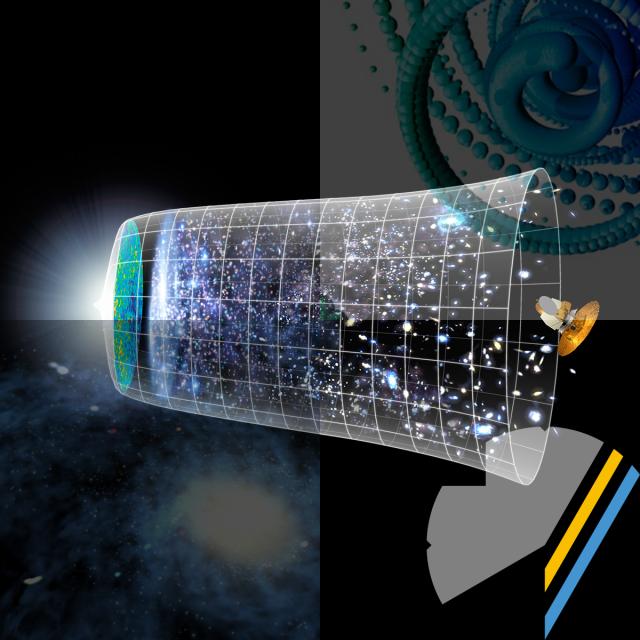
Gravity runs the Universe. This free online course explains why, exploring gravitational waves, black holes and the Big Bang. What is gravity? This fundamental force is the common theme between concepts as intriguing as the Big Bang, black holes, dark energy, space-time, gravitational waves and the expansion of the Universe. If these concepts pique your interest, this free online course is for you. It doesn’t require any background in physics or mathematics, just a simple curiosity about the Universe and our place in it.

Class Deals by MOOC List - Click here and see FutureLearn's Active Discounts, Deals, and Promo Codes.

Discover why the discovery of gravitational waves in 2016 is a real scientific revolution
The theory of gravity, Einstein’s theory of relativity, was published in 1915. This course presents in a simple way the main ideas behind this theory, before explaining why “gravity is the engine of the Universe.”
We will also explore the 2016 discovery of gravitational waves – a phenomenon that Einstein predicted exactly 100 years ago. By the end of the course, we’ll find out:

  • why, the further you look, the more distant the past is;
  • how we can tell what happened just after the Big Bang;
  • what the dark components of the Universe are;
  • what happens when you cross the horizon of a black hole;
  • why the discovery of gravitational waves is opening an extraordinary exploration of our Universe and our space-time.

Learn with gravity experts including a Nobel Prize-winning physicist
Over six weeks, you’ll learn with Pierre Binétruy, the Director of the Paris Centre for Cosmological Physics at Paris Diderot University, as well as the cosmologist, George Smoot, who will explain the discovery that earned him the Nobel Prize for Physics in 2006.
Go to Class
MOOC List is learner-supported. When you buy through links on our site, we may earn an affiliate commission.

Related Courses

The Worldview of Thomas Berry: The Flourishing of the Earth Community (Coursera) Coursera
Yale University

The Worldview of Thomas Berry: The Flourishing of the Earth Community (Coursera)

Thomas Berry (1914-2009) was a historian of world religions and an early voice awakening moral sensibilities to the environmental crisis. He is known for articulating a “new story” of the universe that explores the implications of the evolutionary sciences and cultural traditions for creating a flourishing future. This course investigates Berry’s life and thought in relation to the Journey of the Universe project.

Jun 22nd 2026
5-12 Weeks
Through Engineers' Eyes - Expanding the Vision: Engineering Mechanics by Experiment, Analysis and Design (FutureLearn) FutureLearn
UNSW Sydney - University of New South Wales

Through Engineers' Eyes - Expanding the Vision: Engineering Mechanics by Experiment, Analysis and Design (FutureLearn)

Extend the basic techniques of engineering mechanics to a range of situations; interpret experiments and apply them to design. How can you ensure that your design will perform well and be safe? In this course, you will learn analytical skills, use them to understand experiments and apply them in design. You will be living in the engineer’s world.

No sessions available
4 Weeks
Through Engineers' Eyes: Engineering Mechanics by Experiment, Analysis and Design (FutureLearn) FutureLearn
UNSW Sydney - University of New South Wales

Through Engineers' Eyes: Engineering Mechanics by Experiment, Analysis and Design (FutureLearn)

Learn the techniques of Engineering Mechanics, use them to interpret experiments and apply them to design. When you design anything, how do you know that the design will work? You need Engineering Mechanics - the science-based analysis that engineers use to predict how their designs will perform, so they can meet their responsibilities for performance and safety.

No sessions available
5-12 Weeks
Understanding Einstein: The Special Theory of Relativity (Coursera) Coursera
Stanford University

Understanding Einstein: The Special Theory of Relativity (Coursera)

In this course we will seek to “understand Einstein,” especially focusing on the special theory of relativity that Albert Einstein, as a twenty-six year old patent clerk, introduced in his “miracle year” of 1905. Our goal will be to go behind the myth-making and beyond the popularized presentations of relativity in order to gain a deeper understanding of both Einstein the person and the concepts, predictions, and strange paradoxes of his theory.

Jun 15th 2026
5-12 Weeks
Philosophy and the Sciences: Introduction to the Philosophy of Physical Sciences (Coursera) Coursera
University of Edinburgh

Philosophy and the Sciences: Introduction to the Philosophy of Physical Sciences (Coursera)

What is the origin of our universe? What are dark matter and dark energy? This is the first part of the course 'Philosophy and the Sciences', dedicated to Philosophy of the Physical Sciences. Scientific research across the physical sciences has raised pressing questions for philosophers. The goal of this course is to introduce you to some of the main areas and topics at the key juncture between philosophy and the physical sciences.

Jun 29th 2026
4 Weeks
Introduction into General Theory of Relativity (Coursera) Coursera
Higher School of Economics - HSE University

Introduction into General Theory of Relativity (Coursera)

General Theory of Relativity or the theory of relativistic gravitation is the one which describes black holes, gravitational waves and expanding Universe. The goal of the course is to introduce you into this theory. The introduction is based on the consideration of many practical generic examples in various scopes of the General Relativity. After the completion of the course you will be able to solve basic standard problems of this theory. We assume that you are familiar with the Special Theory of Relativity and Classical Electrodynamics.

Aug 8th 2022
5-12 Weeks
AstroTech: The Science and Technology behind Astronomical Discovery (Coursera) Coursera
University of Edinburgh

AstroTech: The Science and Technology behind Astronomical Discovery (Coursera)

Modern astronomy has made some astonishing discoveries - how stars burn and how black holes form; galaxies from the edge of the universe and killer rocks right next door; where the elements come from and how the expanding universe is accelerating. But how do we know all that? The truth is that astronomy would be impossible without technology, and every advance in astronomy is really an advance in technology. But the technology by itself is not enough. We have to apply it critically with a knowledge of physics to unlock the secrets of the Universe.

Jun 29th 2026
5-12 Weeks