The Evolving Universe (Coursera)

Offered by Caltech,
The Evolving Universe (Coursera)

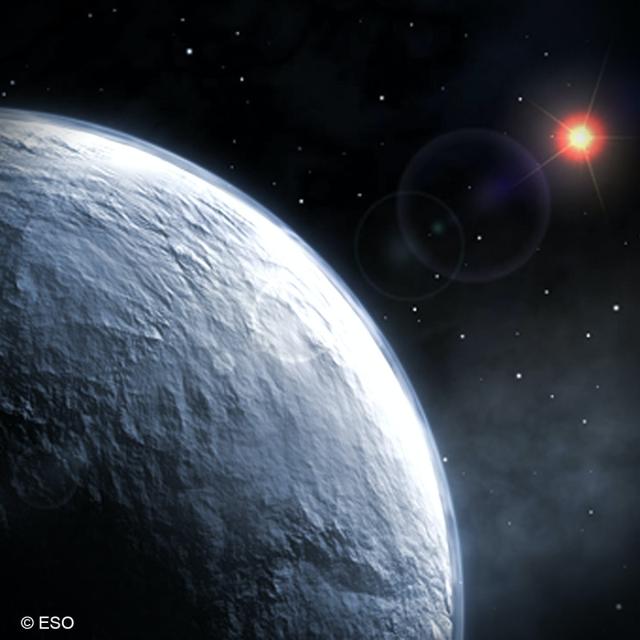
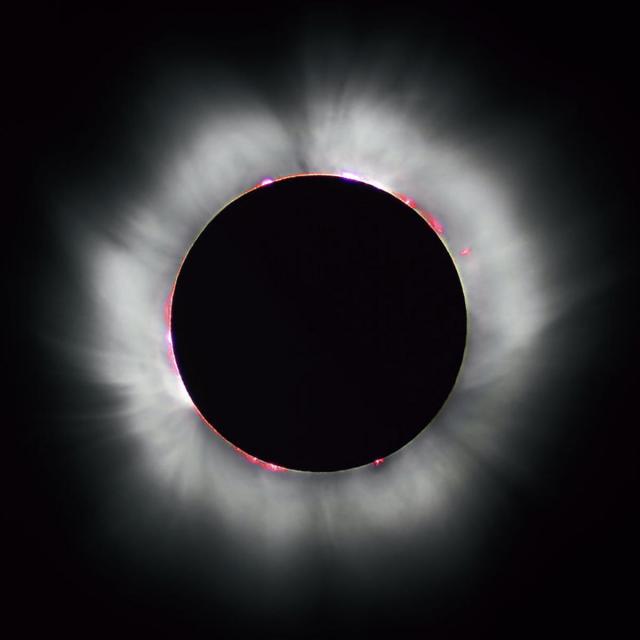
This is an introductory astronomy survey class that covers our understanding of the physical universe and its major constituents, including planetary systems, stars, galaxies, black holes, quasars, larger structures, and the universe as a whole.

Class Deals by MOOC List - Click here and see Coursera's Active Discounts, Deals, and Promo Codes.

.

Go to Class
MOOC List is learner-supported. When you buy through links on our site, we may earn an affiliate commission.

Related Courses

Kinematics: Describing the Motions of Spacecraft (Coursera) Coursera
University of Colorado Boulder

Kinematics: Describing the Motions of Spacecraft (Coursera)

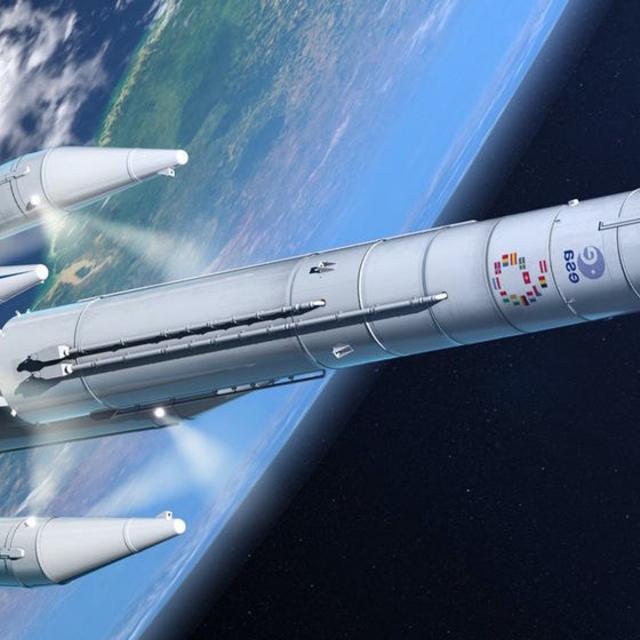
The movement of bodies in space (like spacecraft, satellites, and space stations) must be predicted and controlled with precision in order to ensure safety and efficacy. Kinematics is a field that develops descriptions and predictions of the motion of these bodies in 3D space. This course in Kinematics covers four major topic areas: an introduction to particle kinematics, a deep dive into rigid body kinematics in two parts (starting with classic descriptions of motion using the directional cosine matrix and Euler angles, and concluding with a review of modern descriptors like quaternions and Classical and Modified Rodrigues parameters).

Sep 7th 2026
4 Weeks
Understanding Modern Physics III: Simplicity and Complexity (Coursera) Coursera
The Hong Kong University of Science and Technology - HKUST

Understanding Modern Physics III: Simplicity and Complexity (Coursera)

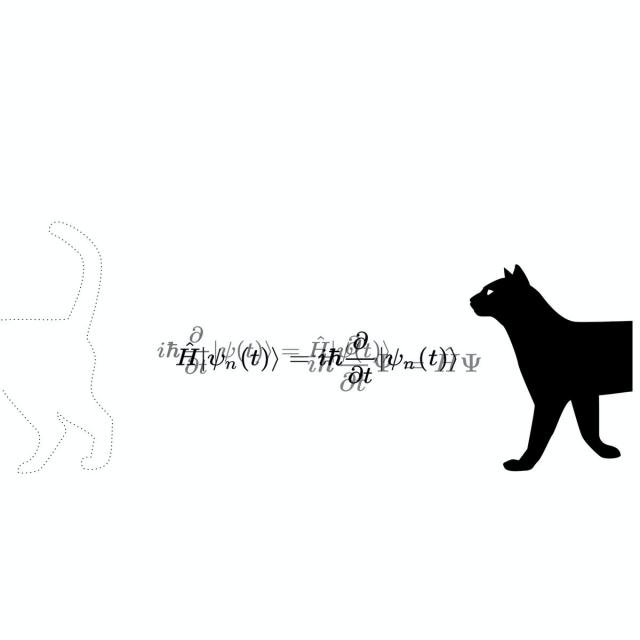
The 20th century was known as the century of physics. In the past 120 years, concepts such as space, time, energy, entropy and particles were understood to much deeper levels. New paradigms of thinking such as relativity and quantum mechanics emerged. This course is the third course in the Understanding Modern Physics series, which covers an introduction to action principle, fundamental particle physics, entropy & information and complexity.

Sep 7th 2026
4 Weeks
Nanotechnology and Nanosensors, Part 1 (Coursera) Coursera
Technion - Israel Institute of Technology

Nanotechnology and Nanosensors, Part 1 (Coursera)

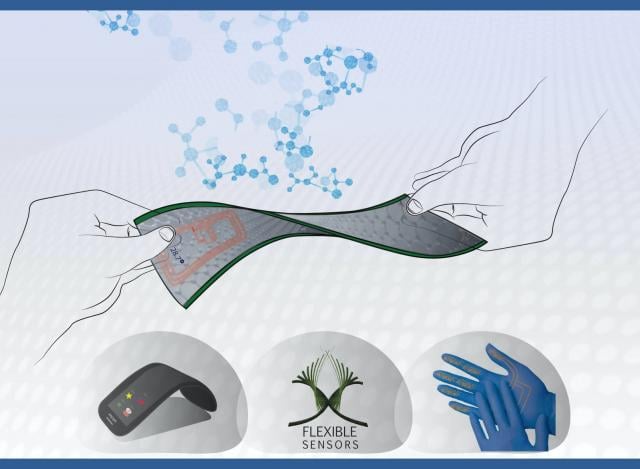
Nanotechnology and nanosensors are broad, interdisciplinary areas that encompass (bio)chemistry, physics, biology, materials science, electrical engineering and more. The present course will provide a survey on some of the fundamental principles behind nanotechnology and nanomaterials and their vital role in novel sensing properties and applications. The course will discuss interesting interdisciplinary scientific and engineering knowledge at the nanoscale to understand fundamental physical differences at the nanosensors.

Sep 7th 2026
5-12 Weeks
Astro 101: Black Holes (Coursera) Coursera
University of Alberta

Astro 101: Black Holes (Coursera)

What is a black hole? Do they really exist? How do they form? How are they related to stars? What would happen if you fell into one? How do you see a black hole if they emit no light? What’s the difference between a black hole and a really dark star? Could a particle accelerator create a black hole? Can a black hole also be a worm hole or a time machine? In Astro 101: Black Holes, you will explore the concepts behind black holes. Using the theme of black holes, you will learn the basic ideas of astronomy, relativity, and quantum physics.

Sep 14th 2026
5-12 Weeks
Fundamentals of Fluid-Solid Interactions (Coursera) Coursera
École Polytechnique

Fundamentals of Fluid-Solid Interactions (Coursera)

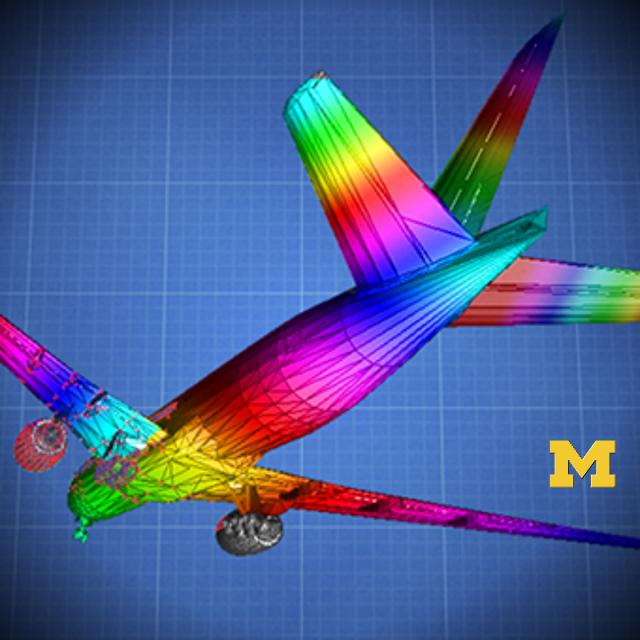
What is fluid-solid interactions ? It is what happens when the motions of a fluid and of a solid are somehow coupled. This happens all the time, around you when leaves flutter in the wind, inside you when your heart beats, above you when wings of a plane vibrate, under the sea... The idea behind this MOOC is to give you the basic tools to be able to predict and eventually mitigate things called flutter, galloping, sloshing, vortex-induced vibrations, added mass, to cite a few. We are going to consider any possible domains of applications such as civil engineering, aerospace engineering, nuclear engineering , ocean engineering, biomechanics and even food processing !

Sep 7th 2026
5-12 Weeks
Control of Nonlinear Spacecraft Attitude Motion (Coursera) Coursera
University of Colorado Boulder

Control of Nonlinear Spacecraft Attitude Motion (Coursera)

This course trains you in the skills needed to program specific orientation and achieve precise aiming goals for spacecraft moving through three dimensional space. First, we cover stability definitions of nonlinear dynamical systems, covering the difference between local and global stability. We then analyze and apply Lyapunov's Direct Method to prove these stability properties, and develop a nonlinear 3-axis attitude pointing control law using Lyapunov theory. Finally, we look at alternate feedback control laws and closed loop dynamics.

Aug 31st 2026
4 Weeks
Science & Religion 101 (Coursera) Coursera
University of Alberta

Science & Religion 101 (Coursera)

This course examines the nature of both science and religion and attempts to explore the possible relationships between them. The primary purpose is to dispel the popular myth that science and religion are entrenched in a never-ending conflict. As a result, this course argues that if the limits of both science and religion are respected, then their relationship can be complementary.

Aug 31st 2026
5-12 Weeks
From the Big Bang to Dark Energy (Coursera) Coursera
The University of Tokyo

From the Big Bang to Dark Energy (Coursera)

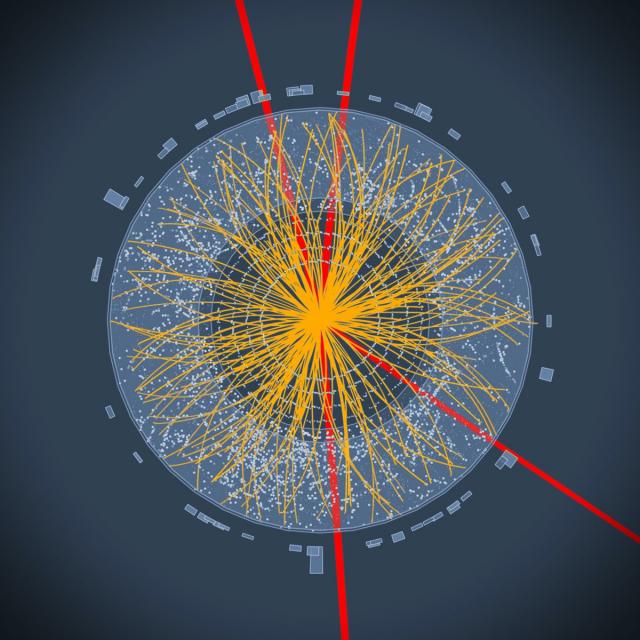
We have learned a lot recently about how the Universe evolved in 13.7 billion years since the Big Bang. More than 80% of matter in the Universe is mysterious Dark Matter, which made stars and galaxies to form. The newly discovered Higgs-boson became frozen into the Universe a trillionth of a second after the Big Bang and brought order to the Universe.

Sep 7th 2026
4 Weeks
Kinetics: Studying Spacecraft Motion (Coursera) Coursera
University of Colorado Boulder

Kinetics: Studying Spacecraft Motion (Coursera)

As they tumble through space, objects like spacecraft move in dynamical ways. Understanding and predicting the equations that represent that motion is critical to the safety and efficacy of spacecraft mission development. Kinetics: Modeling the Motions of Spacecraft trains your skills in topics like rigid body angular momentum and kinetic energy expression shown in a coordinate frame agnostic manner, single and dual rigid body systems tumbling without the forces of external torque, how differential gravity across a rigid body is approximated to the first order to study disturbances in both the attitude and orbital motion, and how these systems change when general momentum exchange devices are introduced.

Aug 31st 2026
4 Weeks
Conceptos y Herramientas para la Física Universitaria (Coursera) Coursera
Tecnológico de Monterrey

Conceptos y Herramientas para la Física Universitaria (Coursera)

Este curso provee al estudiante con conceptos y herramientas matemáticas para modelar problemas en física, que al aplicar podrá enfrentar con éxito los cursos de física universitarios. Así pues, la filosofía de este curso consiste en cubrir temas conceptuales relativos a la Física y desarrollar tu capacidad de aprender y aplicarlos en tu vida profesional.

Sep 14th 2026
5-12 Weeks