D'un infini à l'autre (Coursera)

Offered by École Polytechnique,
D'un infini à l'autre (Coursera)

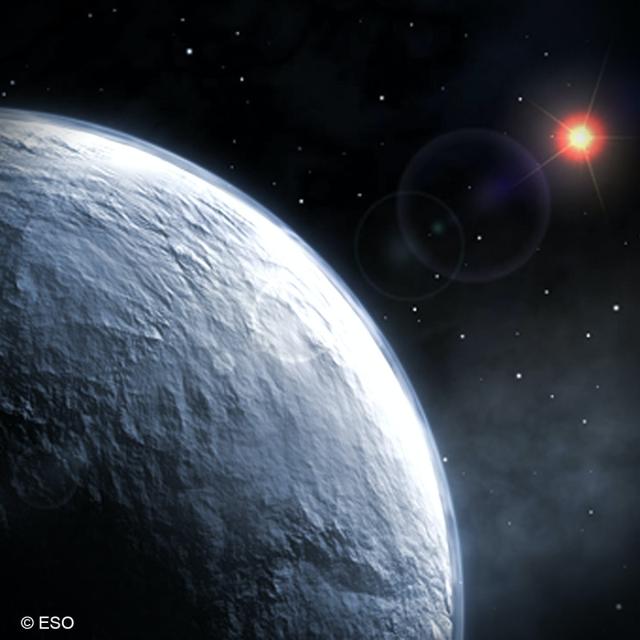
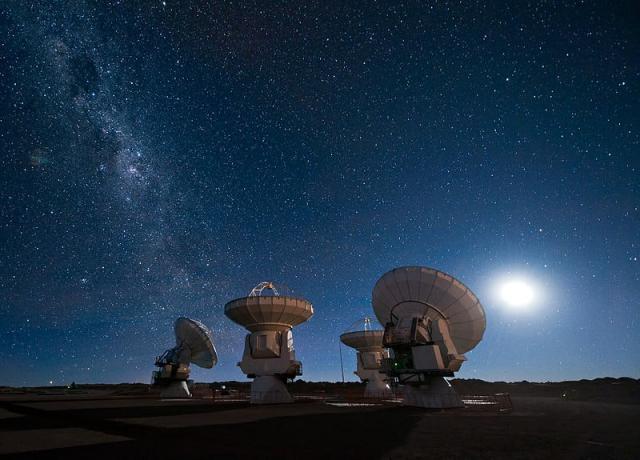
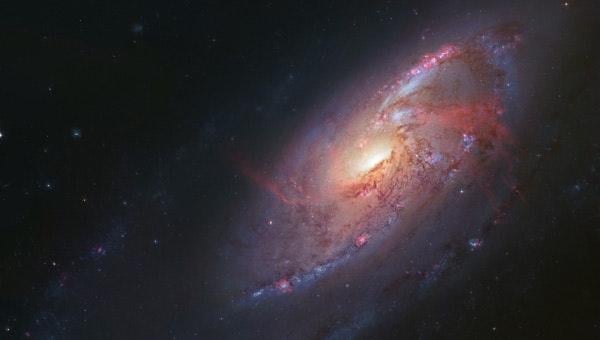
Partez à la découverte de l'infiniment petit et de l'infiniment grand, en compagnie de physiciens et de physiciennes qui vont vous faire découvrir les liens entre la structure de la matière aux distances les plus petites et l'organisation de l'Univers aux distances les plus grandes ce jour, et entre les outils scientifiques utilisés pour les étudier. Vous découvrirez que de nombreux messagers venus de notre Univers (le photon, les neutrinos, ou encore les rayons cosmiques) sont aussi des objets d'intérêt pour les physiciens qui étudient la matière aux échelles les plus petites.

Class Deals by MOOC List - Click here and see Coursera's Active Discounts, Deals, and Promo Codes.

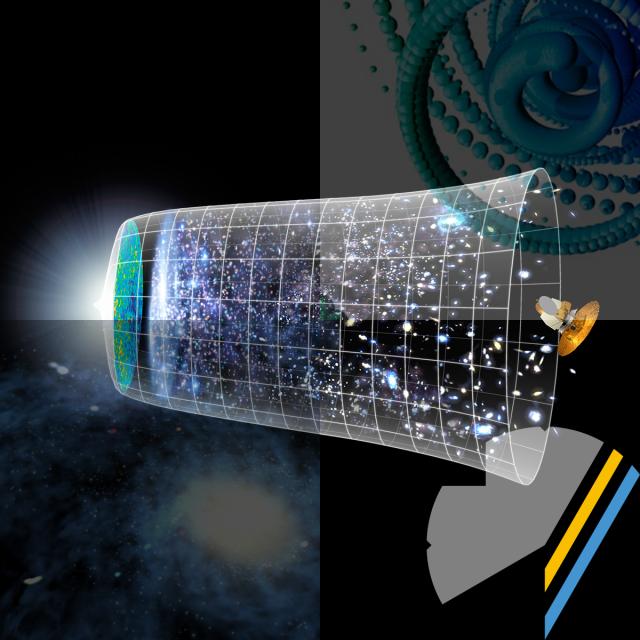
Vous verrez aussi que l'histoire de l'Univers (comme la formation de la matière et la disparition de l'antimatière) peut être comprise grâce aux progrès de l'infiniment petit. Notre compréhension des deux infinis peut ainsi progresser harmonieusement, chaque infini s'appuyant sur les avancées et les outils de l'autre.

Course 3 of 4 in the Voyages de l'infiniment grand à l'infiniment petit Specialization

Syllabus

WEEK 1
Les notions de base
Ce module introduit les aspects par lesquels l'infiniment petit et l'infiniment grand, bien que très différents, se ressemblent, tant par les concepts que par les techniques. Il s'intéresse ensuite à l'un des phénomènes les plus courants des deux infinis, à savoir la lumière.

WEEK 2
Des messagers de l'infiniment petit venus du cosmos
Ce module présente différents phénomènes qui nous renseignent sur des phénomènes astrophysiques, mais qui ont aussi leur intérêt propre du point de vue de l'infiniment petit : ce sont les neutrinos, les rayons cosmiques et les noyaux atomiques.

WEEK 3
Les particules élémentaires et l'évolution de l'Univers
Ce module décrit différents aspects de la matière et le rôle qu'ils ont joué au cours de l'évolution de l'Univers depuis le Big Bang, que ce soit la matière ordinaire (faite de protons et de neutrons), l'antimatière ou bien encore la matière noire.

WEEK 4
Comprendre les deux infinis
Ce module s'intéresse aux aspects communs de l'infiniment grand et de l'infiniment petit, en termes de concepts théoriques mais aussi de techniques expérimentales, illustrant ainsi les convergences entre ces deux infinis.
Go to Class
MOOC List is learner-supported. When you buy through links on our site, we may earn an affiliate commission.

Related Courses

Understanding Einstein: The Special Theory of Relativity (Coursera) Coursera
Stanford University

Understanding Einstein: The Special Theory of Relativity (Coursera)

In this course we will seek to “understand Einstein,” especially focusing on the special theory of relativity that Albert Einstein, as a twenty-six year old patent clerk, introduced in his “miracle year” of 1905. Our goal will be to go behind the myth-making and beyond the popularized presentations of relativity in order to gain a deeper understanding of both Einstein the person and the concepts, predictions, and strange paradoxes of his theory.

Jun 15th 2026
5-12 Weeks
Archaeoastronomy (Coursera) Coursera
Politecnico di Milano

Archaeoastronomy (Coursera)

Archaeoastronomy is the “science of stars and stones”: it studies the relationships between the ancient monuments and the sky, in order to gain a better understanding of the ideas of the architects of the past and of their religious and symbolic world. The course provides the first complete, easy introduction to this fascinating discipline.

Jun 22nd 2026
5-12 Weeks
Physics 102 - Magnetic Fields and Faraday's Law (Coursera) Coursera
Rice University

Physics 102 - Magnetic Fields and Faraday's Law (Coursera)

This course serves as an introduction to the physics of electricity and magnetism. Upon completion, learners will have an understanding of how the forces between electric charges are described by fields, and how these fields are related to electrical circuits. They will gain experience in solving physics problems with tools such as graphical analysis, algebra, vector analysis, and calculus. The course follows the typical progression of topics of a first-semester university physics course: charges, electric forces, electric fields potential, magnetic fields, currents, magnetic moments, electromagnetic induction, and circuits.

Jun 22nd 2026
4 Weeks
Astro 101: Black Holes (Coursera) Coursera
University of Alberta

Astro 101: Black Holes (Coursera)

What is a black hole? Do they really exist? How do they form? How are they related to stars? What would happen if you fell into one? How do you see a black hole if they emit no light? What’s the difference between a black hole and a really dark star? Could a particle accelerator create a black hole? Can a black hole also be a worm hole or a time machine? In Astro 101: Black Holes, you will explore the concepts behind black holes. Using the theme of black holes, you will learn the basic ideas of astronomy, relativity, and quantum physics.

Jun 22nd 2026
5-12 Weeks
Kinetics: Studying Spacecraft Motion (Coursera) Coursera
University of Colorado Boulder

Kinetics: Studying Spacecraft Motion (Coursera)

As they tumble through space, objects like spacecraft move in dynamical ways. Understanding and predicting the equations that represent that motion is critical to the safety and efficacy of spacecraft mission development. Kinetics: Modeling the Motions of Spacecraft trains your skills in topics like rigid body angular momentum and kinetic energy expression shown in a coordinate frame agnostic manner, single and dual rigid body systems tumbling without the forces of external torque, how differential gravity across a rigid body is approximated to the first order to study disturbances in both the attitude and orbital motion, and how these systems change when general momentum exchange devices are introduced.

Jun 22nd 2026
4 Weeks
Journey of the Universe: The Unfolding of Life (Coursera) Coursera
Yale University

Journey of the Universe: The Unfolding of Life (Coursera)

Journey of the Universe weaves together the discoveries of the evolutionary sciences together with humanities such as history, philosophy, art, and religion. The course draws on the Emmy-award winning film, Journey of the Universe, and the book from Yale University Press. Journey explores cosmic evolution as a creative process based on connection, interdependence, and emergence. It examines a range of dynamic interactions in the unfolding of galaxies, Earth, life, and human communities. It investigates ways in which we understand evolutionary processes and the implications for humans and our ecological future.

Jun 22nd 2026
5-12 Weeks
Emergence of Life (Coursera) Coursera
University of Illinois at Urbana-Champaign

Emergence of Life (Coursera)

How did life emerge on Earth? How have life and Earth co-evolved through geological time? Is life elsewhere in the universe? Take a look through the 4-billion-year history of life on Earth through the lens of the modern Tree of Life. This course will evaluate the entire history of life on Earth within the context of our cutting-edge understanding of the Tree of Life. This includes the pioneering work of Professor Carl Woese on the University of Illinois Urbana-Champaign campus which revolutionized our understanding with a new "Tree of Life."

Jun 15th 2026
5-12 Weeks
Physics 102 - AC Circuits and Maxwell's Equations (Coursera) Coursera
Rice University

Physics 102 - AC Circuits and Maxwell's Equations (Coursera)

This course serves as an introduction to the physics of electricity and magnetism. Upon completion, learners will have an understanding of how the forces between electric charges are described by fields, and how these fields are related to electrical circuits. They will gain experience in solving physics problems with tools such as graphical analysis, algebra, vector analysis, and calculus. The course follows the typical progression of topics of a first-semester university physics course: charges, electric forces, electric fields potential, magnetic fields, currents, magnetic moments, electromagnetic induction, and circuits.

Jun 22nd 2026
3 Weeks
The Worldview of Thomas Berry: The Flourishing of the Earth Community (Coursera) Coursera
Yale University

The Worldview of Thomas Berry: The Flourishing of the Earth Community (Coursera)

Thomas Berry (1914-2009) was a historian of world religions and an early voice awakening moral sensibilities to the environmental crisis. He is known for articulating a “new story” of the universe that explores the implications of the evolutionary sciences and cultural traditions for creating a flourishing future. This course investigates Berry’s life and thought in relation to the Journey of the Universe project.

Jun 22nd 2026
5-12 Weeks