From the Big Bang to Dark Energy (Coursera)

From the Big Bang to Dark Energy (Coursera)

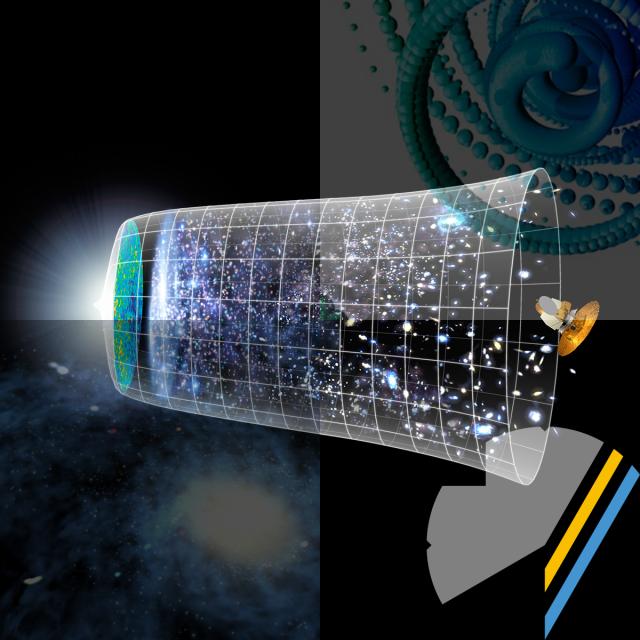
We have learned a lot recently about how the Universe evolved in 13.7 billion years since the Big Bang. More than 80% of matter in the Universe is mysterious Dark Matter, which made stars and galaxies to form. The newly discovered Higgs-boson became frozen into the Universe a trillionth of a second after the Big Bang and brought order to the Universe.

Class Deals by MOOC List - Click here and see Coursera's Active Discounts, Deals, and Promo Codes.

Yet we still do not know how ordinary matter (atoms) survived against total annihilation by Anti-Matter. The expansion of the Universe started acceleration about 7 billion years ago and the Universe is being ripped apart. The culprit is Dark Energy, a mysterious energy multiplying in vacuum. I will present evidence behind these startling discoveries and discuss what we may learn in the near future.

Syllabus

WEEK 1
From Daily Life to the Big Bang
Understanding the Universe in which we live and how to probe it can begin with simple daily life experiences such as night and day and the four seasons. Starting from these observations, we will take a journey from our local Earth at the present time all the way to the edge of the universe and back to its birth, learning the techniques and findings in modern physics that provide us this understanding.

WEEK 2
Birth of Elements and Higgs Boson
We are made of chemical elements. So one of the fundamental questions “where do we come from?” leads to another question: “how were elements born?”. This is related to the Higgs Boson, an important particle in answering this question which remained elusive until its discovery was recently announced on July 4, 2012. In this module, we will learn recent research outcomes on these topics.

WEEK 3
Dark Matter and Anti-Matter
In this module, we will learn about dark matter and anti-matter -- some of the more mysterious sides of the Universe. We know dark matter played an important role in the formation of stars and galaxies, but much of properties are still unknown to us. In another strange mystery, we will see how the beginning of the universe started with equal amounts of matter and anti-matter, yet somehow only matter (which we are composed of!) survived.

WEEK 4
Inflation and Dark Energy
At the very beginning, the Universe exponentially expanded during a period known as the cosmic inflation. Recent studies suggested that the Universe has entered into another stage of expansion, considered to be caused by 'mysterious' dark energy. In this module, we will learn about inflation, dark energy, and the possible fates of our Universe.
Go to Class
MOOC List is learner-supported. When you buy through links on our site, we may earn an affiliate commission.

Related Courses

Ressources minérales et transition (Coursera) Coursera
Institut Mines-Telecom

Ressources minérales et transition (Coursera)

Ce MOOC sur les ressources minérales et les transitions invite à se questionner sur la soutenabilité de nos choix technologiques. Les transitions énergétiques et numériques sont en effet confrontées aux enjeux d'approvisionnement des ressources minérales et aux impacts que leur cycle de vie génère sur l’environnement et la société.

Sep 14th 2026
4 Weeks
Mécanique du point matériel (Coursera) Coursera
École Polytechnique Fédérale de Lausanne

Mécanique du point matériel (Coursera)

Pour illustrer les concepts introduits dans la première partie, on traite ici des problèmes pour lesquels le système mécanique peut être considéré comme un point matériel. Cette partie couvre notamment les problèmes à traiter en coordonnées cylindriques ou sphériques, le problème des orbites des planètes et les référentiels accélérés.

Sep 7th 2026
5-12 Weeks
Sustainability of Social-Ecological Systems: the Nexus between Water, Energy and Food (Coursera) Coursera
Universitat Autònoma de Barcelona

Sustainability of Social-Ecological Systems: the Nexus between Water, Energy and Food (Coursera)

In this course you will become familiar with the ideas of the water-energy-food nexus and transdisciplinary thinking. You will learn to see your community or country as a complex social-ecological system and to describe its water, energy and food metabolism in the form of a pattern, as well as to map the categories of social actors.

Sep 14th 2026
5-12 Weeks
Understanding Modern Physics III: Simplicity and Complexity (Coursera) Coursera
The Hong Kong University of Science and Technology - HKUST

Understanding Modern Physics III: Simplicity and Complexity (Coursera)

The 20th century was known as the century of physics. In the past 120 years, concepts such as space, time, energy, entropy and particles were understood to much deeper levels. New paradigms of thinking such as relativity and quantum mechanics emerged. This course is the third course in the Understanding Modern Physics series, which covers an introduction to action principle, fundamental particle physics, entropy & information and complexity.

Sep 7th 2026
4 Weeks
Particle Physics: an Introduction (Coursera) Coursera
University of Geneva

Particle Physics: an Introduction (Coursera)

This course introduces you to subatomic physics, i.e. the physics of nuclei and particles. More specifically, the following questions are addressed: What are the concepts of particle physics and how are they implemented?; What are the properties of atomic nuclei and how can one use them?; How does one accelerate and detect particles and measure their properties?; What does one learn from particle reactions at high energies and particle decays?; How do electromagnetic interactions work and how can one use them?; How do strong interactions work and why are they difficult to understand?; How do weak interactions work and why are they so special?; What is the mass of objects at the subatomic level and how does the Higgs boson intervene?; How does one search for new phenomena beyond the known ones?; What can one learn from particle physics concerning astrophysics and the Universe as a whole?

Sep 7th 2026
5-12 Weeks
Understanding Einstein: The Special Theory of Relativity (Coursera) Coursera
Stanford University

Understanding Einstein: The Special Theory of Relativity (Coursera)

In this course we will seek to “understand Einstein,” especially focusing on the special theory of relativity that Albert Einstein, as a twenty-six year old patent clerk, introduced in his “miracle year” of 1905. Our goal will be to go behind the myth-making and beyond the popularized presentations of relativity in order to gain a deeper understanding of both Einstein the person and the concepts, predictions, and strange paradoxes of his theory.

Sep 7th 2026
5-12 Weeks
Mastering bitumen for better roads and innovative applications (Coursera) Coursera
École des Ponts ParisTech

Mastering bitumen for better roads and innovative applications (Coursera)

During the four coming weeks, best experts in bitumen will bring you their knowledge and experience to build a strong understanding of today’s realities and new perspectives on the future of bitumen. Total is the European leader on bitumen markets. Innovation has always been the key to sustainability and durability in the products they develop. Their main objective here is to share technical knowledge and experience to insure bitumen are being used in the most effective and efficient ways for their different applications in road works.

Sep 7th 2026
4 Weeks
Philosophy, Science and Religion: Religion and Science (Coursera) Coursera
University of Edinburgh

Philosophy, Science and Religion: Religion and Science (Coursera)

Philosophy, Science and Religion mark three of the most fundamental modes of thinking about the world and our place in it. Are these modes incompatible? Put another way: is the intellectually responsible thing to do to ‘pick sides’ and identify with one of these approaches at the exclusion of others? Or, are they complementary or mutually supportive? As is typical of questions of such magnitude, the devil is in the details. For example, it is important to work out what is really distinctive about each of these ways of inquiring about the world. In order to gain some clarity here, we’ll be investigating what some of the current leading thinkers in philosophy, science and religion are actually doing.

Sep 8th 2026
5-12 Weeks
Politics and Economics of International Energy (Coursera) Coursera
Sciences Po

Politics and Economics of International Energy (Coursera)

Energy issues have always been important in international relations, but in recent years may have become even more important than in the past due to the widespread awareness of existing limits to energy sources and negative climate impacts. The course discusses global trends in energy consumption and production, various available scenarios for potential developments in the coming decades, the availability of oil reserves and the evolution of the oil industry.

Sep 7th 2026
5-12 Weeks
Act on Climate: Steps to Individual, Community, and Political Action (Coursera) Coursera
University of Michigan

Act on Climate: Steps to Individual, Community, and Political Action (Coursera)

Are you concerned about climate change? Would you like to learn how to address and respond to this challenge? If so, this course is for you. Act on Climate: Steps to Individual, Community, and Political Action is intended to help learners understand, address and respond to climate change as individuals and in partnership with their communities and political leaders.

Sep 7th 2026
5-12 Weeks