Through Engineers' Eyes - Expanding the Vision: Engineering Mechanics by Experiment, Analysis and Design (FutureLearn)

Through Engineers' Eyes - Expanding the Vision: Engineering Mechanics by Experiment, Analysis and Design (FutureLearn)

Extend the basic techniques of engineering mechanics to a range of situations; interpret experiments and apply them to design. How can you ensure that your design will perform well and be safe? In this course, you will learn analytical skills, use them to understand experiments and apply them in design. You will be living in the engineer’s world.

Class Deals by MOOC List - Click here and see FutureLearn's Active Discounts, Deals, and Promo Codes.

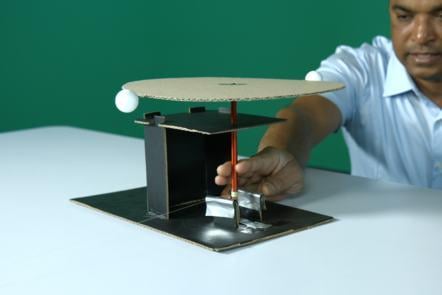
Following on from our companion course Through Engineers’ Eyes: Introducing the Vision, the emphasis in this course is on application of basic engineering mechanics. You will find centres of gravity by experiments on model gliders, learn about friction as you apply it to designing a belt drive, and analyse car performance using concepts of work, energy and power.

What topics will you cover?

Week 1: Gravity, finding centres of gravity
Week 2: Basic models of dry friction (Static and Kinetic), sliding/tipping, rope around bollard
Week 3: Resistance to motion, rolling friction, aerodynamic friction, work/energy/power
Week 4: Impulse-momentum, projectile motion

What will you achieve?
By the end of the course, you'll be able to...

  • Investigate centres of gravity, friction and various types of resistance
  • Explore the concepts of work, energy and power
  • Apply these capabilities to design
Go to Class
MOOC List is learner-supported. When you buy through links on our site, we may earn an affiliate commission.

Related Courses

Gravity! The Big Bang, Black Holes and Gravitational Waves (FutureLearn) FutureLearn
Université Paris Diderot

Gravity! The Big Bang, Black Holes and Gravitational Waves (FutureLearn)

Gravity runs the Universe. This free online course explains why, exploring gravitational waves, black holes and the Big Bang. What is gravity? This fundamental force is the common theme between concepts as intriguing as the Big Bang, black holes, dark energy, space-time, gravitational waves and the expansion of the Universe. If these concepts pique your interest, this free online course is for you. It doesn’t require any background in physics or mathematics, just a simple curiosity about the Universe and our place in it.

No sessions available
5-12 Weeks
Engineering the Future: Creating the Amazing (FutureLearn) FutureLearn
University of York

Engineering the Future: Creating the Amazing (FutureLearn)

Learn more about the fascinating world of engineering, and discover where an engineering degree could take you. Learn what key skills and knowledge you need to study engineering. Engineering has played an immeasurable role in the advancement of our society and planet. On this course, you will get an introduction to the study of engineering, and find out why, as an engineer, you have the potential to change the world.

Self Paced
3 Weeks
Wind resources for renewable energies (Coursera) Coursera
École Polytechnique

Wind resources for renewable energies (Coursera)

The main goal of this course is to get the necessary knowledge on atmospheric and fluid dynamics in order to quantify the wind resource of a local or regional area. We’ll learn about basic meteorology, the specific dynamics of turbulent boundary layers and some standard techniques to estimate wind resources regardless of the type of turbine used or the level of efficiency achieved.

Aug 10th 2026
4 Weeks
Nanotechnology and Nanosensors, Part 2 (Coursera) Coursera
Technion - Israel Institute of Technology

Nanotechnology and Nanosensors, Part 2 (Coursera)

Learn about novel sensing tools that make use of nanotechnology to screen, detect and monitor various events in personal or professional life. Together, we will lay the groundwork for infinite innovative applications, starting from diagnosis and treatments of diseases, continuing with quality control of goods and environmental aspects, and ending with monitoring security issues.

Aug 10th 2026
5-12 Weeks
Thermodynamics in Energy Engineering (FutureLearn) FutureLearn
Hanyang University

Thermodynamics in Energy Engineering (FutureLearn)

Understand the basic thermodynamic principles widely used in many engineering fields: temperature, free energy and entropy. This free online course introduces the basic thermodynamic principles that are widely used in many engineering fields. It will prepare you for degree-level study, by helping you understand and apply thermodynamic fundamentals through real-world, problem-solving exercises.

No sessions available
5-12 Weeks
Remote Sensing Image Acquisition, Analysis and Applications (Coursera) Coursera
UNSW Sydney - University of New South Wales

Remote Sensing Image Acquisition, Analysis and Applications (Coursera)

Welcome to Remote Sensing Image Acquisition, Analysis and Applications, in which we explore the nature of imaging the earth's surface from space or from airborne vehicles. This course covers the fundamental nature of remote sensing and the platforms and sensor types used. It also provides an in-depth treatment of the computational algorithms employed in image understanding, ranging from the earliest historically important techniques to more recent approaches based on deep learning.

Aug 17th 2026
13-24 Weeks
Materials Data Sciences and Informatics (Coursera) Coursera
Georgia Institute of Technology

Materials Data Sciences and Informatics (Coursera)

This course aims to provide a succinct overview of the emerging discipline of Materials Informatics at the intersection of materials science, computational science, and information science. Attention is drawn to specific opportunities afforded by this new field in accelerating materials development and deployment efforts.

Aug 10th 2026
5-12 Weeks
Quantum Optics 1 : Single Photons (Coursera) Coursera
École Polytechnique

Quantum Optics 1 : Single Photons (Coursera)

This course gives you access to basic tools and concepts to understand research articles and books on modern quantum optics. You will learn about quantization of light, formalism to describe quantum states of light without any classical analogue, and observables allowing one to demonstrate typical quantum properties of these states. These tools will be applied to the emblematic case of a one-photon wave packet, which behaves both as a particle and a wave.

Aug 10th 2026
5-12 Weeks
Mechanics: Motion, Forces, Energy and Gravity, from Particles to Planets (Coursera) Coursera
UNSW Sydney - University of New South Wales

Mechanics: Motion, Forces, Energy and Gravity, from Particles to Planets (Coursera)

Most of the phenomena in the world around you are, at the fundamental level, based on physics, and much of physics is based on mechanics. Mechanics begins by quantifying motion, and then explaining it in terms of forces, energy and momentum. This allows us to analyse the operation of many familiar phenomena around us, but also the mechanics of planets, stars and galaxies.

Aug 17th 2026
5-12 Weeks
Through Engineers' Eyes: Engineering Mechanics by Experiment, Analysis and Design (FutureLearn) FutureLearn
UNSW Sydney - University of New South Wales

Through Engineers' Eyes: Engineering Mechanics by Experiment, Analysis and Design (FutureLearn)

Learn the techniques of Engineering Mechanics, use them to interpret experiments and apply them to design. When you design anything, how do you know that the design will work? You need Engineering Mechanics - the science-based analysis that engineers use to predict how their designs will perform, so they can meet their responsibilities for performance and safety.

No sessions available
5-12 Weeks
Ingeniería de Tráfico (Coursera) Coursera
Pontificia Universidad Católica de Chile

Ingeniería de Tráfico (Coursera)

El curso presenta en primer lugar las principales relaciones que caracterizan la circulación de vehículos y que dan pie a la teoría de circulación de vehículos sobre redes de transporte. Posteriormente se discutirán aspectos relativos al control de tráfico en intersecciones, sean estas de prioridad o semaforizadas. Finalmente, discutiremos sobre las características que presentan algunos modelos dinámicos de tráfico bastante utilizados en la actualidad.

Aug 10th 2026
4 Weeks